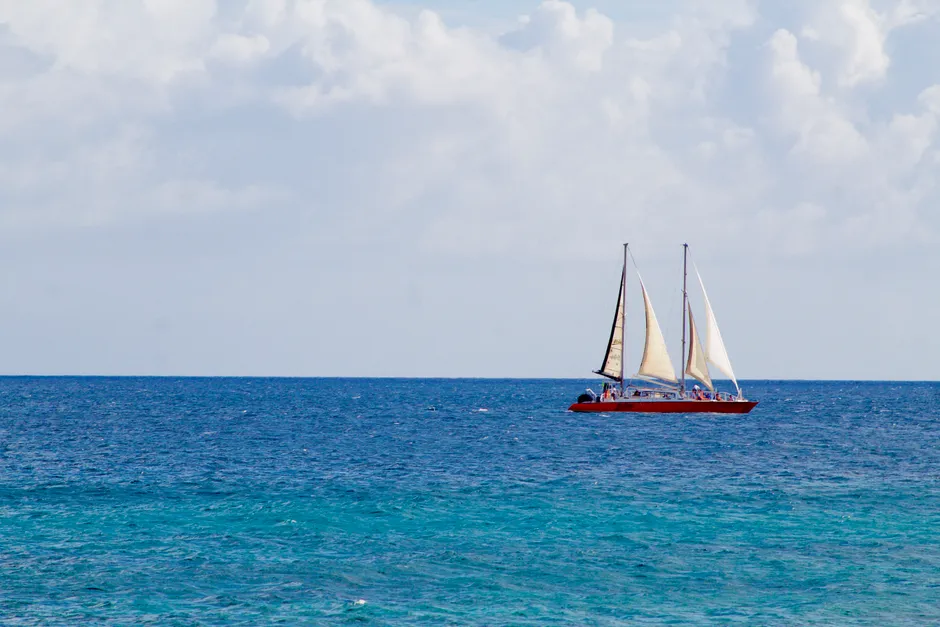
Russian Frigate Fires on British Yacht in the English Channel as UK Escalates Shadow Fleet Pressure

The Russian frigate Admiral Grigorovich fired warning shots at a British-registered yacht in the English Channel on Tuesday, 10 June 2026, in an incident that collided with an already volatile week of UK-Russia maritime confrontation.
The yacht — Bright Future, crewed by a retired British couple — was transiting the Channel between the Isle of Wight and Normandy when the frigate opened fire from roughly 450–500 metres away, according to The Guardian and The Times. The Admiral Grigorovich is a Project 11356 guided-missile frigate of Russia's Black Sea Fleet, routinely deployed through the Bosphorus and into the Atlantic. Its presence in the English Channel — one of the world's busiest commercial waterways and a NATO flank — is itself operationally notable.
Warning shots are a distinct escalatory signal. They are not random fire; under maritime law and naval custom, they communicate an intent to compel a vessel to halt or alter course. Firing them at a civilian yacht, rather than a naval or coast guard vessel, and at close range in a congested international strait, sits well outside conventional rules of engagement for peacetime transits.
A Crowded Week in the Channel
The frigate incident did not occur in isolation. Earlier in June 2026, UK forces boarded a sanctioned Russian oil tanker in the English Channel — the first time British forces had physically interdicted a Russian shadow fleet vessel, according to the UK Ministry of Defence. Defence Secretary Dan Jarvis delivered an oral statement to Parliament on 15 June 2026 on that interdiction, framing it as a direct strike at Moscow's war financing, per the Secretary of State's published remarks.
The shadow fleet — a loose network of ageing, often flag-of-convenience tankers used to move Russian crude in defiance of the G7 price cap — has been a persistent enforcement gap since 2022. Boarding one in British waters marks a qualitative shift from sanctions listing to kinetic interdiction. The legal basis for such action rests on the sanctioned status of the vessel; UK law permits enforcement in territorial and, under certain frameworks, adjacent waters.
That enforcement push has breadth as well as recent depth. In 2026 alone, the UK has sanctioned nearly 500 individuals, entities, and vessels under its Russia sanctions regime, according to the Foreign, Commonwealth and Development Office. That volume — roughly equivalent to several prior years of Russian-related designations compressed into months — reflects a deliberate acceleration in pressure on the financial architecture sustaining Moscow's military spending.
Context: Ukraine, Interflex, and the Longer Arc
June 2026 also marks four years since the UK launched Operation Interflex, the multinational training programme that has now brought more than 63,000 Ukrainian personnel through basic and specialist combat training on British soil, per the Ministry of Defence. That milestone matters as context: the UK's posture toward Russia has moved progressively from diplomatic and economic pressure toward direct military-adjacent action — training, arms supply, and now physical interdiction of revenue streams.
The Admiral Grigorovich episode fits that arc, though the direction of escalation here originates from Moscow. Russia has periodically used naval transits through the Channel as messaging — shadowing exercises, irregular routing, electronic emissions near maritime traffic separation schemes. Firing on a civilian vessel is a different register entirely.
What Russia's intent was remains contested. Meduza reported the incident without Russian government attribution, and Moscow had not issued an official account as of 16 June 2026. The absence of an explanation is itself a choice — ambiguity preserves deniability and keeps the burden of escalation management on the British side.
The UK government will face immediate pressure on two questions: whether the Rules of Engagement governing Channel transits by adversary warships need revision, and whether the Bright Future incident changes the calculus on the shadow fleet boarding — or is designed to. Both threads run through the same institutional question of how far NATO's eastern maritime flank will be contested in waters that, until recently, were treated as settled.