Jane Street's AI Buildout: A $6 Billion Bet and 500 New Hires

Jane Street is planning to hire more than 500 people over the next year, WSJ reported on June 20, 2026 — a headcount expansion of roughly 14% on top of its current 3,500 employees. The hiring push runs alongside a $6 billion AI cloud agreement the firm signed with CoreWeave in April 2026, in which Jane Street also committed $1 billion in equity to the GPU cloud provider.
Together, those two data points sketch a firm in deliberate, capital-intensive expansion. The CoreWeave commitment — disclosed by CoreWeave in April — is not a vanilla SaaS subscription. A $6 billion cloud services agreement, paired with a $1 billion equity anchor, reflects a structural dependency on AI-driven compute at a scale that very few non-hyperscaler institutions have committed to on the record.
The revenue context matters here. Jane Street posted $16.1 billion in trading revenue in Q1 2026 alone, Reuters reported in May. For a firm founded in 2000 that has operated for most of its life as a relatively lean, secretive market-maker, that number is striking. It implies a Q1 run-rate that, if sustained, would put annualised trading revenue north of $60 billion — a figure that puts Jane Street in direct comparison with the trading desks of the largest global investment banks, institutions with balance sheets and regulatory capital frameworks that dwarf a private partnership.
Geographic Footprint and Regulatory Friction
The growth story is not frictionless. Jane Street has 400 staff in Hong Kong and was, as of April 2025, actively hiring for more than 40 roles there while seeking to expand its physical office footprint in the city, per Reuters. The Asia Pacific build-out is consistent with the firm's strategy of positioning closer to equity and fixed-income markets in which electronic market-making still commands structural edge.
India presents a harder problem. The Indian income tax department has an ongoing investigation into Jane Street, and a government source told Reuters in August 2025 that the firm is not cooperating with the probe. Jane Street has been a significant participant in Indian equity derivatives markets — its activity there attracted public scrutiny from Indian regulators in 2024. A non-cooperation posture in a sovereign tax investigation carries real risk, both reputational and operational, for a firm that depends on exchange access and regulatory goodwill in every jurisdiction it trades.
What the AI Spend Actually Signals
The CoreWeave deal deserves scrutiny beyond its headline size. CoreWeave is a GPU cloud provider that went public in March 2025; Jane Street's $1 billion equity investment preceded that IPO, making it a significant pre-public anchor position as well as a commercial counterparty. Owning equity in a critical infrastructure vendor while simultaneously committing $6 billion in cloud spend over a multi-year term creates an alignment of incentives that is worth noting — Jane Street benefits if CoreWeave's capacity and reliability scale, and CoreWeave benefits materially from Jane Street as both a customer and a capital source.
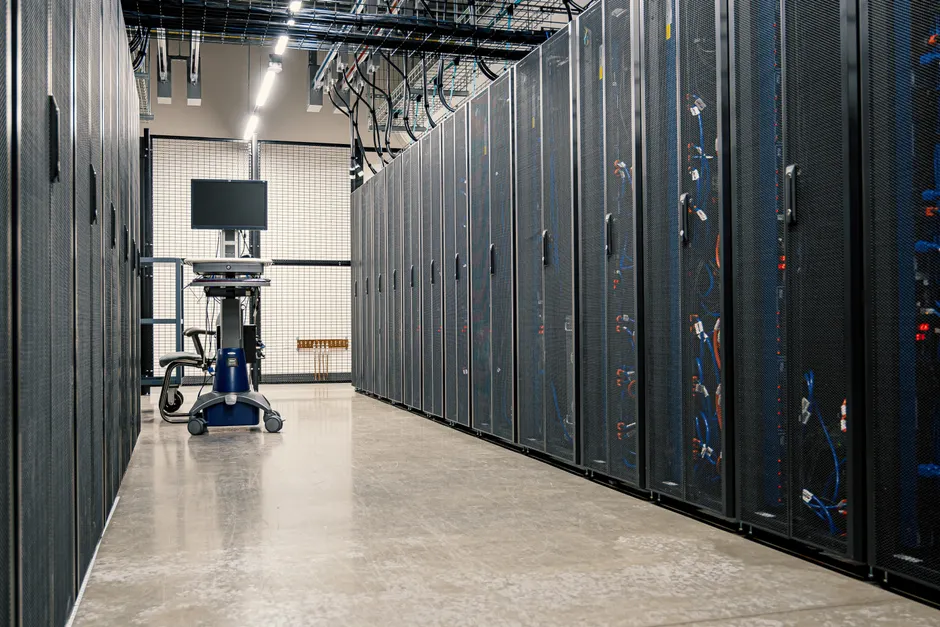
The deeper question the spend raises is architectural. High-frequency and quantitative trading firms have always been compute-intensive. The shift to large-scale AI cloud infrastructure — rather than owned, co-located bare metal — is a meaningful operational change for firms that have historically prized latency control and data security above cloud elasticity. Whether the AI workloads being offloaded to CoreWeave are model training, risk analytics, or something else entirely, Jane Street has not said publicly. But a $6 billion commitment over a multi-year period implies these are not peripheral workloads.
The 500-plus hiring target reinforces that reading. A firm deploying capital at this scale into AI infrastructure and simultaneously adding ~14% to its headcount is not treating AI as a cost-reduction exercise. It is staffing up alongside the compute spend, which suggests net expansion of capability rather than substitution.
Jane Street remains a private partnership, so it discloses financials selectively and on its own timeline. The Q1 revenue figure and the CoreWeave deal are among the most concrete public data points available. The combination — record revenue, a large-scale AI infrastructure commitment, accelerating headcount, and aggressive geographic expansion — describes a firm using a period of exceptional profitability to entrench structural advantages before conditions normalise.