Australia's Coal Diesel Subsidy Bill: $6.2 Billion in Rebates, and Counting

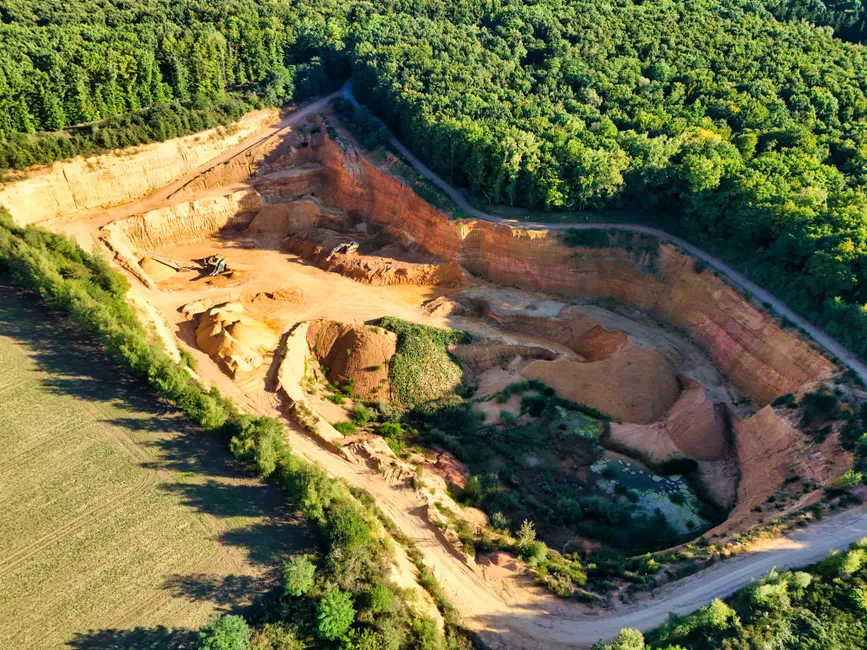
Coal companies operating in Australia are estimated to receive $6.2 billion in rebates on 11.6 billion litres of diesel consumed over their operational lives, according to The Guardian reporting published on 21 June 2026. The mechanism is the Federal Government's Fuel Tax Credit (FTC) scheme — a program that refunds excise or customs duty on fuel used in off-road vehicles and machinery, meaning equipment that never touches a public road. At the project level, the numbers are concrete: Whitehaven's Environmental Impact Statement for one mine alone projects 85 million litres of diesel per year and more than 2.5 billion litres across the mine's life, according to Lock the Gate Alliance.
The FTC scheme's total cost across all sectors reached $10.8 billion in 2025–26, per Australia Institute research published in March 2026. Mining dominates that figure. BHP alone received $622 million in diesel tax breaks in the last financial year, according to the Climate Council. Forward projections compound the exposure: as of May 2026, approximately $45 billion in FTC refunds are forecast to be paid over the next four years, per ABC News.
Why the Subsidy Is Growing, Not Shrinking
The structural driver is strip ratio. As surface coal seams are exhausted, miners must shift more overburden per tonne of coal recovered — and diesel is the energy source for that work. IEEFA analysis published in May 2026 found that diesel consumption in coalmining is growing faster than mining production itself, with scope 1 emissions from the sector rising 1.4% in FY2024–25. Fuel efficiency measures can slow the trajectory but cannot reverse it while strip ratios continue to climb.
That dynamic plays out against a deteriorating global demand picture. Coal power additions fell to their lowest level in 20 years in 2024, according to Global Energy Monitor's Boom and Bust Coal 2025 report. The combination — escalating extraction costs and a softening demand outlook — narrows the window in which the subsidy calculus looks benign for the public balance sheet.
Reform Stalled
Efforts to claw back a portion of FTC payments from miners had been progressing in Canberra before geopolitical shock intervened. By May 2026, talks to restructure the scheme had been derailed by the Iran war, which redirected ministerial attention and complicated the energy-security framing around fossil fuel production, per ABC News.
The timing matters. The Albanese Government's capacity to revisit the FTC architecture was already constrained by the industry's lobbying weight and the political sensitivity of any measure that could be framed as a production tax during an energy cost crisis. An external shock that raises the strategic premium on domestic energy supply gives opponents of reform a ready argument, regardless of whether coal's contribution to the specific supply crunch is meaningful.
What the Guardian's figures add to that political backdrop is a lifecycle accounting frame. Aggregating rebate estimates across a mine's operational span — decades, in most cases — translates an annual budget line into a cumulative fiscal commitment that is harder to treat as routine. The Whitehaven projection is a useful illustration: a single approved project, not yet operational, already carries a diesel subsidy liability that runs to hundreds of millions of dollars.
The policy tension is genuine. The FTC was designed around a coherent principle — excise is levied to fund road infrastructure, so off-road users should not pay it. Applying that logic to a billion-dollar mining operation extracting a fuel whose combustion contributes to the costs that same government is trying to reduce through climate policy creates an internal contradiction that budget review cycles have not resolved. Whether the Iran war pause becomes a permanent reprieve for the scheme, or merely a delay, is the operative question for fiscal analysts and climate-policy watchers alike.