Queensland's LNP Government Orders Review of Mine Rehabilitation Funding Scheme
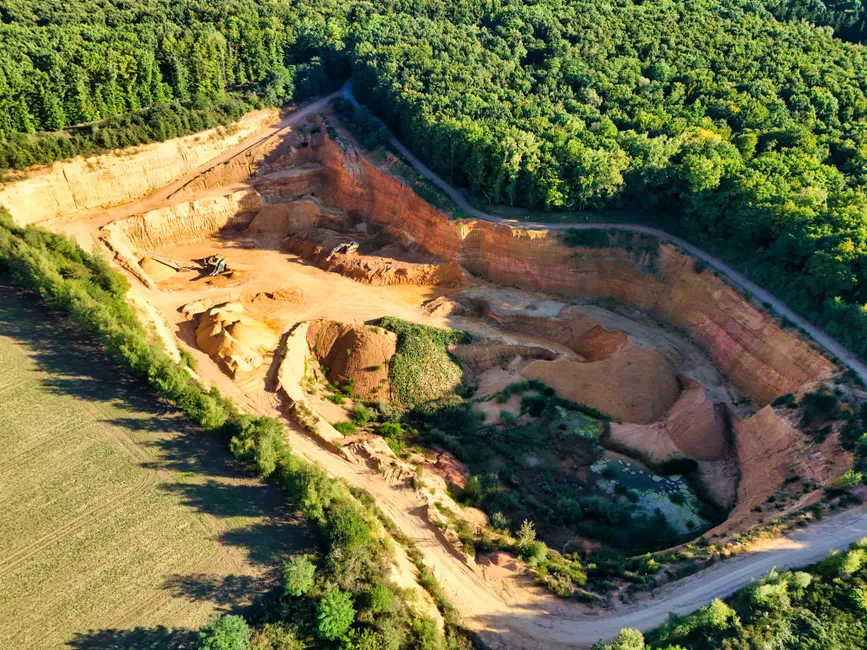
Queensland Treasurer David Janetzki and Mining Minister Dale Last announced on 6 July 2026 a review of the state's Financial Provisioning Scheme — the regulatory mechanism that requires resources companies to lodge financial assurance sufficient to cover remediation and rehabilitation liabilities when a mine closes. The announcement has drawn immediate criticism from environmental advocates who fear any weakening of the scheme could transfer cleanup costs to the public.
What the Scheme Does — and Why It Exists
Introduced in 2019, the Financial Provisioning Scheme replaced an earlier cash-bond model with a risk-weighted surety framework. Under it, companies with lower rehabilitation risk pay into a pooled fund managed by Queensland Treasury, while higher-risk operators must hold direct financial assurance — bonds, insurance, or equivalent instruments — against their specific liabilities. Queensland Treasury also administers forfeited deposits, directing them toward environmental rehabilitation, and the scheme carries an explicit mandate to manage abandoned mine sites and expand rehabilitation research. The 2023 Queensland Sustainability Report noted that the government had previously conducted extensive reviews aimed at improving rehabilitation and financial assurance outcomes; the 2019 scheme was the principal output of that process.
The policy logic is straightforward: mining creates long-horizon liabilities — acid drainage, heavy-metal contamination, subsidence — that can persist for decades after operations cease. Without upfront financial assurance, an insolvent or absconding operator leaves those liabilities with the Crown, and ultimately with taxpayers.
What the Government Says It Wants
Last framed the review as ensuring the scheme remains "fit for purpose" and does not constrain investment, according to The Guardian. Janetzki was more specific, flagging the tension between maintaining high environmental rehabilitation standards and the capital burden the scheme places on junior miners and explorers — the smaller, earlier-stage operators for whom lodging substantial financial assurance can be a binding constraint on access to finance or project approval.
That framing is notable. Large, capitalised miners can absorb assurance requirements relatively easily; juniors and explorers, whose projects often have uncertain economics and limited balance sheets, experience the same requirements as a proportionally heavier drag on viability. The government's stated intent to "balance" the two objectives signals that relief for smaller operators is likely a central design question in the review.
Where the Risk Sits
The Lock the Gate Alliance pushed back immediately. Central Queensland coordinator Claire Gronow warned that smaller miners are precisely the operators most likely to walk away from unrehabilitated sites if the financial assurance framework is softened — the inverse of the government's investment rationale. The argument is structurally sound: the 2019 scheme was risk-weighted partly because smaller and more marginal operators carry higher abandonment risk. Any reduction in assurance requirements for that cohort would widen the gap between assessed liability and covered liability.
Queensland is not the only jurisdiction to have wrestled with this. Analogous debates have played out in British Columbia, South Africa, and the US over how to calibrate financial assurance without either deterring investment or leaving jurisdictions holding stranded environmental liabilities. The consistent lesson from those cases is that partial or phase-in exemptions for smaller operators tend to persist and expand, because once granted they create constituencies for their continuation.
Scope and Timeline
The government has not publicly specified the review's terms of reference, timeline, or whether it will include public consultation. That absence of detail makes it difficult to assess whether the exercise is a technical recalibration — adjusting the risk-weighting methodology or the pooled-fund contribution rates — or a more structural rethink of who must hold direct assurance and at what thresholds. The distinction matters enormously for the scheme's environmental integrity.
The Crisafulli LNP government, which holds Queensland Treasury and the resources portfolio, came to power on a platform that included reducing regulatory burden on the resources sector. The Financial Provisioning Scheme's review sits within a broader pattern of re-examining the environmental compliance settings inherited from the previous Labor administration.
For resources sector practitioners, the review's outcome will affect project finance structuring — particularly for juniors seeking debt or equity on the basis of Queensland tenure — as well as rehabilitation liability accounting under IFRS and AASB standards. Industry and environmental groups can be expected to make detailed submissions once terms of reference are released; the architecture of any revised scheme will be contested in that process.


