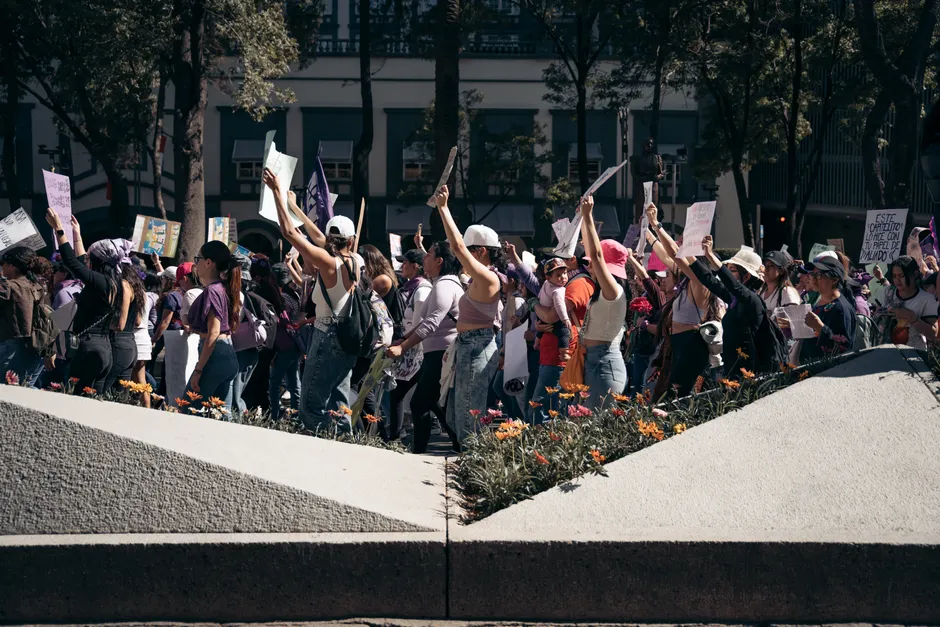
India's Cockroach Janta Party Camps at Jantar Mantar, Demands Education Minister's Resignation

The Cockroach Janta Party has set up a sustained protest at Jantar Mantar in New Delhi, demanding the resignation of Union Education Minister Dharmendra Pradhan over examination irregularities and paper leaks, Al Jazeera reported on 21 June 2026.
The party's choice of Jantar Mantar is deliberate. The 18th-century observatory in central Delhi has long served as the designated protest zone within the capital — a pressure valve that successive governments have tolerated precisely because its symbolic weight is high and its proximity to Parliament keeps demonstrators visible without granting them access. Camping there, rather than staging a single-day rally, signals an intent to sustain pressure until a concrete political response is forthcoming.
Pradhan has presided over the education portfolio during a period of recurring controversy around high-stakes national examinations. Paper leaks in competitive entrance tests are a structurally embedded problem in India's examination ecosystem, where the stakes — admission to medical colleges, engineering institutes, civil services — are existential for millions of aspirants. When leaks occur, the damage is twofold: it compromises the cohort that sat the exam legitimately, and it erodes institutional credibility in a system where meritocratic certification carries enormous social weight.
The Cockroach Janta Party occupies an unusual niche in Indian opposition politics. Its name and branding trade on the imagery of resilience and indestructibility — a rhetorical posture that positions the party as a persistent irritant to established power rather than a conventional electoral challenger. Whether the party holds significant parliamentary representation or functions primarily as a movement-style pressure group shapes how much direct leverage it can exert. At Jantar Mantar, however, formal seat counts matter less than the media and public-opinion dynamics the protest can generate.
Calls for a minister's resignation over examination failures are not new in Indian politics, and they rarely produce the outcome demanded in the short term. The BJP-led central government has generally absorbed such pressure through a combination of committee announcements, assurances of inquiry, and reliance on the opposition's fragmentation. What matters more in the medium term is whether the protest catalyzes a broader coalition — student groups, opposition parties, parent associations — into coordinated action, and whether any judicial intervention forces the government's hand on accountability mechanisms.
The structural question underneath the immediate political theatre is whether India's examination architecture can be reformed at all without a wholesale rethink of how high-stakes testing is administered, digitally secured, and independently invigilated. Paper leaks are typically downstream symptoms of systemic failures: inadequate chain-of-custody protocols, underpaid administrative staff vulnerable to inducement, and an absence of criminal deterrence sufficient to change the risk calculus for those who profit from advance access. A minister's resignation addresses the political accountability layer, but leaves the operational layer intact.
For now, the Cockroach Janta Party's encampment keeps the issue on the news cycle as the examination season winds down — a moment when affected students, who have the most direct grievance, are still mobilized and visible. Whether that window translates into durable policy pressure, or dissipates as the next news event displaces it, is the operative question.