UK Baby Banks Served 400,000 Children in 2025 as Child Poverty Holds at 4 Million
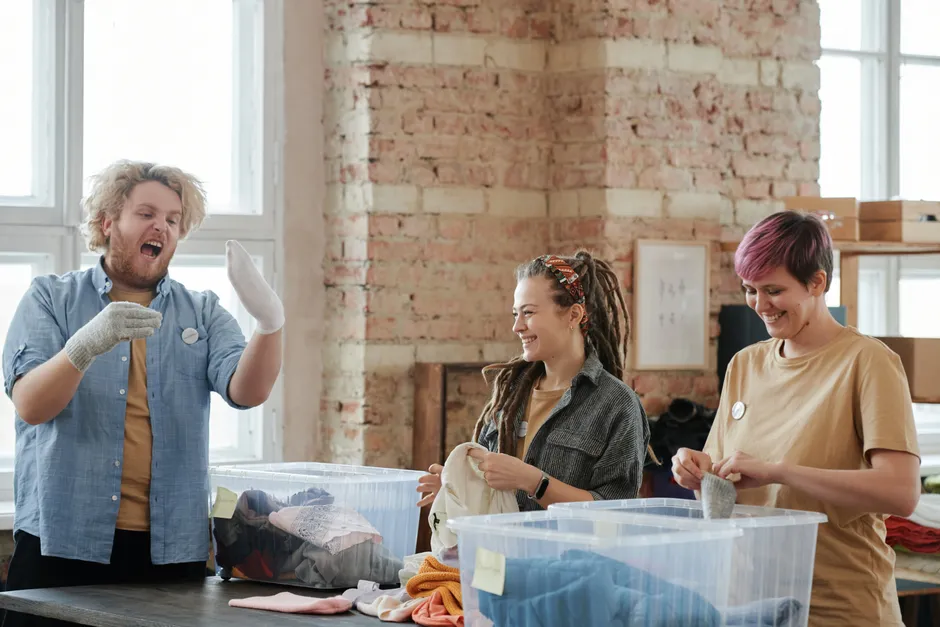
UK baby banks distributed more than 3.5 million essential items — clothes, nappies, prams, and cots — to roughly 400,000 children in 2025, an 11% rise on the previous year, according to data from the Baby Bank Alliance and Little Village. The figures land against a backdrop of persistently high child poverty: new data cited by Save the Children UK puts 4 million children in poverty in 2024–25, with London carrying the highest rate in England at 38%.
Baby banks operate as community redistribution networks, collecting donated or surplus infant and toddler goods and channelling them to families who cannot afford them. They sit outside the formal welfare architecture — no means-testing bureaucracy, no conditionality — which partly explains their rapid expansion during a period when real wages have stagnated and benefit uprating has consistently lagged inflation.
The 11% year-on-year growth in children reached is not a marginal statistical fluctuation. It tracks directly with deteriorating household finances among families with young children, particularly in urban areas where housing costs consume an outsized share of income. London's 38% child poverty rate — the highest in England — makes the capital the natural epicentre of demand, though the network now reaches well beyond it.
Royal Profile, Celebrity Reach
The Princess of Wales gave formal backing to UK baby banks this year, lending the kind of institutional visibility that charity networks typically struggle to generate independently. Separately, author and podcaster Giovanna Fletcher partnered with Save the Children UK and the Baby Bank Alliance in 2025 to amplify awareness of rising demand. High-profile endorsements of this kind carry measurable fundraising and volunteer recruitment effects, though their impact on the structural drivers of need is, by definition, limited.
Save the Children's involvement spans both the domestic poverty agenda and its international programmes. The organisation launched what it describes as the world's first research centre dedicated to child blast injuries — a direct response to the documented scale of explosive weapons use in contemporary conflicts. In Gaza in 2024, the use of explosive weapons affected an average of 475 children per month, or roughly 15 per day, according to Save the Children's own data. The blast injury research centre and the baby bank work sit under the same organisational umbrella, a juxtaposition that captures the range of acute threats to child welfare the sector is currently navigating.
Structural Pressure, Not a Temporary Spike
The deeper question the baby bank numbers raise is whether this level of need is a transient response to a cost-of-living shock or a structural feature of how the UK's welfare and labour market systems now function for families with young children. The trajectory — an 11% increase in one year, with demand concentrated in the highest-poverty areas — is more consistent with entrenchment than with a temporary peak.
Child poverty at 4 million is not a new figure in absolute terms; the UK has circled this level for several years. What the 2024–25 data reinforces is that policy interventions to date have not moved the headline number meaningfully. The two-child benefit cap, housing benefit shortfalls relative to market rents, and stagnant early years funding are the structural levers that practitioners in this space point to most consistently. Baby banks absorb some of the material hardship those gaps create. They do not close the gaps themselves.
For those working across child welfare, poverty policy, or the voluntary sector, the 2025 data confirms what the operational picture has been signalling for some time: demand on informal redistribution networks is growing faster than any policy intervention is currently reducing the underlying need. The baby bank model has proven its capacity to scale. Whether that scalability is something to welcome or to worry about depends entirely on what question you think it answers.