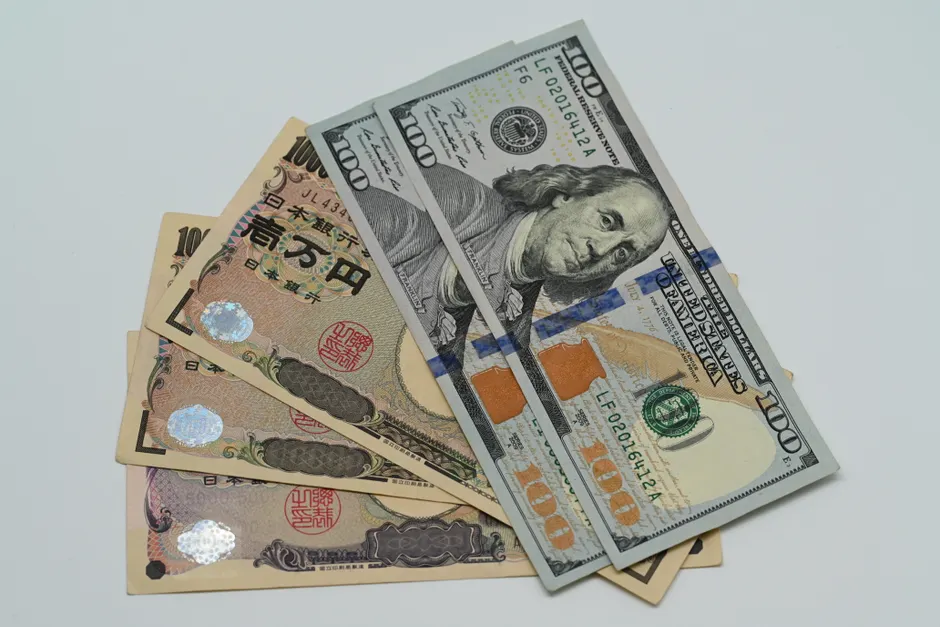
Dollar Strength Accelerates as Long-End Yields Break Through 5%

The WSJ Dollar Index advanced 0.19% to 96.97 on Sept. 24 as Asian currencies weakened broadly while Treasury yields surged. WSJ
The move extended a sharp weekly run. The index was up 0.90 point, or 0.93%, over the prior five trading days. That was the largest five-day point and percentage gain since Friday, Sept. 18, 2026.
The Sept. 24 print capped a three-session progression. On Sept. 22, the index rose 0.09% to 96.19 as Asian currencies consolidated ahead of the Trump-Xi meeting. On Sept. 23, Asian currencies consolidated again amid falling oil prices, with the dollar rising to an eight-week high and Treasury yields jumping to multiyear highs.
G-10 price action on Sept. 23 captured the dollar bid. The euro dropped 0.55% to $1.1384, after trading as low as $1.1367, its lowest since July 28. The dollar was 0.61% firmer against the yen at 158.33. Reuters
Rates provided the impulse. The benchmark 10-year Treasury yield jumped 13.89 basis points to 5.106% on Sept. 23. That level was the highest since 2007, and the single-day move was the biggest one-day increase since April 2025. The front end moved with it. The 2-year Treasury note yield jumped more than 11 basis points to 4.889% on the same day. CNBC
The scale of the repricing stands out against early September levels. On Sept. 2, the 10-year yield shed 0.2 basis point to 4.794%. On Sept. 17, it fell 6.55 basis points to 4.939%. The Sept. 23 surge to 5.106% therefore reversed a lower, range-bound configuration in a single session and pushed nominal long-end yields through the 5% threshold.
Dollar positioning had already been firming. The dollar was holding near a two-week high on Wednesday, a lower-priority undated observation that fits the sequence from consolidation to breakout.
The broader context here is a familiar rates-to-FX transmission, but operating at the long end rather than through front-end policy repricing alone. A 13.89 basis point steepening impulse at 5%+ nominals tightens financial conditions through duration, mortgage and corporate discount rates, and cross-currency hedging costs. For Asian FX, that combination compresses carry and raises the cost of short-dollar funding. Consolidation gave way to broad weakening once the long end broke.
In my view, the structure of the move matters more than the index level itself. An eight-week high in the dollar alongside multiyear highs in yields points to a joint tightening in both the currency and duration channels. The five-day gain in the WSJ Dollar Index quantifies momentum, yet momentum is not direction. What to watch is whether the 10-year holds above 5% and whether the 2-year sustains near 4.89%, because persistence at those levels changes forward hedging ratios and term premium assumptions. A reversal would still leave the Sept. 23 rate shock in realized volatility and value-at-risk models.
Looking at what this means for portfolio construction, the event compresses the usual diversification between dollar longs and long duration. Both legs repriced against risk. Short-term, that favors liquidity and shorter-dated exposure until intraday ranges in both Treasuries and dollar-Asia stabilize.