Bedford Train Collision: One Dead, RAIB Interim Report Due as Red Signal Failure Examined
A collision between two passenger trains in the Bedford area on June 20, 2026 killed one person, with investigators now focused on a passed red signal as a probable causal factor, according to The Guardian.
The Rail Accident Investigation Branch (RAIB) is conducting a full investigation into the incident and has an interim report due by June 26 — two days from the time of writing. That compressed timeline reflects standard RAIB practice for serious accidents: interim findings are not a verdict on causation but a mechanism to flag any immediate safety actions the industry must take before the full inquiry concludes, which typically takes twelve to eighteen months.
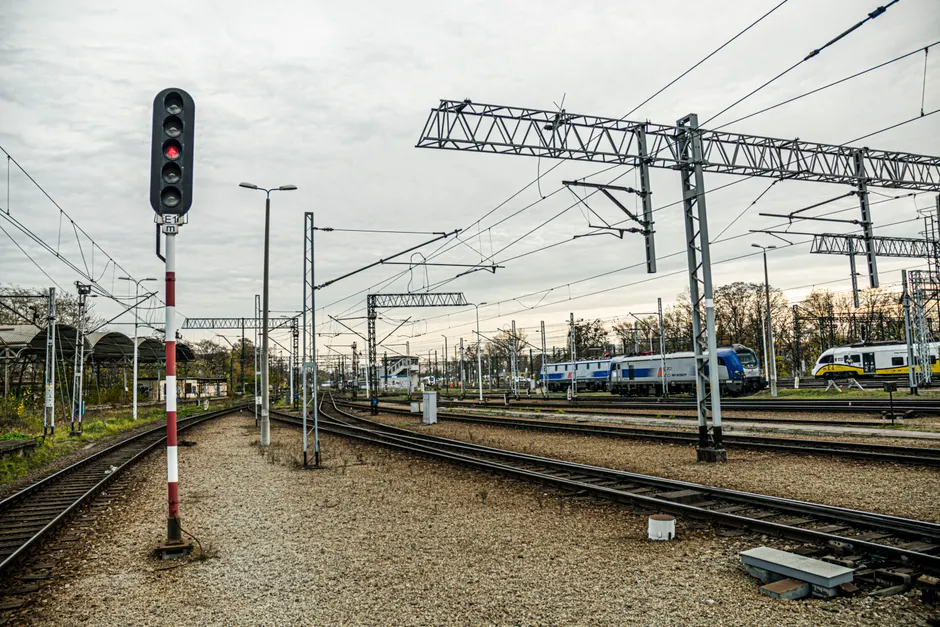
A signal passed at danger (SPAD) is among the most scrutinised event types in UK rail safety. The sector has layered successive mitigation systems over the past three decades — most notably the Train Protection and Warning System (TPWS), which was mandated across the national network following the 1999 Ladbroke Grove disaster that killed 31 people. TPWS automatically applies brakes when a train overruns a red signal or approaches one above a threshold speed. Whether the system was active, functioning, or fitted on the specific rolling stock and signal involved in the Bedford collision is a question the RAIB will be expected to address directly.
The UK is also mid-rollout of the European Train Control System (ETCS), a continuous in-cab signalling architecture that supersedes lineside signals entirely on upgraded corridors. Bedford sits on the Midland Main Line, a route that has been under electrification and upgrade discussion for years; the state of digital signalling deployment on the specific section involved will form part of the technical picture investigators reconstruct.
One fatality at this stage is the confirmed figure. Serious injury counts and the precise composition of the trains — operator, rolling stock class, consist length — have not been confirmed in verified sources available at publication. The RAIB interim report, if released on schedule on June 26, will likely clarify the sequence of events, the signals and protection systems in scope, and any emergency instructions issued to operators.
The broader regulatory context matters here. The Office of Rail and Road (ORR) holds statutory responsibility for safety enforcement and will be monitoring RAIB findings before determining whether any operator or infrastructure manager faces a formal investigation under health and safety law. Network Rail, as infrastructure manager for the Midland Main Line, and whichever train operating company operated the units involved will both be required to cooperate fully — a legal obligation, not a courtesy. The division of accountability between infrastructure and operations has historically been one of the more contested dimensions of post-Hatfield and post-Potters Bar inquiries, and RAIB will be careful to map it precisely before the interim report is published.
For rail safety professionals and operators, the next 48 hours turn on one document. The interim report's safety actions — if any are issued — carry immediate operational weight. Any instruction to re-examine SPAD risk at specific signal types, or to review TPWS coverage gaps, would require rapid response across the network. That is the instrument's purpose: not to assign blame but to stop a recurrence while the full picture is still being assembled.