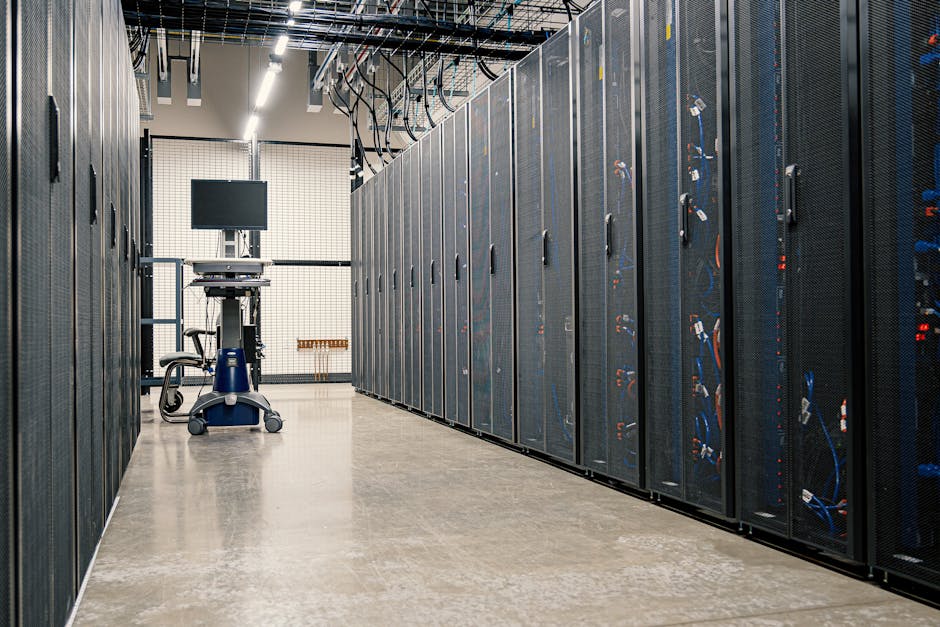
Data Centers Are Now a Ballot-Box Issue — and Politicians Are Paying the Price
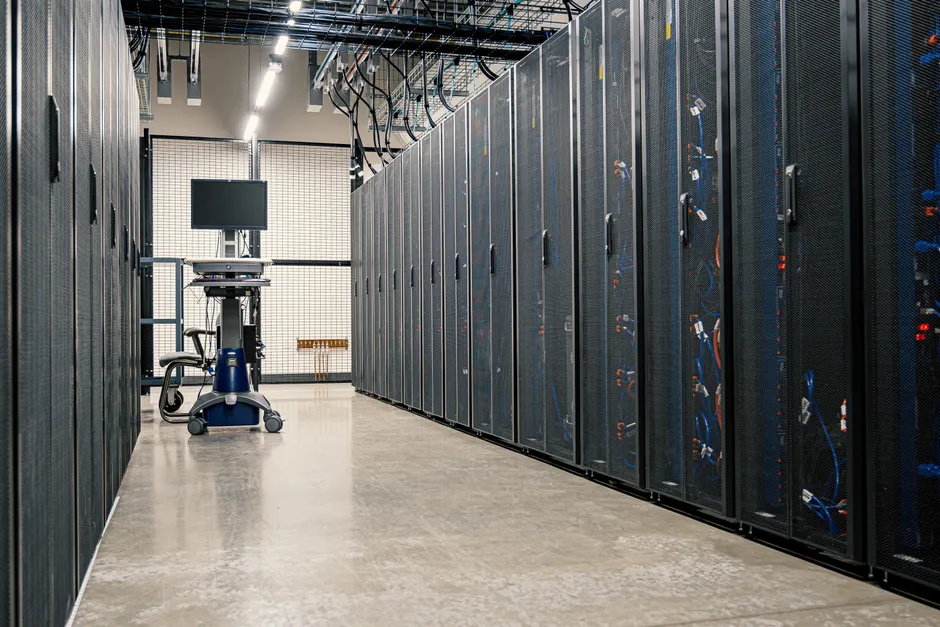
A Utah county commissioner has attributed his loss in a Republican primary election directly to a large data center project in his jurisdiction, the latest in a series of electoral consequences tied to AI infrastructure development across the United States.
The commissioner's defeat is not an isolated incident. In June 2023, data center policy drove a political upset in Prince William County, Virginia, one of the most data-center-dense corridors in the world. What was once a zoning and planning issue confined to county meetings has crossed into primary politics — and the partisan makeup of those affected does not sort neatly.
Gallup polling published in May 2026 found that seven in ten Americans oppose construction of an AI data center in their local area, with 48% describing themselves as strongly opposed. That level of intensity — nearly half the country in strong opposition — is the kind of number that moves primaries, where turnout is low and motivated single-issue voters punch well above their demographic weight.
The opposition is genuinely bipartisan. By late 2025, Reuters reported a coalition of farmers, environmentalists, and homeowners in central Pennsylvania pushing back against the Trump administration's drive to accelerate AI data center construction — a coalition that crossed partisan lines and united constituencies that rarely share a petition. A Harvard Gazette analysis from April 2026 identified the recurring pressure points: rising local power rates, substantial water consumption, and a range of environmental concerns amplified by the sheer pace of build-out.
That build-out is not incidental. Microsoft alone disclosed plans to invest approximately $80 billion in FY 2025 on AI-enabled data center capacity for model training and inference deployment. Google's own Virginia impact report documented community concerns about noise pollution and the proximity of facilities to schools, homes, and historic sites — concerns that have only grown louder as the construction pipeline has widened.
The Infrastructure-Politics Gap
The political economy here is worth laying out plainly. The case for large-scale AI infrastructure is made at the national and corporate level: economic competitiveness, job creation, technological leadership. The costs are experienced locally: land-use changes, grid pressure, water draw, truck traffic, and the visual and acoustic footprint of facilities that run around the clock. That mismatch between where the benefits are aggregated and where the burdens land is a structural feature of most heavy infrastructure, from highways to power plants to semiconductor fabs. Data centers are not unique in this respect. What is different is the speed and geographic concentration of deployment.
Northern Virginia already hosts more data center capacity than any comparable region on earth. Utah, central Pennsylvania, and rural Georgia are now on the same growth trajectory, compressing into a few years what took Northern Virginia more than two decades. Local planning systems, grid operators, and water utilities were not designed to absorb that velocity.
The electoral signal coming out of Utah and Virginia suggests that communities which feel bypassed by that process — consulted late if at all, offered economic benefits that do not materialize locally in visible ways — are willing to use their votes to register the complaint.
Worth flagging: the political backlash does not map cleanly onto opposition to AI itself. Gallup's question concerned local construction, not the technology. Many of the Pennsylvanians pushing back were not opposed to AI data centers categorically; they objected to placement, process, and the adequacy of local compensation. That distinction matters for how the industry and policymakers respond. A siting and community-engagement problem is tractable. A wholesale political rejection of AI infrastructure would be something else entirely.
The industry has navigated versions of this before — cell towers, wind farms, and natural gas pipelines all generated local opposition that eventually shaped federal and state regulatory frameworks. The difference is that AI infrastructure is moving faster than any of those precedents, and the political temperature is rising in an election cycle where both parties are watching closely.
Politicians who approved data center projects expecting economic-development credit are instead finding themselves on the wrong end of a turnout problem. That dynamic, more than any single primary result, is likely to reshape how local officials engage with site-selection processes going forward.