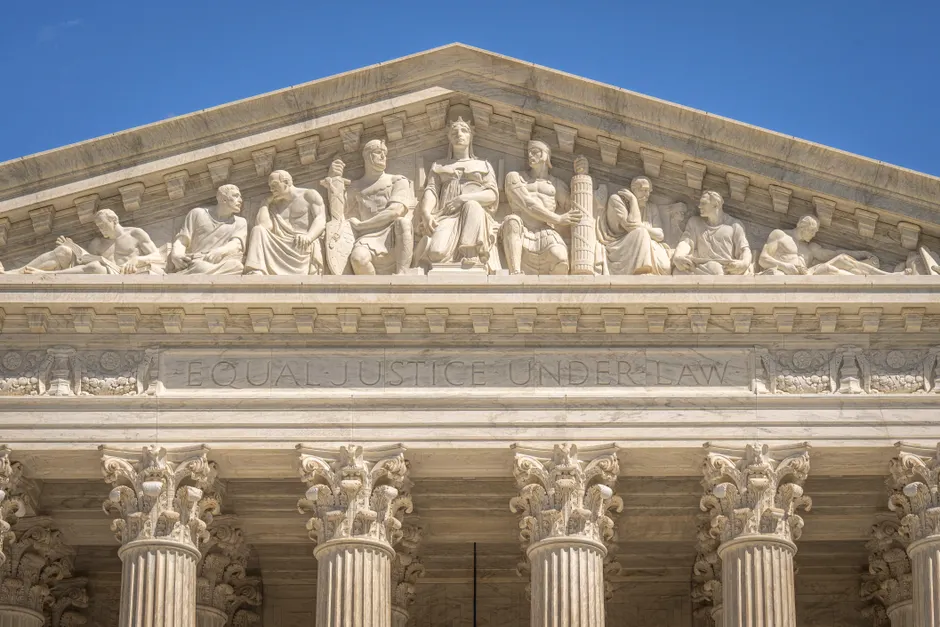
Supreme Court Rules 5-4 States May Count Mail Ballots Received After Election Day

The Supreme Court ruled 5-4 on June 29, 2026 that states may accept mail-in ballots in federal races after polls close on Election Day, resolving a question that had divided lower courts and shadowed election administrators in roughly 30 states. The decision in Watson v. Republican National Committee (No. 24-1260) settles — at least for now — whether postmark-by-Election-Day ballot-receipt windows are constitutionally permissible.
Background and the Road to Watson
The case arrived on the heels of Bost v. Illinois State Board of Elections (No. 24-568), decided January 14, 2026, in which Congressman Michael Bost and two other federal candidates sued the Illinois State Board of Elections, arguing that counting ballots arriving after Election Day was improper under federal law. The Bost litigation established the doctrinal fault lines the Court was then asked to resolve more broadly in Watson.
The geographic stakes were substantial. Approximately 30 states count at least some absentee ballots mailed by Election Day but received afterward, according to the Watson majority opinion. Mississippi, for example, accepts absentee ballots up to five business days post-Election Day. A ruling for the RNC would have required those states to revamp their statutes before the 2026 midterms — a compressed and logistically demanding timeline.
What the Court Decided
The 5-4 split tracks the Court's familiar ideological fault lines, though the precise alignment of the majority and dissent is not yet detailed in verified public reporting. The core holding is that states retain authority under their own election laws to establish receipt windows beyond Election Day for mail ballots in federal contests. The federal statutory framework — principally the uniform Election Day statute — does not preempt that state-level discretion, at least as the majority reads it.
The RNC had argued that federal law mandates a single national Election Day, and that any ballot received after that date is effectively cast outside the statutory window. That argument did not prevail. The majority's logic, as it emerges from the case materials, turns on the distinction between the act of voting — which occurs when the voter marks and mails a ballot — and the administrative act of receiving that ballot, which may legitimately occur afterward.
Practical and Political Fallout
For election administrators, the ruling provides durable authority for existing receipt-window policies. States that have already built five- or seven-day post-Election Day windows into their canvassing timelines can preserve them without further legislative action. States that had deferred statutory changes pending the outcome now have the clearance to proceed.
The political valence is layered. Republicans, through the RNC, brought both Bost and Watson in part because extended receipt windows tend to benefit high-volume mail-ballot users — a demographic that has skewed Democratic in recent cycles. A ruling requiring same-day receipt would have reduced the pool of counted ballots in states like Pennsylvania, Michigan, and Wisconsin. The Court's holding forecloses that avenue, at least under current statutory interpretation.
The Brennan Center had flagged during oral arguments — held in March 2026 — that several factual premises circulating in the case involved contested characterizations of mail-ballot fraud rates and delivery reliability. The majority's reasoning, whatever its precise contours, will be scrutinized closely on those empirical points once the full opinion circulates.
For practitioners in election law, the immediate task is reading the majority opinion against the dissent to identify any carve-outs or limiting principles. A 5-4 decision on a statutory question leaves open the possibility of future constitutional challenges, or of Congress amending the Election Day statute if the political arithmetic shifts. Neither avenue is fast. For the 2026 election cycle, Watson is the operative rule.