Venezuela Earthquake: 920 Dead, U.S. Mobilizes $150 Million as International Aid Flows In
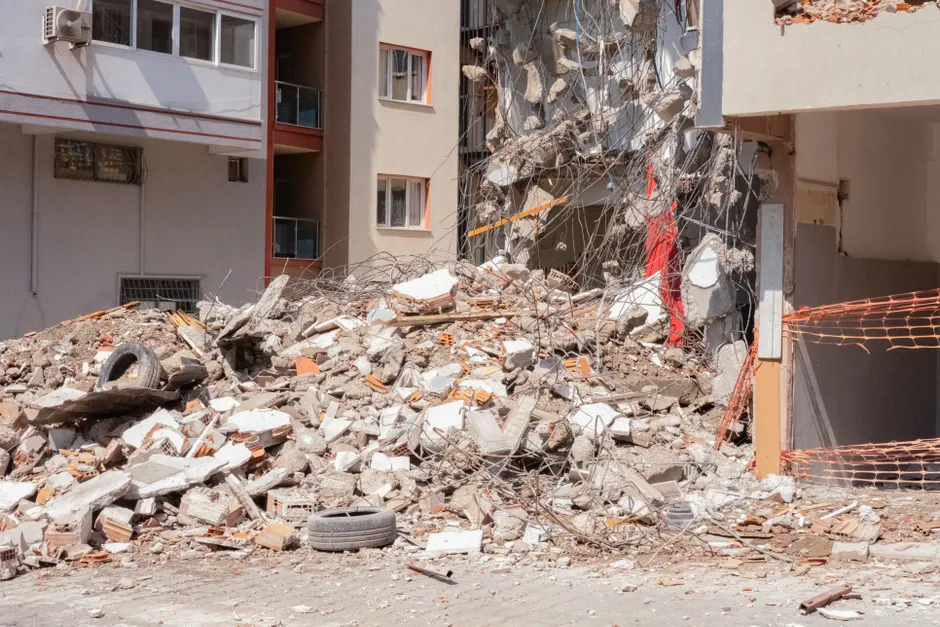
At least 920 people were dead and more than 3,000 injured by June 26, 2026, after a magnitude 7.1 earthquake struck the Venezuelan state of Yaracuy at 6:04 PM local time on June 24, according to the U.S. Geological Survey. A secondary seismic event was recorded off Venezuela's northern coast the same evening. The death toll places this among the most destructive earthquakes in Venezuelan history; the country's last major seismic disaster of comparable scale was the 1967 Caracas earthquake, which killed roughly 240 people.
Yaracuy, an inland agricultural state in Venezuela's north-central corridor, sits near the junction of several fault systems associated with the South American and Caribbean plate boundary — a seismically active zone that has generated damaging events for centuries. A 7.1-magnitude strike in that region carries outsized destructive potential: the state's building stock, much of it informally constructed, is poorly suited to absorb lateral loading of that magnitude, and Venezuela's prolonged economic contraction has hollowed out civil protection infrastructure over the past decade. Search-and-rescue capacity inside the country was visibly strained within hours of the event.
International Response
International assistance began mobilizing within 24 hours. Reuters reported that emergency aid from multiple countries was already in transit by June 25. The UN Human Rights Council, meeting in Geneva, held a minute of silence on June 25 in memory of the victims — an unusual procedural gesture that signals the breadth of international attention the disaster drew.
The most consequential external commitment came from Washington. The Trump Administration announced $150 million in total assistance to Venezuela, including $50 million in new bilateral awards channeled through implementing partners. Secretary of State Marco Rubio made public remarks on the response on June 25, and President Trump addressed the disaster directly. By June 29, the State Department confirmed that relief supplies had been delivered to affected communities through those partnerships — the most recently confirmed operational status of the U.S. effort.
The Diplomatic Dimension
The scale and speed of the U.S. commitment warrants close reading. Washington and Caracas have had no normalized diplomatic relations for years; the U.S. has maintained sanctions on the Maduro government and does not recognize its legitimacy. Routing $150 million through implementing partners — NGOs and international organizations rather than Venezuelan state agencies — is the standard mechanism for delivering humanitarian aid without conferring political recognition or handing funds to a sanctioned government. That structural choice is not new, but the dollar figure is substantial by any measure.
Whether this creates any durable channel between Washington and Caracas depends on factors well beyond the earthquake itself: the Maduro government's posture toward U.S.-affiliated aid organizations on the ground, the speed and visibility of delivery, and whether either side chooses to instrumentalize the response. Disaster diplomacy has occasionally loosened frozen bilateral relationships — the 2004 Indian Ocean tsunami opened brief U.S.-Iran and U.S.-North Korea contact windows — but those openings proved ephemeral. Venezuela's political situation is structurally different and considerably more constrained.
What is verifiable now: the humanitarian need is acute, international mobilization has been rapid, and the U.S. has committed a significant sum through channels that keep it operationally engaged inside Venezuela without formal government-to-government interaction. The casualty count, still at 920 dead as of June 26 reporting, is likely to rise as rescue operations reach more remote communities in Yaracuy. The state's road and communications infrastructure, already degraded before June 24, will slow that accounting.


