Alexa Tablet 12 Pro vs 13-inch iPad Pro: Amazon Trades OLED Brightness for Price and Play Store Reach

Amazon's Alexa Tablet 12 Pro is the most premium model in the company's new Alexa Tablet lineup, priced at $550. That puts it in direct comparison with Apple's 13-inch iPad Pro, with the 1TB configuration priced at $2,199. Engadget
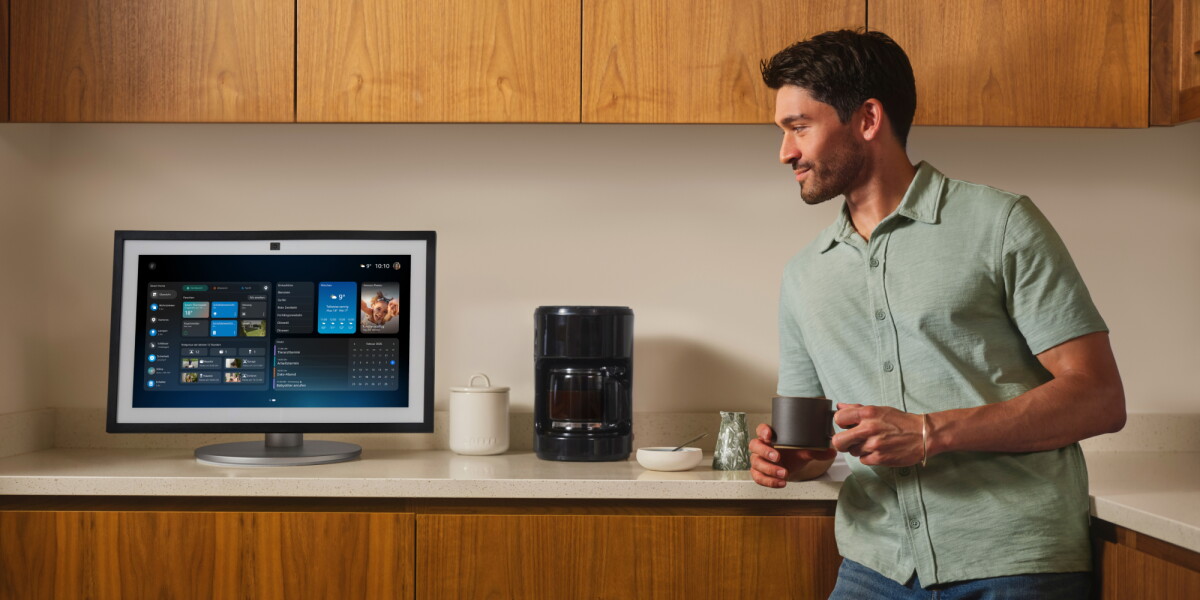
The Alexa Tablet 12 Pro uses a 12-inch LCD touchscreen at 2,800 x 1,840 resolution, 280ppi, 500 nits brightness and 120Hz refresh rate. The 13-inch iPad Pro uses an OLED screen at 2,752 x 2,064 resolution, 264ppi and 120Hz refresh rate. Pixel density favors Amazon by a small margin. Panel architecture favors Apple. Both support keyboard and stylus accessories on the Amazon side, bringing the 12 Pro into the detachable productivity category Fire tablets never seriously contested.
The larger gap is luminance and contrast behavior. Apple uses a tandem OLED panel rated at 1,000 nits, double the 500 nits of the Alexa Tablet 12 Pro. Tandem structures stack two emissive layers to sustain higher full-screen brightness with lower current density per layer, which helps with HDR headroom, burn-in mitigation and power efficiency at high output. LCD cannot match per-pixel black levels. It can still deliver sharp text and adequate color for office work, media playback and browser-based workflows.
Amazon is compensating with surface treatment rather than raw output. Its Nanomatte finish, co-developed with Corning to reduce glare, ships on the 12 Pro as a diffuse layer intended to cut specular reflections. Apple's nano-texture glass takes a similar etched-glass approach, but availability is narrow. It is only offered on the 1TB and 2TB models of the 11-inch or 13-inch iPad Pro, which pushes the price of a low-reflection iPad well above $2,000.
The platform change matters more than any single display metric. The Alexa Tablet 12 Pro offers the Play Store, while prior Fire Tablets were limited to the Amazon Appstore. For developers and IT buyers, that removes sideloading workarounds, forked SDK dependencies and app parity gaps that kept Fire hardware out of many enterprise device fleets. The shift follows reporting from August 2025 that Amazon planned to ditch its homegrown software for Android as part of a Fire tablet revamp, with a first Android-powered tablet planned for the following year. Reuters That reporting put the price of the upcoming tablet at around $400, below the $550 Amazon ultimately set for the 12 Pro.
Apple's side of the comparison rests on iPadOS and M-series silicon. The current 13-inch iPad Pro runs iPadOS and uses an M-series processor, and Apple introduced an iPad Pro powered by the M5 chip in October 2025. Apple The line comes in 11-inch and 13-inch sizes, in space black and silver, with what Apple calls the Ultra Retina XDR display. The earlier M4-based iPad Pro, unveiled in May 2024, had already moved the Pro line to OLED.
The broader context here is segmentation, not a direct performance contest. At $550 against $2,199 for a high-storage 13-inch iPad Pro, Amazon is not trying to match tandem OLED sustained brightness, M-series compute or the iPadOS pro app catalog. It is testing whether Play Store compatibility, a 120Hz high-density LCD, stylus and keyboard support, and anti-glare glass are sufficient for fleet deployments, field work, education and price-sensitive prosumer use. In this author's view, that is a rational wedge. Many tablet workflows are now browser, MDM-managed Android apps and video calls, where display quality thresholds are lower and unit cost dominates.
Worth flagging for technical buyers is lifecycle management. Play Store access simplifies patching and app distribution, but enterprise value will depend on kernel update cadence, years of security support, zero-touch enrollment and peripheral driver quality for keyboards and pens. Apple retains advantages in display calibration, performance per watt and mature tablet-optimized creative tools. Amazon's advantage is procurement scale. If the Nanomatte coating holds up to cleaning cycles and the LCD maintains uniform brightness at 120Hz, the 12 Pro could become a credible secondary device in shops that already standardize on iPad Pro for heavy work.