Amazon's Alexa Tablet 12 Pro Trades GPU for Readability

The $549.99 Alexa Tablet 12 Pro reviewed by The Verge on Oct. 14 sits near the top of Amazon's new four-model Alexa Tablet line. The review focuses almost entirely on the display. That emphasis is deliberate.
Amazon positions the lineup from a $229.99 8-inch model to a $679.99 12 Pro configuration with Nanomatte coating and extra RAM. The unit tested, at $549.99, is the entry point to Nanomatte. Amazon's Devices newsroom lists the family under an announcement for new Alexa Tablets with Alexa+ built in, alongside a separate kids tablet family. The base 12 Pro was earlier listed as starting at $499, with the Nanomatte version starting at $549.99 The Verge.
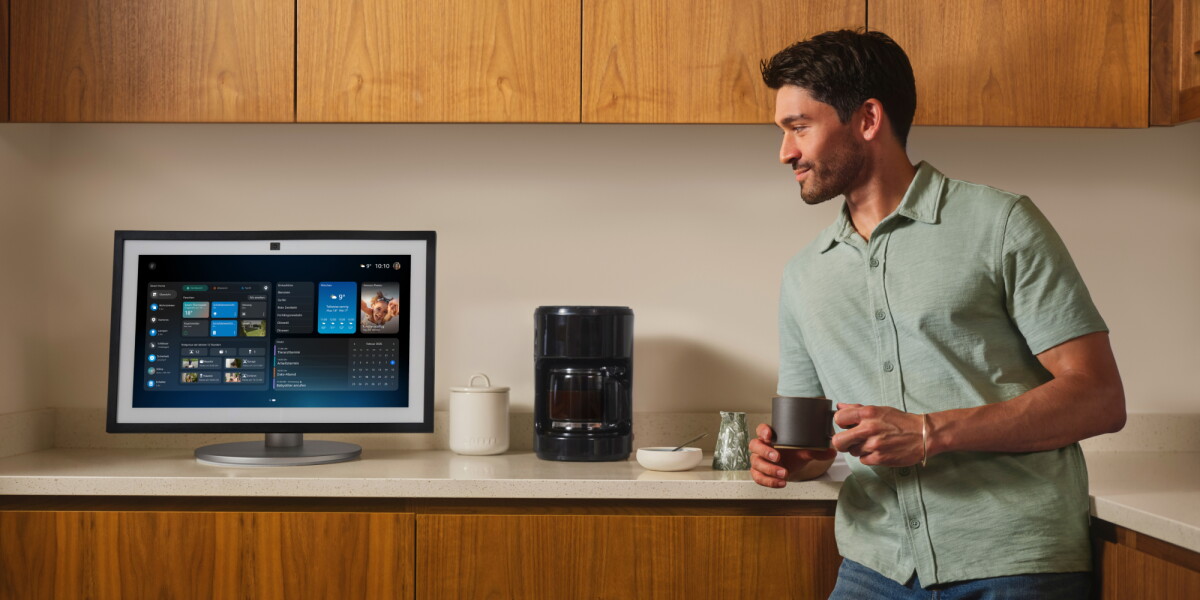
The panel itself is a 12-inch 2800 x 1840 unit with 120Hz refresh and a 3:2 aspect ratio. Amazon's developer specifications list it more precisely as 11.95 inches, IPS, with 128GB of UFS internal storage. Retail listings describe it as 2.8K at 280 PPI. Amazon partnered with Corning to etch the Nanomatte surface at a sub-pixel level to reduce glare The Verge.
Amazon wanted that glare story tested in harsh light. It held a briefing in a brightly sunlit room to demonstrate the 12 Pro. The tactic makes sense for this specific technology. Matte and etched-glass treatments live or die under direct reflection, not in a dark lab.
Display behavior
In regular use, The Verge found the 12 Pro reflects only a small sheen of light without losing sharpness and delivers very wide viewing angles. Text remains legible. Color holds up off axis. For a tech-literate buyer, the relevant detail is calibration. The review unit arrived with Boosted display mode turned on. Switching to Natural mode improved the picture.
There are trade-offs. The anti-glare texture produces shimmer with light text on a black background. Black levels also do not match Apple. iPad blacks are still blacker, in the reviewer's phrasing. The reviewer stated he prefers the 12 Pro's screen to any iPad he tried, with one clear caveat. He did not have an iPad Pro with nano-texture glass to compare.
That caveat matters. Etched glass versus etched glass is the direct comparison. Without it, the preference applies to glossy iPads only.
Silicon, chassis and software
The 12 Pro uses a MediaTek Dimensity 8400, an 8-core CPU. Retail documentation describes the Matte version processor as a 4nm 8-core chip. Memory configuration has shifted across early documents. Amazon's developer specifications list 8GB and 16GB RAM options. An earlier hands-on reported 8GB or 12GB of RAM. The Matte 128GB retail listing specifies 8GB RAM with 128GB storage.
Physically, the 12 Pro is 6.5mm thick and weighs 550 grams. It is offered in Graphite. Amazon lists quad Dolby Atmos speakers, Alexa+ built in, and all-day battery life. For enterprise and Android developers, one specification carries particular weight. The devices access Android apps through the Play Store The Verge.
That detail changes the support equation. Play Store access means standard MDM workflows, familiar app packaging, and no sideloading for mainstream commercial software.
Performance is not the selling point. In one graphics-heavy benchmark cited by The Verge, the current 13-inch iPad Pro scored about nine times higher than the Alexa Tablet 12 Pro. The gap is large. It points to different design centers. One SoC targets sustained peak GPU throughput and pro creative workloads. The other targets power efficiency and cost at acceptable UI fluidity.
Looking at what this means for buyers and for tablet design, the interesting choice is where Amazon spent its budget. It did not chase Apple on GPU. It spent on optical stack, refresh rate, aspect ratio, and glare mitigation. In this author's view, that is a pragmatic read of how large tablets are actually used.
Most 12-inch tablets spend their lives in browsers, documents, video calls, PDFs, and video playback. Glare, viewing angle, and 3:2 vertical space affect those hours every day. Peak graphics scores do not. I watched my own children, now grown, do schoolwork on glossy tablets angled away from windows for years. Small optical improvements would have mattered more to them than benchmark headroom they never touched.
Worth flagging for IT buyers is the combination of 120Hz, IPS, UFS storage, and Play Store compatibility at $549.99 to $679.99. That is a usable field tablet, kiosk display, or shared conference device, provided the workload is not GPU bound. Developers targeting this hardware should test light-on-dark UI carefully. The reported shimmer on light text over black suggests dark mode needs optical validation, not just contrast checks.
The long arc here is encouraging. Glare-resistant, high-refresh panels were once confined to specialized or very expensive hardware. Bringing a Corning-etched sub-pixel treatment to a mid-priced consumer tablet broadens access. The 12 Pro does not lead on silicon. It leads, at least among the non-textured iPads tested against it, on readability in bright rooms. For many users, that is the more useful form of performance.