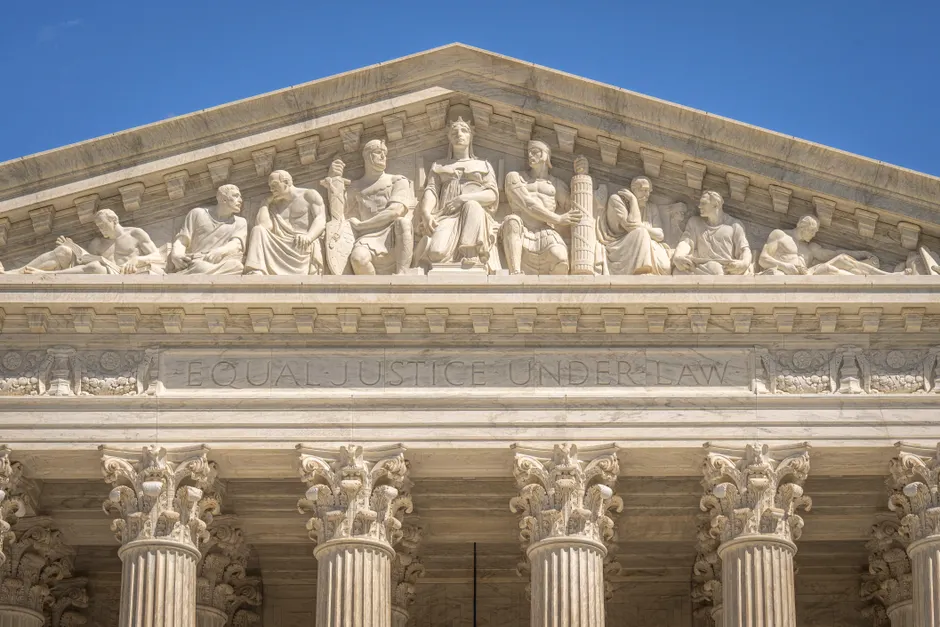
Connecticut's Assault Weapon Law Heads Toward Supreme Court Scrutiny

Connecticut's restrictions on selective-fire and semiautomatic firearms are now before the Supreme Court under Docket 25-421, with a Brief in Opposition filed on December 18, 2025. The petition puts the Court in a position it has, until now, largely managed to sidestep: ruling directly on whether state-level bans on a class of commonly owned semiautomatic rifles, pistols, and shotguns survive constitutional review under the framework it set in Bruen.
That framework arrived on June 23, 2022, when the Court decided New York State Rifle & Pistol Ass'n v. Bruen, holding that New York's proper-cause requirement for public carry violated the Fourteenth Amendment. More consequentially for cases like 25-421, Bruen discarded the two-step means-end scrutiny that lower courts had used to sustain assault weapon bans and replaced it with a single historical-tradition test: a firearms regulation is constitutional only if it is consistent with the Nation's historical tradition of firearm regulation. Circuit courts have since divided sharply on how that test applies to categorical bans on semiautomatic weapons.
A parallel docket, 25-5150, involves a separate challenge to the regulation of semi-automatic rifles as "assault weapons," with an amicus brief filed by Miller on September 19, 2025. The presence of an amicus filing at the cert stage is notable — it signals that organized Second Amendment litigants view these petitions as sufficiently cert-worthy to invest resources before the Court has even decided to take the cases.
The Statutory Scope of Connecticut's Law
Connecticut's statute covers a wide range of firearms. The assault weapon restrictions at issue in 25-421 apply to selective-fire firearms — those capable of firing more than one round per trigger pull — and to semiautomatic rifles, pistols, and shotguns that meet statutory feature criteria. The breadth of that definition matters legally: the broader the class of weapons covered, the harder it is for a state to argue that analogous historical regulations existed at the founding or in the Reconstruction era, the two reference points Bruen directs courts to consult.
Defenders of the law will lean on Bruen's own language distinguishing "weapons in common use for self-defense" from those that are "dangerous and unusual." The Brief in Opposition filed in December 2025 presumably engages that line, arguing that the banned weapons fall outside the protected core. Petitioners, conversely, will point to post-Bruen circuit splits as themselves a reason for the Court to grant certiorari — a standard cert consideration when federal appellate courts have reached irreconcilable conclusions on a constitutional question.
What the Court Does Next
The procedural posture is straightforward. The Brief in Opposition having been filed, the petition is ripe for conference. The Court can deny certiorari, leaving the lower court ruling in place; grant cert for full briefing and argument; or, less commonly, grant, vacate, and remand in light of intervening precedent.
The weight of the circuit split argument is real. Since Bruen, the Fourth, Seventh, and Ninth Circuits have reached differing conclusions on categorical semiautomatic bans, creating the kind of doctrinal instability that the Court typically resolves. If the justices take up 25-421 — or consolidate it with 25-5150 or a related petition — oral argument would likely fall in the October 2026 term.
The practical stakes extend well beyond Connecticut. A ruling that state assault weapon bans cannot survive the Bruen historical-tradition test would call into question similar statutes in California, Maryland, Massachusetts, and New Jersey, among others. A ruling in the opposite direction would give those states durable constitutional footing and effectively close off one of the most litigated frontiers in post-Bruen Second Amendment law.
What the docket record does not yet show is whether the Court is ready to supply that answer. Denial rates on Second Amendment petitions remain high even after Bruen, and the justices may prefer to let the circuits work through additional cases before committing to a rule. But with two active dockets and a mature circuit split, the conditions for a grant are closer to present than they have been at any point since 2022.