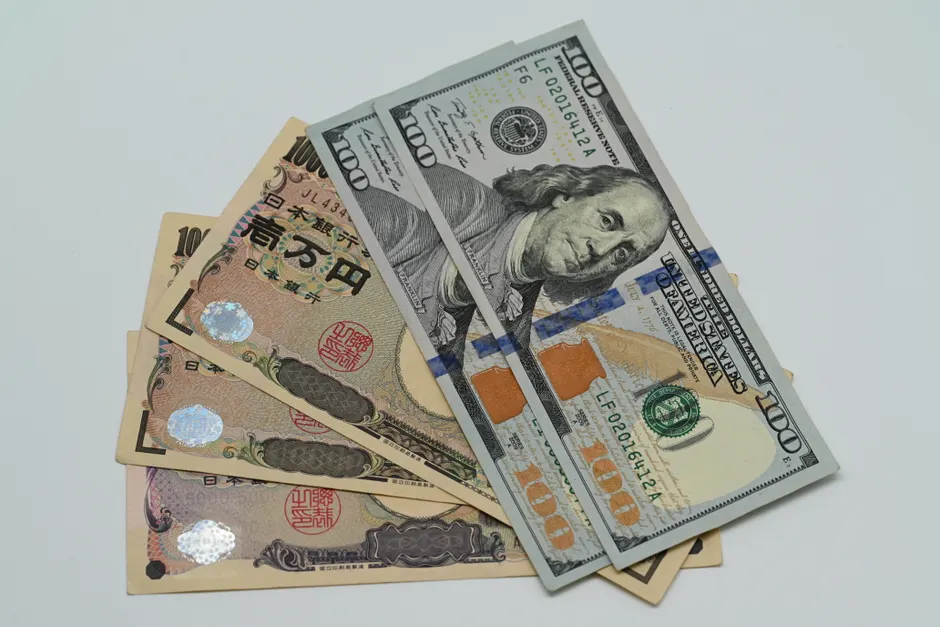
Yen Breaches 162 Per Dollar for First Time Since 1986, Posting Fourth Consecutive Quarterly Loss

The Japanese yen touched 162.41 per dollar in Tuesday morning trade on June 30, 2026, breaching the 162-per-dollar level for the first time since 1986 and extending a streak that now stands at four consecutive quarters of decline, according to Reuters. CNBC puts the intraday range at 162.27 to 162.50, with the Q2 drawdown running approximately 2%.
The structural driver is well understood: the Bank of Japan's persistently accommodative stance keeps the policy rate near zero while the Federal Reserve holds restrictive. That rate differential invites carry trades — borrow cheap in yen, deploy in higher-yielding dollar assets — and suppresses any organic bid for the currency. Four quarters of sequential weakening is not a repricing event; it is a grinding, directional flow that reflects the durability of that spread.
At 162-plus, the yen has now retraced to levels last seen when Japan's asset bubble was still inflating. The symbolism is not lost on Japanese policymakers. The government spokesman's comment that Japan would build "an economic structure resilient to forex swings," reported by Reuters, reads more as structural ambition than near-term market guidance — a framing that implicitly acknowledges intervention is not imminent, or at least not sufficient on its own to reverse the trend.
The intervention calculus is the live question for practitioners. The Ministry of Finance has authority to direct the Bank of Japan to sell dollars and buy yen, and it has used that authority before — most recently in 2022 and 2024 — with tactically meaningful but ultimately transient effect. Unilateral intervention against a rate-differential this wide is an expensive way to buy time, not a solution. Sustained yen appreciation requires either Fed cuts, a BoJ hike cycle that the domestic economy can absorb, or both. None of those are imminent on the current forward curve.
For import-dependent sectors and Japanese households, 162 yen per dollar means energy and food costs remain elevated in local-currency terms — inflation that the BoJ's own framework treats as cost-push rather than demand-driven, which in turn justifies continued accommodation and perpetuates the loop. For multinationals reporting in yen, the currency translation tailwind to overseas earnings is meaningful, and the Nikkei's relative resilience through the yen's slide partly reflects that dynamic. Japanese exporters price in USD and repatriate depreciated yen; the math flatters reported profits.
The critical threshold to watch is not a round number but the trajectory into Q3. If the yen continues depreciating through the summer with no BoJ policy signal, the political pressure on the Ministry of Finance to act — or to coordinate with the Fed, as in the 2024 episode — will intensify. A further leg lower risks feeding into inflation expectations in a way that complicates the BoJ's careful exit from its yield-curve-control legacy. A disorderly move would be a different problem entirely than a slow grind, and the pace over the last quarter has been grinding rather than disorderly — for now.