UK Publishes £15bn Defence Investment Plan Ahead of NATO Summit

The UK government released its Defence Investment Plan on June 30, 2026, committing £15 billion in new funding to transform the armed forces — a document Prime Minister Keir Starmer had confirmed in early June would land before the July 7 NATO summit in The Hague.
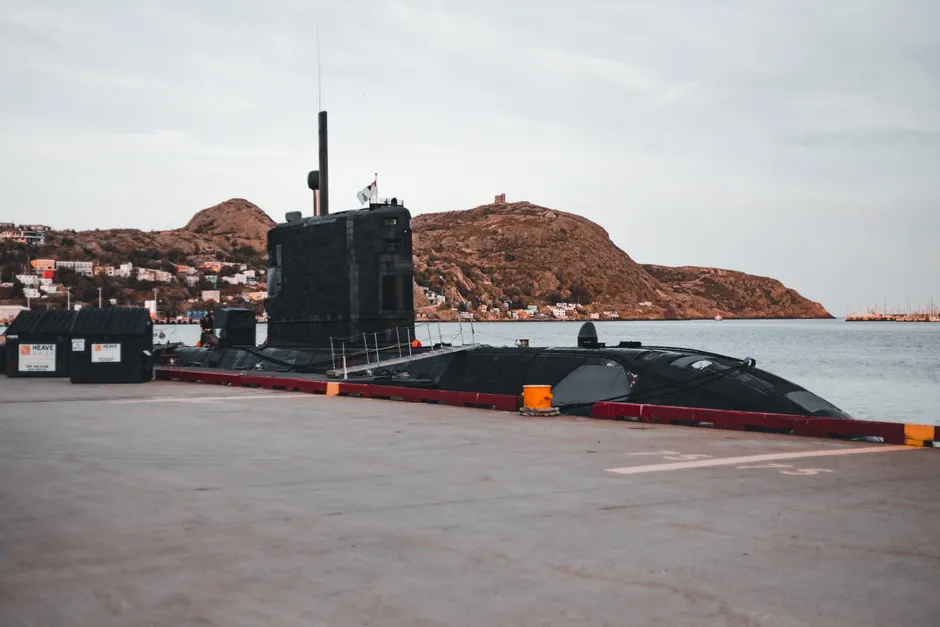
The plan charts a path from the current baseline toward 2.7% of GDP, with Starmer having pledged in February 2026 to reach 2.5% by 2027 and 3% in the subsequent spending period — framing it as the largest sustained increase in defence expenditure since the Cold War. The nuclear envelope is the centrepiece: more than £63 billion over four years has been allocated to strengthen the nuclear deterrent and fund both the Dreadnought-class SSBN programme and SSN-AUKUS. The Dreadnought programme alone carries a £41 billion valuation; it is designed to replace the Vanguard-class boats and sustain the Continuous At Sea Deterrent. A further £5 billion sits within the plan earmarked for ammunition stockpile regeneration, nuclear enterprise modernisation, and the next phase of AUKUS submarine work.
The Funding Gap Problem
Publication of the plan did not resolve the central fiscal question. The Treasury deferred full details of how the spending increase will be financed when the initial announcement was made. That gap has material political ramifications: Greater Manchester Mayor Andy Burnham is reportedly confronting a £4.7 billion shortfall in his first budget tied to the defence investment plan's funding architecture — a figure that puts the distributional mechanics of the uplift under immediate scrutiny.
The decision to defer fiscal detail is a pattern familiar from large UK defence uplifts. Announcing headline trajectory while leaving the offset question open buys political momentum — but it also invites the critique, already voiced by at least one former senior military officer, that plans lacking investor-grade detail are inadequate to deter capital into the UK's defence industrial base. For defence primes and their supply chains, certainty of contract pipeline matters as much as the percentage-of-GDP headline.
NATO Timing and Strategic Context
The July 7 summit is the immediate forcing function. Alliance members are under pressure to move toward — and in some cases beyond — 3% of GDP in defence spending, a threshold that has shifted from aspirational to politically operational since Russia's full-scale invasion of Ukraine. Publishing a credentialled plan before The Hague positions London to make concrete commitments rather than reiterate promises. The nuclear and AUKUS dimensions are also directly relevant to NATO's own deterrence posture discussions and to the separate but parallel Five Eyes geometry that underpins the SSN-AUKUS trilateral.
The broader picture here is that the UK is simultaneously managing three interlocking obligations: sustaining the independent nuclear deterrent through Dreadnought, delivering SSN-AUKUS on a timeline that Australia is watching closely, and rebuilding conventional readiness — particularly munitions depth — that two decades of post-Cold War drawdown eroded. The £63 billion nuclear allocation over four years crowds the fiscal space available for conventional force regeneration, which is where NATO's eastern flank allies will be most attentive.
Whether the Treasury's arithmetic catches up with the ambition before the summit will define whether this plan functions as a strategic signal or remains, as critics have framed it, an intention dressed as a commitment.