Idaho's Firing Squad Law Takes Effect July 1, Making It the Nation's Only State with the Method as Default
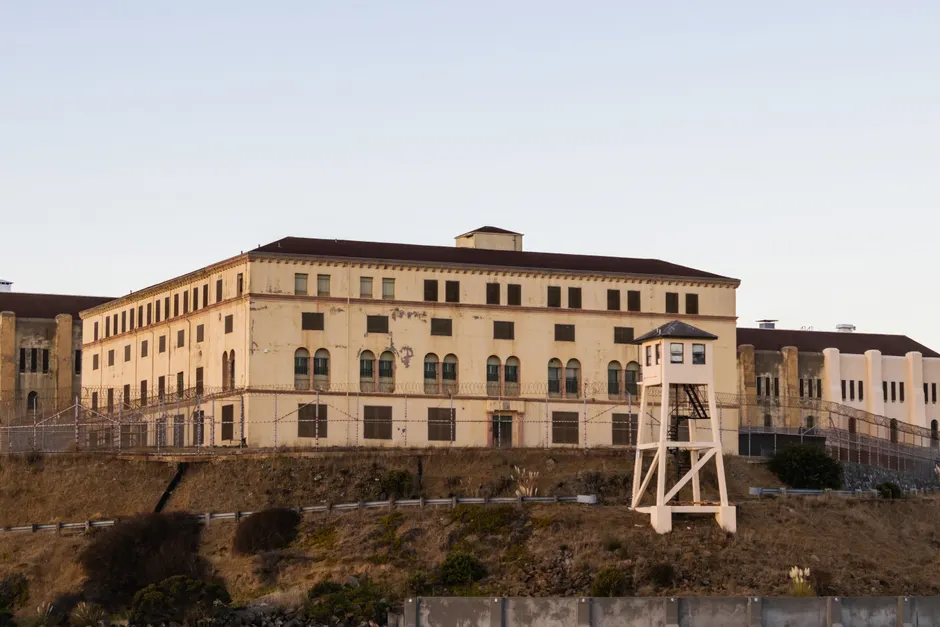
As of July 1, 2026, Idaho formally activates House Bill 37, making it the only U.S. state to designate the firing squad as its primary method of execution — a distinction no other state currently holds.
Governor Brad Little signed HB 37 on March 12, 2025, according to the Death Penalty Information Center. The statute included a deferred effective date specifically to give the Idaho Department of Correction time to retrofit its execution chamber. While five other states permit firing squad as an option, none have elevated it to default status. Idaho now does.
Facility Readiness
The physical infrastructure has been central to the implementation timeline. The IDOC has been retrofitting F-Block at the Idaho Maximum Security Institution to accommodate both firing squad and lethal injection executions — the latter remaining available as a fallback if a firing squad execution is not practicable, per Snopes' June 2026 fact-check. The F-Block retrofit update published by IDOC in June 2025 confirmed the dual-configuration design, with facility renovations targeted for completion by summer 2026.
Maintaining lethal injection as a secondary method matters operationally. Idaho's death row is not large, but the conditions under which a firing squad execution could be deemed "not possible" — equipment failure, staffing, legal injunction — give IDOC meaningful contingency flexibility without requiring separate statutory authorization.
Context: Thomas Creech and Prior Execution Attempts
Idaho's recent execution history shapes the urgency behind the method change. In February 2024, IDOC prepared to carry out the execution of Thomas Creech — convicted of first-degree murder in the arson death of his wife in Ada County — as documented in IDOC's execution updates from that date. That attempt did not proceed to completion; lethal injection access issues have repeatedly complicated Idaho's ability to carry out sentences. The turn to firing squad reflects, at least in part, the state's difficulty securing the drugs required for lethal injection protocols, a supply-chain problem that has affected multiple states over the past decade.
Federal Alignment
Idaho's shift does not occur in isolation. In April 2026, the U.S. Department of Justice readopted firing squads, electrocution, and lethal gas as permissible federal execution methods, broadening the federal toolkit beyond lethal injection for the first time in years. The federal move and Idaho's state law are legally independent, but together they signal a wider institutional turn toward methods that do not depend on pharmaceutical supply chains or manufacturer cooperation.
The practical logic is straightforward: firing squad executions require no proprietary drugs, no pharmaceutical manufacturer consent, and no compounding pharmacy. The constitutional question — whether the method constitutes cruel and unusual punishment under the Eighth Amendment — has not been definitively resolved by the Supreme Court, and litigation is the most likely near-term friction point for Idaho officials seeking to implement the law.
What July 1 actually triggers is the legal framework, not necessarily an imminent execution. Scheduling a firing squad execution still requires a warrant, an exhaustion of appeals, and operational readiness sign-off from IDOC. The chamber retrofit completing by summer 2026 aligns with the statute's effective date, but the gap between legal authority and a scheduled execution date could extend months or longer depending on pending litigation and the status of individual death-row cases.
What Idaho has done is resolve the policy question on its end. The next set of questions — constitutional, logistical, and political — belong to the courts, the federal government's evolving framework, and the states watching closely to see whether Idaho's implementation proceeds without injunction.