Kwibohora32: Rwanda Marks 32 Years Since the End of the Genocide
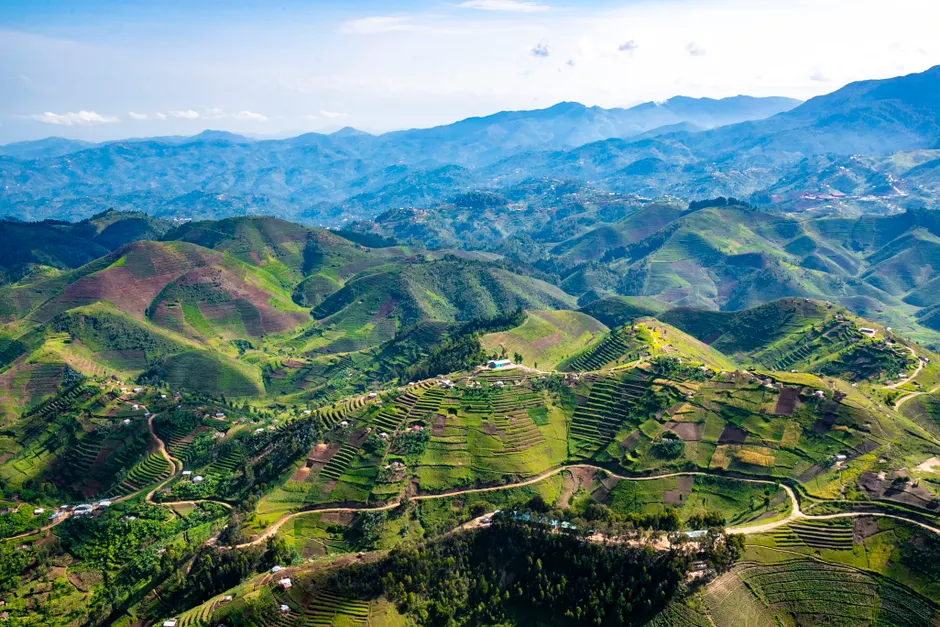
Rwanda observes Liberation Day — Kwibohora, from the Kinyarwanda word for "liberation" — on 4 July 2026, marking 32 years since the Rwanda Patriotic Army (RPA) halted the 1994 Genocide against the Tutsi and assumed control of the country.
The date is a national public holiday. Each year's commemoration carries a numbered designation: Kwibohora26, Kwibohora29, Kwibohora30, Kwibohora31, and so on — a convention that keeps the arithmetic of survivor memory visible in the official record. The Rwandan Embassy in Sweden framed the 31st anniversary in 2025 under the theme "31 Years of Resilience, Renewal, and Progress," language that has been consistent across Rwanda's diplomatic network, with embassies in Qatar, Switzerland, South Africa, and the Democratic Republic of Congo each staging their own parallel observances.
The genocide unfolded over roughly 100 days between April and July 1994. An estimated 800,000 to 1,000,000 Tutsi and moderate Hutu were killed — one of the fastest mass killings in recorded history. The international community's failure to intervene, including the withdrawal of UN peacekeeping forces and a deliberate avoidance by Western governments of the word "genocide" while the killings were ongoing, remains a defining case study in the limits of multilateral humanitarian intervention. The RPA's military advance from Uganda, led by then-General Paul Kagame, ended the genocide when Kigali fell on 4 July 1994. That military fact is the bedrock of every Kwibohora commemoration.
Kagame has presided over Liberation Day events since taking effective political control — he led the 26th anniversary commemoration and has remained the central figure at each subsequent observance. His presidency, now extending well past three decades of political dominance, fuses the state's founding narrative with his personal biography in a way that is unusual even by the standards of post-conflict governance. Rwanda's constitution was amended in 2015 to allow him to stand for additional terms; he was re-elected in 2024 with officially reported margins that left no serious opposition in the field.
The broader strategic context of this year's Kwibohora is sharper than in recent cycles. Rwanda's military involvement in eastern Democratic Republic of Congo — through direct deployment and its relationship with the M23 armed group — has drawn sustained international criticism and triggered sanctions from the United States and the European Union. Peace negotiations, mediated variously by Angola and Qatar, have produced ceasefires that have repeatedly broken down. For Kigali, the eastern DRC question is framed partly through the lens of unresolved genocide accountability: the Democratic Forces for the Liberation of Rwanda (FDLR), a militia active in eastern Congo composed in part of génocidaires and their descendants, remains a stated security rationale for Rwanda's posture. Whether that rationale is proportionate to the scale of Rwandan engagement is the central dispute between Kigali and its critics in Brussels, Washington, and Kinshasa.
Liberation Day in this environment carries dual weight. Domestically, it anchors the government's legitimacy in a transformation narrative — from a country synonymous with mass atrocity in 1994 to one that consistently ranks near the top of African development indices on metrics like gender parity in parliament, ease of doing business, and urban infrastructure investment in Kigali. Internationally, Kagame uses the occasion to press the case that Rwanda's security calculus cannot be assessed without accounting for what the world failed to do in 1994 — a framing that resonates with African Union interlocutors even when it finds less traction in Western capitals.
The diaspora dimension is consistent and deliberate. Rwandan diplomatic missions from Doha to Johannesburg to Geneva hold formal Kwibohora events, as the High Commission in South Africa did for the 31st anniversary on 4 July 2025. These are not merely ceremonial. They serve as points of community cohesion for a diaspora that numbers in the hundreds of thousands, many of whom are descendants of Tutsi who fled earlier waves of violence before 1994, and whose relationship to the homeland is filtered through the genocide and its aftermath.
Kwibohora is, structurally, what comparative genocide scholars call a "foundational commemoration" — one that simultaneously memorializes victims, legitimizes a governing order, and projects a national identity forward. Rwanda has institutionalized that function more systematically than most post-atrocity states. Thirty-two years on, the commemoration endures as both a reckoning with history and a live political instrument.


