Washington DC's July 4 Parade Canceled on America's 250th Birthday as Extreme Heat Grips the Capital
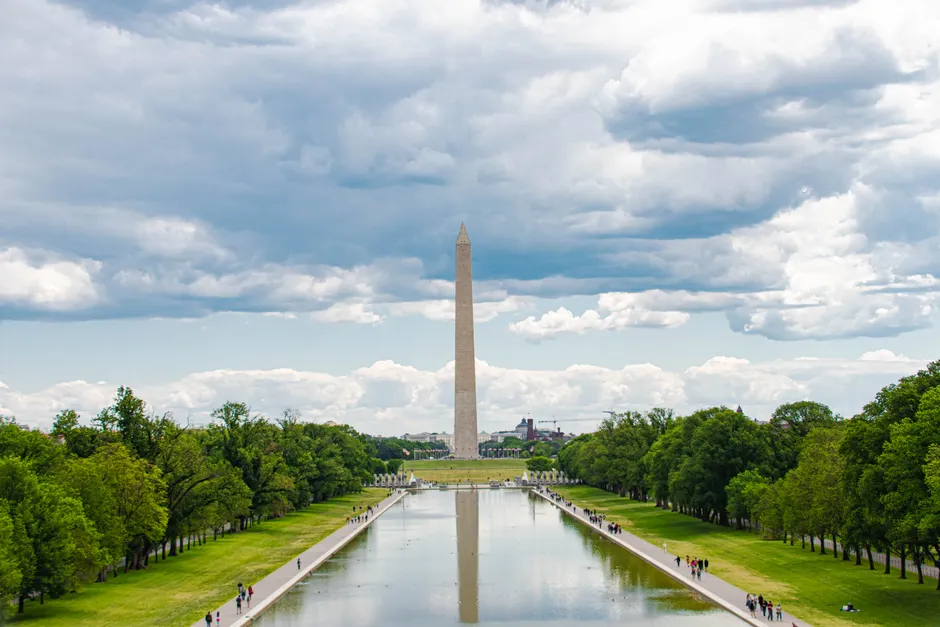
The National Park Service's Independence Day parade in Washington DC — scheduled to step off at 10:30 a.m. on July 4, 2026 — was canceled late on the evening of July 3, after the National Weather Service issued an extreme heat warning for the region, according to The Guardian.
The timing made the cancellation particularly striking. July 4, 2026 is the semiquincentennial — the 250th anniversary of the signing of the Declaration of Independence — a date that had been circled on the national calendar for years and around which federal agencies, the District's municipal government, and the semiquincentennial organizing body Freedom250 had built extensive programming.
Forecasters projected temperatures reaching 102°F (39°C), with heat index values — the felt temperature accounting for humidity — ranging between 110 and 115°F (43–46°C). At those levels, heat stress can become life-threatening within minutes for individuals engaged in strenuous outdoor activity, particularly the elderly, young children, and those in uniform carrying equipment along a parade route. The NWS extreme heat warning, a threshold designation reserved for the most dangerous heat events, was the proximate trigger.
The decision was not made unilaterally. Organizers reached it through extensive consultation among the NPS, Washington DC's municipal government, and the Trump administration. The cancellation was then jointly announced by the National Park Service, the U.S. Secret Service, and Freedom250. That three-agency sign-off reflects the operational complexity of the event: the parade corridor runs through federally controlled land, requires a substantial Secret Service protective footprint, and falls under the broader semiquincentennial framework Freedom250 has been coordinating.
The heat had already extracted a concrete toll before the parade decision was made. The Great American State Fair, installed on the National Mall as part of the July 4th celebration, temporarily shut down on July 3 after 44 visitors were treated for heat-related illnesses. That episode — a dress rehearsal of sorts for what the parade could have produced at larger scale — almost certainly shaped the calculus of the officials in consultation.
The broader context here is worth sitting with. The 250th anniversary had been conceived as a generational civic moment, one that federal planners had spent years designing for maximum public participation. Canceling the marquee public event of that day, on the day itself, represents an operational and symbolic setback of some consequence — though the alternative, a parade proceeding through triple-digit heat with hundreds of thousands of spectators crowded along the National Mall, carried risks that were neither abstract nor manageable through shade tents and water stations.
Heat-related mass-casualty events at large outdoor gatherings are not hypothetical edge cases. The 2010 Love Parade disaster in Duisburg and, more recently, the crush and heat-related deaths at major festivals in the Middle East and South Asia have hardened event-safety doctrine across public health and emergency management disciplines. Washington's officials appear to have applied that doctrine here, choosing the cancellation window — late on July 3, hours before the parade was to begin — as the last responsible moment at which personnel deployments and crowd flows could still be redirected.
What remains unclear is whether any portion of the semiquincentennial programming continues on July 4 itself, or whether the fireworks display — typically a separate NPS-managed event on the Mall — is also affected. The verified facts do not address that question. Given the heat warning encompasses the full day, any large outdoor gathering in the capital faces the same ambient conditions that grounded the parade.
For the tens of thousands of visitors who traveled to Washington specifically for the 250th anniversary, the cancellation — announced less than twelve hours before the parade was to begin — left little room for contingency. That is the cost of a late-breaking weather event meeting a fixed civic calendar. The decision may have been correct and still been painful to absorb.


