Epomaker RT98 Review: A Modular Numpad and a CRT-Style Screen at $119

Epomaker's RT98 is a wireless, 98%-layout mechanical keyboard with a numpad that physically repositions to either flank of the board — and a detachable CRT-style screen built into the chassis. The Verge published a full hands-on review on July 4, 2026, making it the most authoritative assessment available to date.
The prebuilt model retails at $119, with buyers choosing at order time whether the numpad ships on the left or right. Repositioning it later is a matter of unscrewing the module and remounting it on the opposite side. Switch options at that price point are Epomaker's own Creamy Jade linears or the Sea Salt Silent V2 linears. The 101-key board carries PBT keycaps, is hot-swappable, and connects wirelessly — backed by an 8,000 mAh battery that should keep most users off the charging cable for a meaningful stretch. VIA support is included for those who want to remap without firmware flashing.
Hardware Construction
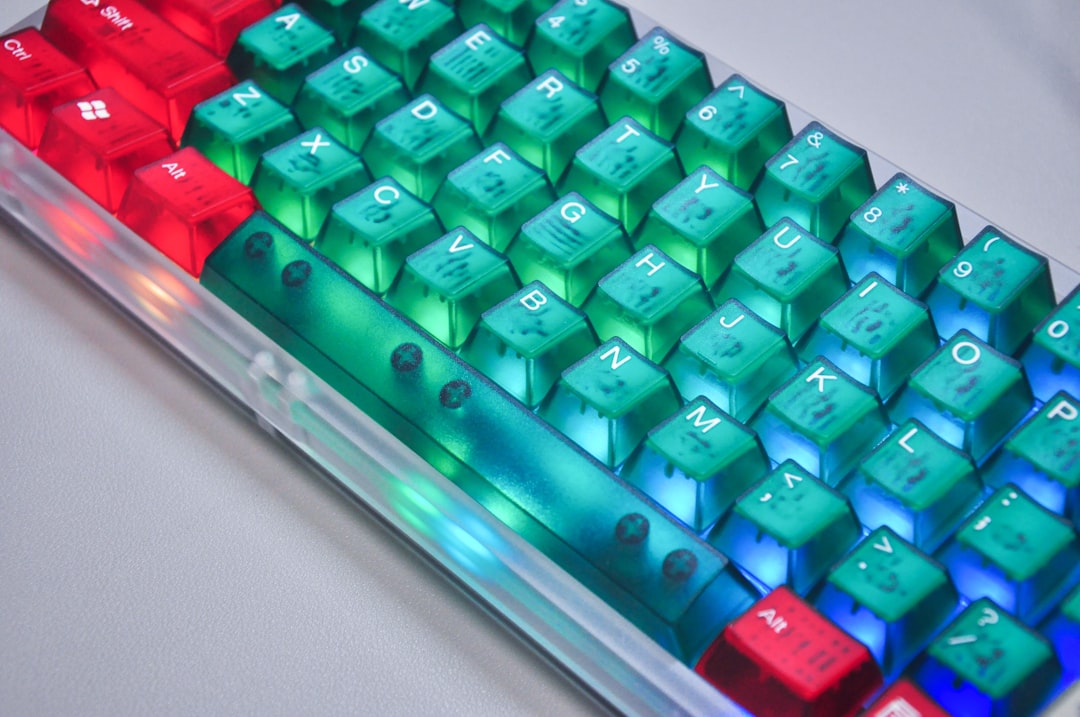
The chassis is ABS plastic throughout. Internally, Epomaker used a gasket-mount design with foam layers under the PCB — a combination that, on paper, should deliver the cushioned, dampened keystroke feel that's become the baseline expectation in this segment. The PCB itself is solid, and the switch plate is polycarbonate without flex cuts. That combination tends to produce a stiffer feel than boards with cutouts or leaf-spring mounting, and the polycarbonate plate, while acoustically somewhat neutral, doesn't provide the give that brass or aluminum plates would clearly telegraph.
The Sea Salt Silent V2 switches deliver smooth, quiet actuation on the alphanumeric keys, but The Verge's reviewer flagged the plate-mounted stabilizers as a weak point: they're louder than the switches themselves, which undercuts the silent-board pitch on larger keys like spacebar, shift, and backspace. That's a well-known failure mode in this price tier — stab treatment either gets done at the factory or it's left to the buyer.
The detachable screen is marketed by Epomaker as a "detachable Mini TV," styled to evoke a CRT monitor. It's a cosmetic flourish aimed squarely at the enthusiast-aesthetic crowd; the practical utility is secondary to the visual statement.
Context and Competition
The RT98 was crowdfunded via Kickstarter — Epomaker ran a pre-launch giveaway between February 16 and March 16 before the campaign opened — and it was Epomaker's most recently crowdfunded keyboard at the time of the review. The $119 prebuilt price lands it in a densely contested part of the market, where buyers have a wide range of acoustically and structurally capable options.
The Verge's reviewer pointed directly to the Dry Studio ATM 98 as a better-performing alternative for users prioritizing sound profile and keycap quality, describing it as a better-sounding silent board with nicer keycaps. That's a meaningful comparison for anyone chasing a refined typing experience above all else.
Where the RT98 differentiates itself is the repositionable numpad. Left-handed users — and right-handed users who prefer their numpad out of the way of a mouse — have historically had to choose between full-size layouts, tenkeyless boards, or separate standalone numpads. The RT98 collapses that decision into a single unit. It's a practical solution to a workflow problem that the keyboard industry has largely ignored.
The gasket mount and foam stack suggest Epomaker was aiming for a balanced typing experience, not just a novelty product built around the modular concept. The execution doesn't quite reach the acoustic ceiling that the ATM 98 sets, but the mechanical substrate is competent for the price.
The 1-year warranty and 30-day free return policy round out the purchase proposition at $119. For a crowdfunded product entering broader retail, those terms are reasonable. Retro White is among the confirmed color options.
Whether the CRT screen tips the balance for any given buyer will depend almost entirely on how much they value desk aesthetics. As a functional differentiator, it is decorative. As a signal of the product's intended audience — enthusiasts who care about how a build looks as much as how it types — it's perfectly coherent positioning.