NASA's Swift Boost Mission Launches Robotic Tug to Save Decaying Observatory

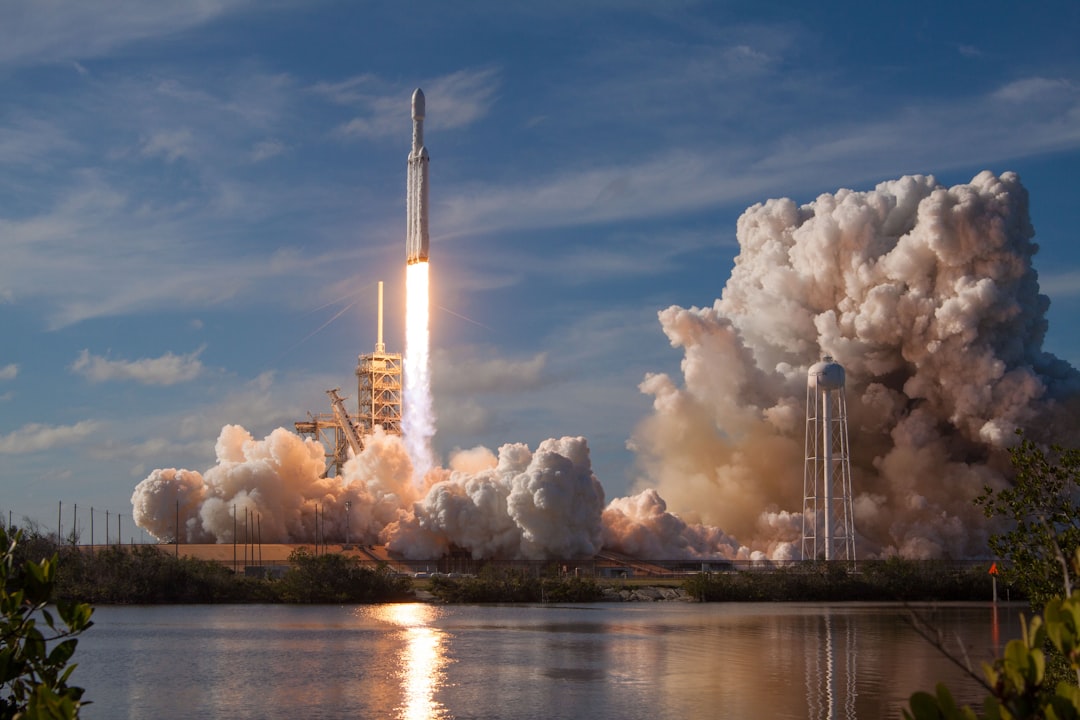
NASA's Swift Boost mission lifted off on July 3, 2026 at 4:36 AM Eastern time, sending Katalyst Space's LINK robotic spacecraft toward the Neil Gehrels Swift Observatory — a $30 million commercial rescue operation aimed at pulling the aging telescope back from orbital decay before it re-enters Earth's atmosphere.
The launch vehicle was a Northrop Grumman Pegasus XL rocket, carried to altitude aboard Stargazer, L3Harris's modified L-1011 carrier aircraft. The plane departed Kwajalein Atoll in the Marshall Islands, climbed to approximately 40,000 feet, and released the rocket over the Pacific. The Pegasus XL free-fell briefly before igniting its first stage and delivering LINK to orbit — the air-launch sequence the vehicle has used for decades, well-suited to equatorial deployments where the carrier aircraft's flexibility substitutes for fixed launchpad infrastructure.
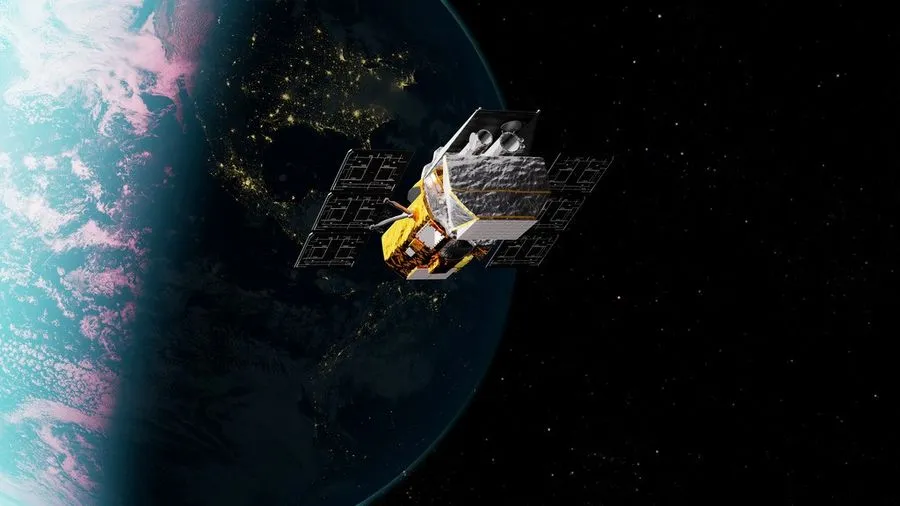
Ground teams confirmed contact with LINK shortly after separation — the mission's first formal milestone. The spacecraft will now spend several weeks under health-check procedures conducted by Katalyst Space engineers, verifying propulsion, sensor, and navigation systems before any proximity operations begin. Once cleared, LINK will rendezvous with Swift, conduct a survey pass, and then close in to capture and dock using three robotic arms.
Why Swift Needs Saving
The Neil Gehrels Swift Observatory has operated for over two decades as a high-energy astrophysics workhorse, purpose-built for rapid detection and follow-up of gamma-ray bursts (GRBs). Its multi-wavelength instrument suite — spanning gamma-ray, X-ray, ultraviolet, and optical bands — lets it pivot to a transient event within seconds of detection, making it what the science community treats as a first-responder asset for sudden cosmic events. Among its confirmed contributions: observational data that established neutron star mergers as a factory for heavy r-process elements, including gold and platinum. That result, tied to the 2017 kilonova event GW170817, resolved a long-standing question about where the periodic table's heaviest entries come from.
Brad Cenko, the observatory's principal investigator, has publicly emphasized Swift's role as a dispatcher for the broader astronomy community — its rapid-alert pipeline notifies ground- and space-based observatories worldwide within minutes of a burst detection.
The urgency behind Swift Boost is solar-driven. Elevated solar activity over the past cycle has heated and expanded Earth's upper atmosphere, increasing aerodynamic drag on low-orbit spacecraft. Swift's orbital altitude has decayed faster than mission planners modeled. Without intervention, the observatory was projected to re-enter by the end of 2026, according to Engadget.
The Rescue Plan
LINK's target is to tug Swift to an orbital altitude of approximately 370 miles — high enough to restore meaningful drag margin. If successful, that reboost is expected to extend the observatory's operational life by roughly a decade. The full sequence, from health checks through docking and orbit-raising, is projected to take 10 to 12 weeks.
The mission's commercial structure is worth noting. Katalyst Space, an Arizona-based startup, designed and built LINK under contract with NASA in an arrangement the agency has described as a commercial mission to boost Swift's orbit. The $30 million price tag is modest against the alternative: Swift's science output over another decade would be difficult to replicate with any near-term successor mission, and a purpose-built replacement would cost orders of magnitude more.
The launch had originally been targeted for no earlier than June 30, 2026, per NASA's pre-launch blog post, before weather at Kwajalein pushed it three days. LINK had arrived at NASA's Wallops Flight Facility in Virginia in early June for pre-launch processing before transfer to the Marshall Islands.
The broader context here is that on-orbit servicing has been a stated priority for NASA and the broader space community for years, with multiple programs — from Orbital Express in the 2000s to more recent OSAM efforts — advancing the underlying technologies. Swift Boost is among the first missions to put a commercial servicer on an active science spacecraft. The technical and contractual template it establishes, assuming LINK performs as designed, will matter well beyond this single observatory. Whether the approach scales to the broader fleet of aging science assets is a question the next 12 weeks will begin to answer.