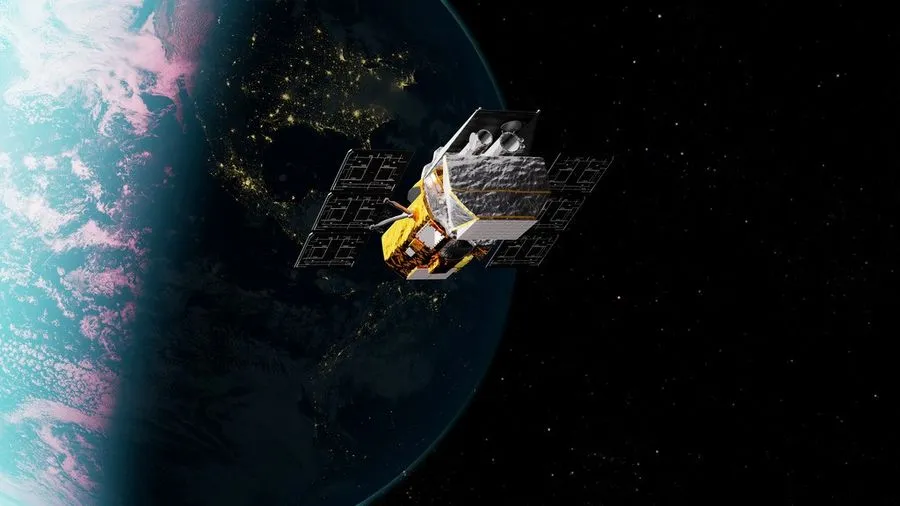
Katalyst Space Technologies Launches Emergency Orbital Boost Mission for NASA's Swift Observatory
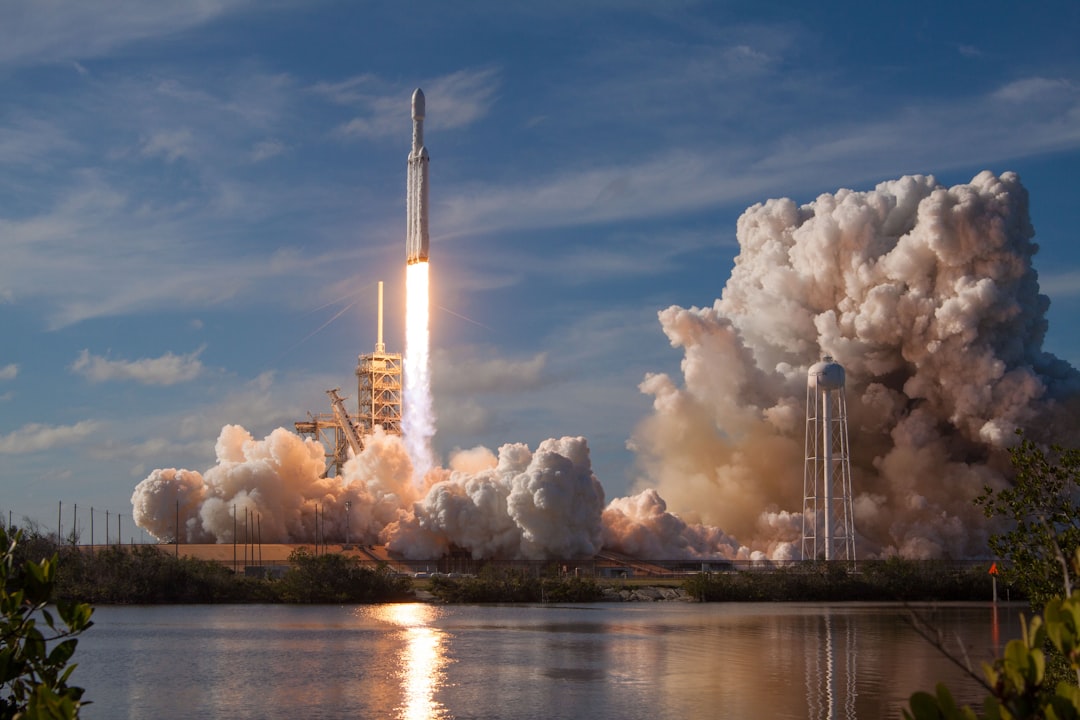
Katalyst Space Technologies' Link spacecraft lifted off on July 3, 2026, on an emergency mission to rescue NASA's Neil Gehrels Swift Observatory from orbital decay — a $30 million intervention on behalf of a $500 million asset that would otherwise burn up in Earth's atmosphere within months.
Swift has been in low Earth orbit since its 2004 launch, studying gamma-ray bursts — the most energetic transient events in the universe, associated with the collapse of massive stars and the mergers of neutron star pairs. That science has been foundational to high-redshift cosmology and multi-messenger astronomy. The problem is purely mechanical: Swift has no onboard propulsion system. Its orbit has always been a managed decay, but recent solar activity accelerated the timeline, pushing the observatory's altitude down to approximately 224 miles. Without intervention, NASA estimated the spacecraft would dip too low to save by October 2026.
That constraint drove the pace. Katalyst, a startup headquartered in Flagstaff, Arizona, assembled the entire rescue mission — design, build, and launch — in nine months. Link's goal is to dock with Swift using a three-armed capture mechanism and fire its own propulsion to raise Swift's orbit by roughly 150 miles, buying the observatory additional years of operational life.
A Launch Window Bought Dearly
The July 3 launch came after a bruising week of delays. The first attempt, on June 30, was scrubbed by weather. A second attempt on July 1 was again turned back by unfavorable conditions. On July 2, NASA's blog reported that teams were reviewing data following a last-minute technical problem — a sequence the Associated Press also reported that day. The mission finally lifted off targeting a 4:35 a.m. EDT window on July 3, with Reuters confirming the launch proceeded.
The compressed timeline is worth holding in mind. Nine months from contract to launch is aggressive for any spacecraft; for a precision rendezvous-and-boost vehicle designed to grapple a tumbling observatory with no cooperative docking interface, it borders on extraordinary. Commercial in-space servicing has been discussed for decades — Orbital ATK's Mission Extension Vehicle program demonstrated the concept on geosynchronous satellites — but applying it under emergency conditions to a science observatory in low Earth orbit, with a hard deadline imposed by atmospheric drag, is a different operational profile entirely.
What the Numbers Say
The cost calculus here is stark. Swift's original price tag was approximately $500 million. Katalyst's rescue mission comes in at $30 million — 6 cents on the dollar to preserve an asset that continues to produce science two decades after launch. That ratio alone makes the case for in-space servicing in a way no whitepaper can.
Swift's longevity is also a reminder of how durable well-built scientific instruments tend to be. The observatory was designed for a nominal two-year mission. It has been operating for over 21 years. Gamma-ray burst detection, UV/optical follow-up, and X-ray afterglow characterization are still active science priorities; the instrument has not been superseded so much as it has become part of the permanent infrastructure of time-domain astronomy.
Looking at what this mission means for the broader in-space servicing sector: if Link succeeds, it will be among the most publicly visible demonstrations of commercial satellite servicing to date, and it will have done so under conditions — tight timeline, LEO rendezvous, non-cooperative target — that previous servicing missions did not face. A clean execution would strengthen the commercial case for building rescue capability into future mission planning from day one, rather than treating it as a last resort.
Whether the capture and boost maneuvers proceed nominally will become clear in the coming days and weeks. The orbital mechanics are unforgiving. But the fact that a nine-month sprint from a Flagstaff startup is the thing standing between a functioning space telescope and the atmosphere says something pointed about where commercial space capability now sits — and about the gap that still exists in how NASA and the broader scientific community plan for the end-of-life of propulsion-free assets.