China Formalizes East-Taiwan Coast Guard Patrol Amid Broad International Objection
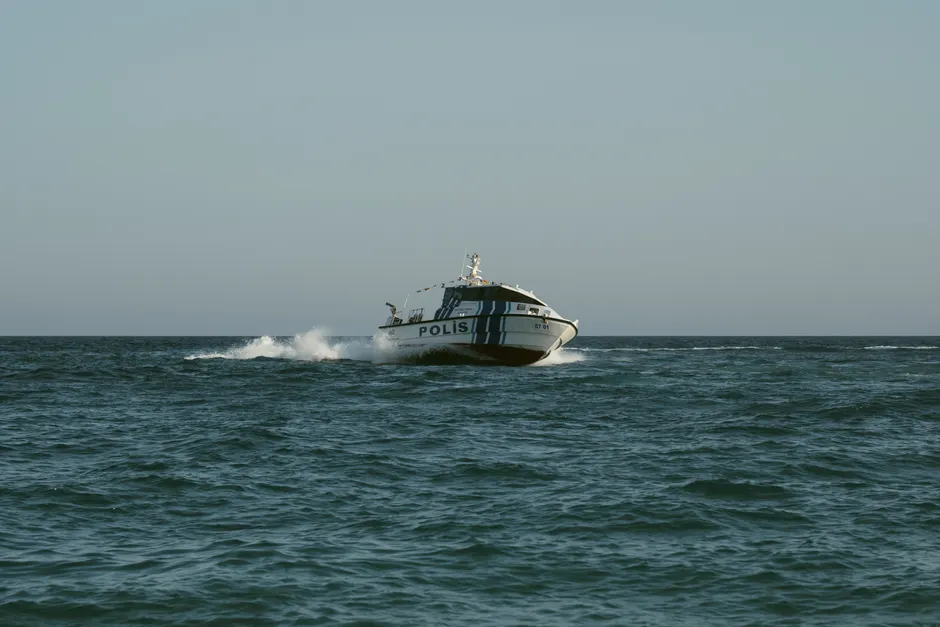
China's Coast Guard announced on July 4, 2026, that it had stood up a permanent law-enforcement patrol zone east of Taiwan, replacing the rotating task force that had been operating off the island's coast in recent weeks. The China Coast Guard (CCG) said it would "strengthen" such patrols going forward — language that signals intent to institutionalize, not merely repeat, the presence.
The move did not arrive without precedent. CCG vessel Daishan had already conducted law-enforcement patrols in the waters east of Taiwan on June 1, and Reuters reported that the July 4 announcement came despite pushback from several governments. Beijing's framing has been consistent: at a June 9 press conference, Foreign Ministry spokesperson Lin Jian told reporters — in response to a Japanese Coast Guard inquiry — that the patrols were routine and conducted in areas under China's jurisdiction. Spokesperson Guo Jiakun was pressed again on June 25 after the United States, Britain, France, and Germany each raised concerns about Chinese activity off Taiwan's east coast; Beijing declined to treat those objections as constraints.
The Eastern Flank and Why It Matters
The geography is the point. Chinese coast guard operations have long been a fixture in the Taiwan Strait — the roughly 180-kilometre channel separating mainland China from western Taiwan — but the waters to Taiwan's east open onto the Philippine Sea and sit astride the island's primary deep-water maritime approaches. A sustained CCG presence there extends Beijing's grey-zone toolkit to a flank Taiwan and its security partners have historically regarded as strategically sheltered.
Taiwan's government has not accepted the patrol's legitimacy on any level. Taipei described the CCG operations as a "provocative act," and its military said it would coordinate closely with Taiwan's own Coast Guard in response to the Chinese deployments. On July 1 — three days before Beijing formalized the patrol — Taiwan's government told Taiwanese vessels off the island's east coast to ignore any boarding or inspection demands from CCG ships. That guidance puts civilian mariners in a legally and practically fraught position: Chinese coast guard law authorizes officers to board, inspect, and detain foreign vessels in waters Beijing claims jurisdiction over, while Taipei insists those same waters are not subject to Chinese law enforcement.
On the same day Taiwan issued that directive, China urged the United States to handle the Taiwan issue "with utmost caution." The timing suggests Beijing was signalling Washington against any counter-deployment or formal diplomatic escalation ahead of the July 4 patrol announcement.
The Pattern Behind the Announcement
What Beijing is doing operationally follows a well-worn grey-zone sequence: establish a presence, normalize it through repetition, codify it with legal-sounding language ("law enforcement," "jurisdiction"), and then defend the resulting status quo as routine. Each step is individually deniable as non-military; cumulatively, the steps shift the burden onto anyone seeking to contest the new baseline. The CCG's explicit statement that it will strengthen patrols east of Taiwan is, by that logic, not a threat — it is a schedule.
The quadrilateral concern voiced by Washington, London, Paris, and Berlin is notable for its breadth. European defense engagement in the Indo-Pacific has grown incrementally since 2021, but coordinated public statements on Taiwan-adjacent CCG activity represent a relatively high threshold of diplomatic exposure for London, Paris, and Berlin, each of which balances significant economic relationships with China. Whether that concern translates into operational coordination — naval transits, port calls, expanded intelligence-sharing with Taipei — remains the open question for allied policymakers.
For Taiwan, the immediate challenge is practical. Its government has told civilian ship captains to resist inspection. Its military has pledged coordination with the coast guard. But enforcement of that posture against a fleet operating in international waters — or in waters whose status is genuinely contested under UNCLOS — requires constant presence and clear rules of engagement that Taipei has not yet publicly detailed.
The CCG's July 4 announcement converts what had been episodic grey-zone pressure into a declared, permanent operational posture. The line between a coast guard patrol and a de facto blockade is thin, and is measured in intent, density of coverage, and willingness to act on boarding authorities. None of those variables has yet been tested at scale east of Taiwan.


