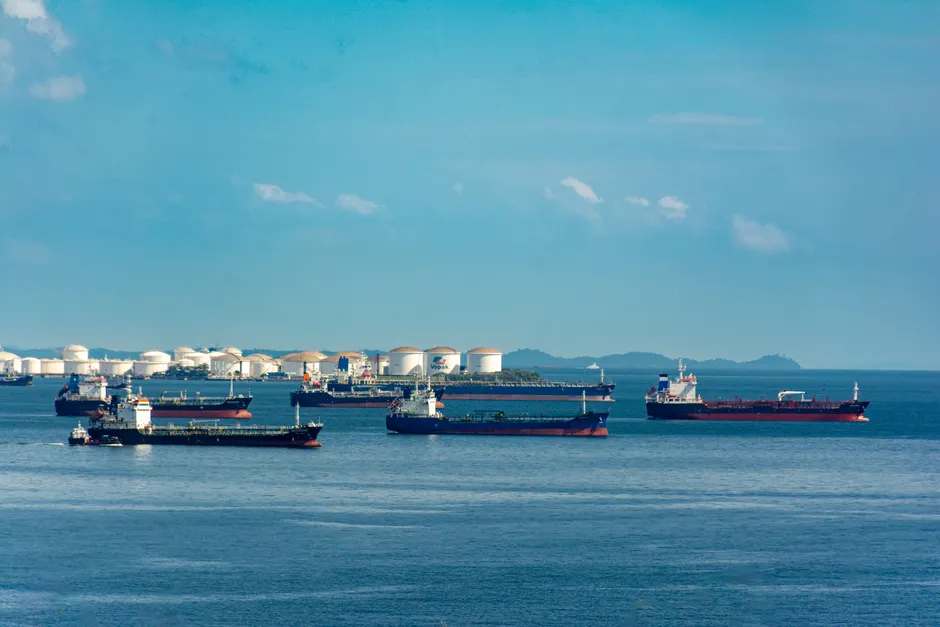
IRGC Tightens Hormuz Grip During Khamenei Funeral as Diplomatic Framework Strains

Iran's Islamic Revolutionary Guard Corps escalated its operational control over the Strait of Hormuz in the 48 hours leading up to July 5, 2026, turning back at least eight vessels on approximately July 4 after issuing direct warnings — a step-change in enforcement that coincides with the six-day state funeral of Supreme Leader Ali Khamenei and a widening gap between the letter of a June 17 US-Iran memorandum of understanding and conditions on the water.
The MOU, signed digitally on June 17, committed Tehran to use its best efforts to restore transit traffic to pre-blockade levels and to hold off on tolls for 60 days. The Guardian has characterised the document as "a loose guideline of objectives as opposed to a rigid set of enforceable rules" — a description the data now supports. Marine Traffic recorded 38 confirmed crossings on July 2, a 10% day-on-day decline. Iranian-flagged vessel crossings surged to 11 that same day, up from two the previous day. Nine crossings in contravention of sanctions were also logged. Route selection shifted toward Iranian-controlled and "Dark or Unknown" corridors as traffic on the US-backed Omani southern route weakened — the very lane ships had been using to bypass Iranian-controlled waters.
A Narrowing Corridor
The geometry of the strait matters here. Iran controls the northern route, which is less-trafficked and more heavily mined. The southern route, running closer to Oman's coastline, had become the default passage for vessels that spent weeks stuck in the strait. Its viability now depends on clearance operations and diplomatic bandwidth that are both under pressure.
French President Emmanuel Macron announced around July 2 that France and the UK had agreed to deploy a mine-clearing naval force to clear the southern route. Tehran's foreign ministry rejected the plan as "unwarranted and unjustified interference." The Institute for the Study of War assessed on July 2 that Iran has signalled it will continue to use force to compel vessels onto Iranian-controlled routes exclusively. Reuters reported on July 1 that senior Iranian sources confirmed Tehran intends to keep sovereign control over the strait.
The IRGC's posture did not emerge this week. The navy declared the strait "completely closed" on June 20, warning all vessels their security could be endangered if they proceeded without authorisation, according to Iran International. Al Jazeera and gCaptain both reported renewed transit warnings on June 25 that caused vessels to turn back. A tanker was struck by an unidentified projectile on June 27, sustaining bridge damage; crew were reported safe, per UKMTO and Anadolu Agency. UKMTO also reported on July 5 that a vessel in the Red Sea sent a distress signal after being attacked by unknown armed assailants off Hodeidah, Yemen — a reminder that the security perimeter extends well beyond the strait itself. President Trump has separately asserted that Iran fired at least four one-way attack drones at transiting ships, causing damage, per Crisis Group.
Governance Gap and the Omani Model
The more durable question is institutional: who manages the strait, on what legal basis, and at whose price? Oman has been quietly positioning itself as a mediating authority. It held trilateral talks with Iran, France, and the UK on future governance and proposed a framework modelled on the Strait of Malacca — optional navigational fees covering safety, docking, route guidance, and environmental protection. The International Maritime Organization has reportedly given the Omani plan broad support.
Iran's reaction has been competitive rather than cooperative. The Guardian noted in late June that Tehran was "jealously competing with Oman as decision-maker over the strait." Iran announced in June its own plan to introduce maritime fees after a 60-day negotiation window — the same window the MOU is meant to govern. The IMO briefly paused its own ship-escort operation around June 25 after a vessel reported an incident, a concrete illustration of how enforcement gaps bleed into multilateral operations.
Oil prices tell a quieter story. Crude has fallen as much as 40% from a peak of $125 per barrel to around $75, reflecting expanded supply availability. That decline reduces, though does not eliminate, the leverage that a prolonged Hormuz disruption would otherwise give Tehran over consuming nations.
Trump has acknowledged that US-Iran talks will not resume until Khamenei's funeral concludes. The funeral, a six-day event expected to draw millions of mourners, is itself politically charged: Mojtaba Khamenei was absent from his father's ceremony on July 5, an omission noted widely given the succession questions it leaves unresolved. Calls for the killing of Trump were reported at the funeral proceedings on July 5, setting a fraught tone for any resumption of dialogue.
The 60-day toll moratorium under the MOU runs out in mid-August. Between now and then, the IRGC's operational choices, the pace of Franco-British mine clearance, Oman's governance proposal, and the outcome of Iran's internal succession process will all bear on whether the strait returns to anything resembling normal commercial passage — or whether the current squeeze hardens into a new baseline.