Khamenei Funeral Procession Begins in Tehran as Millions Gather and Succession Questions Loom
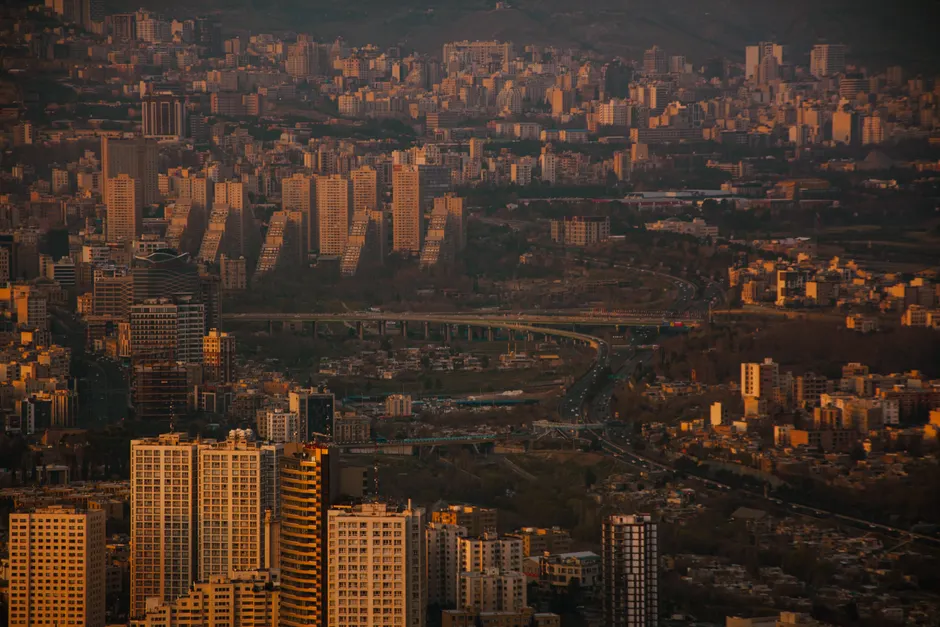
Iran's state funeral apparatus moved into its most visible phase on July 6, 2026, as the funeral procession for Supreme Leader Ayatollah Ali Khamenei departed Damavand Street in eastern Tehran at 7:51 AM local time, routing west through Enqelab and Azadi streets toward the capital's symbolic core. IRNA reported the procession also carried the bodies of three family members alongside Khamenei's. Reuters estimated millions were expected to line the route — and noted one conspicuous absence: Mojtaba Khamenei, the Supreme Leader's son and a figure long discussed in succession speculation, was not present at the Tehran procession.
July 6 was the third day of public ceremonies. The official farewell opened July 4 at the Imam Khomeini Grand Mosalla in Tehran, and the Salat al-Mayyit — the Islamic funeral prayer — was performed over Khamenei's body on July 5. The full rites are scheduled to run through July 9, with a procession in the holy city of Qom planned for July 7.
Scale and International Presence
The logistical footprint has been substantial. The Iranian Army was formally tasked to support the institutions overseeing the ceremonies — a standard deployment for events of this magnitude but one that underscores the security architecture required when millions gather in a capital already on high political alert. Officials from 100 countries were expected to attend, with foreign delegations paying respects at the official farewell ceremony. A Sri Lankan parliamentary delegation was among those confirmed present in Tehran.
Iran's diplomatic missions worked hard to amplify participation beyond its borders. The consulate in Mumbai announced special mourner visas for those traveling to Iran. The embassy in Colombo promoted a symbolic registration platform — branded "LetUsRise" — for remote participation. The embassy in Ljubljana told its audience that people worldwide could register to join the ceremony remotely. The effort reflects a deliberate projection of the Islamic Republic's transnational reach, framing Khamenei's death not merely as a national event but as one of consequence for the broader Muslim world and the resistance axis Iran has cultivated across the Middle East.
The Absence That Will Be Parsed
In the near term, the detail that will attract the most analytical attention is Mojtaba Khamenei's non-appearance in Tehran. His presence — or absence — at ceremonial moments carries weight precisely because he has never held formal state office, yet has been discussed for years as a potential candidate for succession to the velayat-e faqih, the doctrine of clerical guardianship that underpins the Islamic Republic's constitutional order. Under that framework, the Assembly of Experts selects the next Supreme Leader from among qualified senior clerics. Whether Mojtaba's absence was logistical, precautionary, or a deliberate signal is not confirmed by any verified source — but it will be read closely by factions within the system and by foreign governments alike.
The broader succession question is the one that will define Iranian politics for the months ahead. Khamenei held the position of Supreme Leader since 1989, following the death of the Islamic Republic's founder, Ayatollah Ruhollah Khomeini. His nearly four decades at the apex of a system that fuses religious authority with executive and military power means the transition has no modern precedent within the Republic's own institutional history beyond that single prior case. The Assembly of Experts will convene to deliberate; who its members elevate — and how quickly — will shape Iran's domestic factional balance and its posture toward ongoing nuclear diplomacy, regional proxy conflicts, and relations with the Gulf states and the West.
The procession through Azadi — "Freedom" — Street on July 6 carried the weight of that uncertainty. The week of ceremonies is, for now, state ritual performing continuity. What follows is where the questions become harder.


