Millions Flood Tehran Streets for Khamenei's Funeral Procession

Ayatollah Ali Khamenei's flag-draped coffin moved through central Tehran on Monday, July 6, 2026, carried on a truck that crept through dense crowds of black-clad mourners in the largest state funeral Iran has held since the death of Ayatollah Khomeini in 1989. Khamenei was killed in February at the outset of the US-Israel war, along with several family members whose coffins were borne alongside his in a joint procession, according to IRNA.
The route ran from Damavand Street in eastern Tehran westward through Enqelab and Azadi streets, ending toward Azadi Square — a deliberate geography, threading through arteries that carry both logistical weight and symbolic charge for the Islamic Republic. At Enghelab Square, mourners held Iranian flags and red banners: in Iranian Shia mourning culture, red cloth signals martyrdom and a call for vengeance. Mourners beat their chests as the convoy passed, PressTV reported.
The week-long memorial cycle began in Tehran on Friday, July 3, drawing foreign nationals who had traveled specifically to attend, according to IRNA. Khamenei's body had lain in state at Tehran's Grand Mosalla for three days before Monday's procession, per NBC News. Iranian authorities had projected millions would turn out for the capital leg of the ceremonies. Iranian President Masoud Pezeshkian attended the Tehran ceremony and was subsequently scheduled to travel to Iraq for parallel funeral observances there, PressTV reported. The final procession is set for Thursday, July 9, in Mashhad, where Khamenei and his family members are to be interred at the holy shrine of Imam Reza — IRNA confirmed the burial site, which carries its own political messaging: Mashhad is Khamenei's birthplace and the spiritual heartland of Khorasani Shia identity.
Three of Khamenei's sons appeared at the funeral ceremonies and prayed beside his coffin. Conspicuously absent, Reuters reported, was his designated successor — a detail that will sharpen the already acute succession question hovering over the Islamic Republic's most consequential institutional moment in decades. The Assembly of Experts, which holds constitutional authority to select the next Supreme Leader, faces that task under conditions of war, external pressure, and an internal power landscape reshaped by Khamenei's five-year effort to consolidate clerical and IRGC factions behind a chosen heir. The successor's absence from public mourning rites is the kind of signal that Iranianists and regional intelligence analysts will parse carefully: whether it reflects security precautions, factional calculation, or both is not yet clear.
The BBC's chief international correspondent Lyse Doucet reported from Tehran under a condition imposed by Iranian authorities: none of her material could be used on the BBC's Persian Service. That restriction — applied to international media organizations operating in Iran — reflects the regime's enduring sensitivity about information flows to the Persian-speaking diaspora and domestic audience, even amid an event the government is staging as a demonstration of national solidarity.
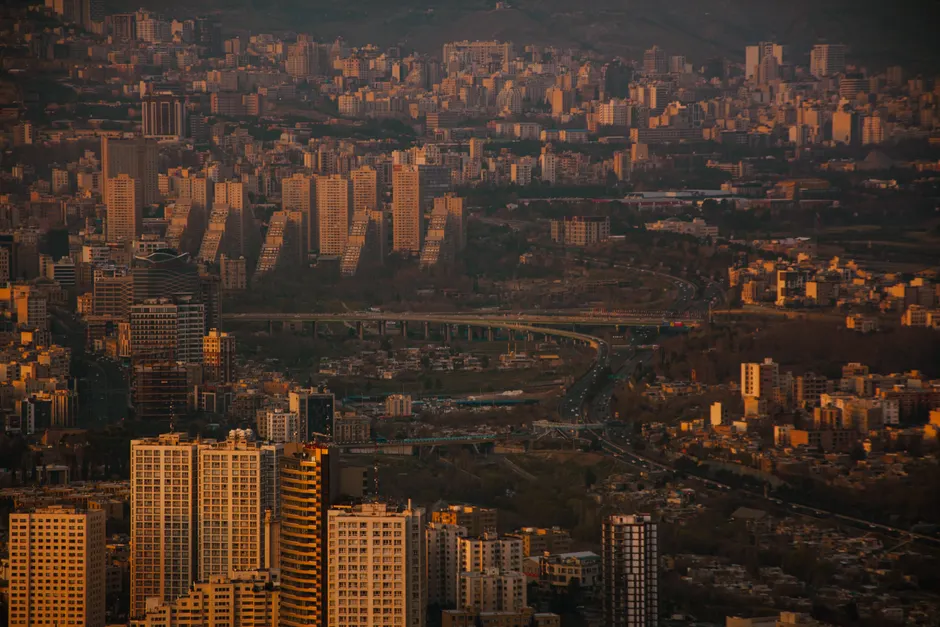
The split picture on Tehran's streets is itself telling. The New York Times noted that as mourners descended on the capital, many city residents fled. Iran has a long tradition of state-mobilized funeral turnout — the Islamic Republic views mass mourning as political theater and civic obligation simultaneously — but the parallel outflow speaks to the complex social landscape a post-Khamenei leadership will inherit.
The burial at Imam Reza's shrine in Mashhad on July 9 will close the formal mourning cycle. What opens after it is a succession process for which there is no clean precedent: the previous transfer, from Khomeini to Khamenei in 1989, was managed under peacetime conditions and with Khomeini still able to signal preferences before his death. This transition happens mid-war, with the institutional apparatus tested and the regional order in flux. The Assembly of Experts will convene under conditions that are, by any measure, without modern parallel in the Islamic Republic's history.