UK EV Charger Rollout Slows Sharply as ZEV Mandate Uncertainty Bites
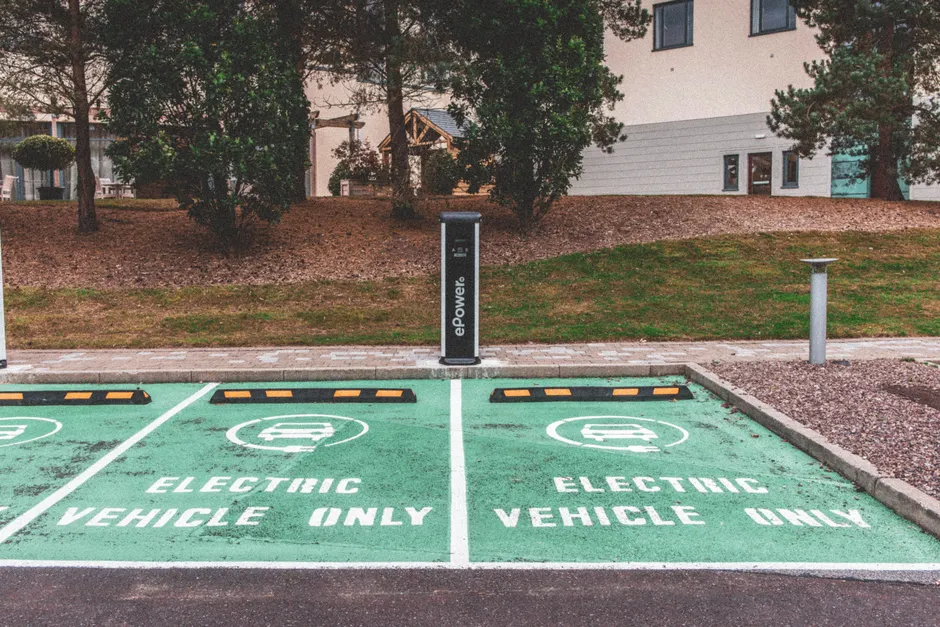
The UK's public EV charging network grew by roughly 10% year-on-year in the first half of 2026 — a sharp deceleration from the 40%-plus annual growth rates recorded in 2024, according to Zapmap data reported by The Guardian. Charger companies installed 5,100 public charge points in H1 2026, bringing the national total to 121,171 units across 46,731 locations and 94,595 devices as of end-June 2026.
The slowdown sits in uncomfortable tension with the demand side. The number of electric vehicles on Britain's roads surpassed 2 million in April 2026, and the ratio of EVs to public chargers has continued to tighten. Infrastructure deployment that was outpacing vehicle adoption two years ago is now lagging it.
The Infrastructure Picture
Not all segments are slowing at the same rate. Ultra-rapid chargers — those delivering 150 kW or above — grew 37% year-on-year, per Zapmap, and nine in ten rapid chargers installed over the past 12 months were sited outside London, according to Jarrod Birch, head of policy and public affairs at ChargeUK, the industry lobby group. On-street charging posted the largest monthly net additions in the Zapmap data for June 2026, a positive signal for urban residents without off-street parking.
The overall headline, however, was pulled lower by a notable statistical event. June 2026 recorded a net reduction of 91 chargers on the Zapmap platform — the first negative monthly net figure in the tracker's history. Zapmap attributes this primarily to a large-scale recategorisation by a major charge point operator that reclassified Standard units (3 kW to 7.9 kW) to more accurately reflect their public versus private availability status, rather than to physical removals. The data artefact matters: it obscures the underlying installation trend and makes June's figures temporarily unreliable as a directional indicator.
The three-year trajectory is less ambiguous. Zapmap recorded 13,281 net additions to the public network across the whole of 2025 — a 13% overall increase — and Q1 2026 came in at 13% year-on-year as well, before the H1 composite figure settled at 10%. Each successive period reads softer than the one before.
The Policy Drag
Birch is direct about the cause: "The ZEV mandate has been argued over for three years under two governments," he said, and that prolonged uncertainty has caused investor hesitation. The Zero Emission Vehicle mandate, introduced by the Conservatives in 2023 as a binding sales target framework for automakers, has since been layered with what the current Labour government terms "flexibilities" — loopholes that allow manufacturers greater headroom to defer full compliance. Now the government is reportedly considering reducing the 2030 EV sales target from 80% to as low as 50%, following sustained lobbying from the UK and European car industries.
For charging infrastructure investors, mandate ambiguity functions as a demand-signal problem. A credible, stable ZEV trajectory anchors forward projections of charger utilisation; a weakened or uncertain mandate compresses those projections and raises the risk-adjusted cost of capital for new deployments. The lobbying pressure that softened the mandate was framed around automaker competitiveness, but its downstream effect lands squarely on the infrastructure supply chain.
The government has muddied its own framing in another way. Its official FAQ on EV charging infrastructure statistics explicitly states that the often-cited 300,000 charge points figure for 2030 is a "minimum demand estimate" and "not a government target," according to the relevant gov.uk publication. Without an enforceable infrastructure target to complement the vehicle sales mandate, there is no regulatory backstop if private deployment continues to slow.
What the Numbers Mean
Birch frames the three-year doubling of the network as evidence of structural progress, and the Zapmap data supports that. 121,171 chargers is not a trivial base; the geographic shift toward non-London deployment addresses a persistent criticism that infrastructure was clustering in the capital. Still, a deceleration from 40% growth to 10% in roughly eighteen months is not a natural maturation curve — network effects in charging infrastructure typically sustain high growth rates until penetration approaches saturation, and the UK is nowhere near that threshold.
The divergence between ultra-rapid growth (37%) and the overall network rate (10%) hints at where capital is concentrating: high-utilisation en-route corridors with clearer commercial returns, rather than the lower-margin on-street and destination segments that most EV drivers — particularly those without home charging — depend on daily. That selective investment pattern is rational for individual operators but may produce coverage gaps that slow broader EV adoption.
What comes next depends substantially on whether the government finalises the ZEV mandate revision and at what level. A target set at 50% for 2030 would materially alter the demand forecasts underpinning infrastructure business cases. The charging industry is effectively waiting for a policy number before it commits capital. Until that number lands, the deceleration visible in the H1 2026 data is unlikely to reverse.


