India's Electric Vehicle Market Accelerates as Oil Price Volatility and Regulatory Pressure Drive Adoption

India's Electric Vehicle Market Accelerates as Oil Price Volatility and Regulatory Pressure Drive Adoption
India's electric vehicle market expanded 25% in the fiscal year ending March 2026, according to BBC, crossing the 5% threshold in passenger vehicle penetration for the first time. The acceleration comes as crude oil prices jumped 50% amid Middle East conflict, exposing the vulnerability of a nation that imports nearly 90% of its oil.
The growth trajectory extends beyond passenger cars. Electric three-wheelers now capture more than 30% of their segment, while electric motorbikes command over 15% market share. In the premium passenger segment—vehicles priced above one million rupees—electric variants account for one in every ten sales, signaling adoption among India's affluent consumers despite higher upfront costs.
Regulatory Framework Drives Long-Term Shift
The Corporate Average Fuel Economy (CAFE-3) regulations, which took effect in April 2025 and run through March 2032, mandate carbon emission reductions in passenger cars from 113 grams per kilometer to 76 grams per kilometer by 2032. These standards effectively force automakers to electrify their portfolios or face substantial penalties.
Delhi has proposed the most aggressive timeline, seeking to halt registrations of new internal combustion engine two and three-wheelers by 2027. The capital leads national EV penetration at 11.5%, followed by Kerala at 11.1% and Assam at 10.0%, according to industry data. This regional variation reflects differing local incentive structures and charging infrastructure deployment.
The federal government launched the Faster Adoption and Manufacturing of Hybrid and Electric Vehicles (FAME) scheme in 2015, providing purchase incentives for clean fuel vehicles. More recently, India is considering additional incentives exceeding $1 billion to accelerate private-sector adoption of electric buses and trucks, targeting commercial fleet electrification.
Infrastructure and Market Dynamics
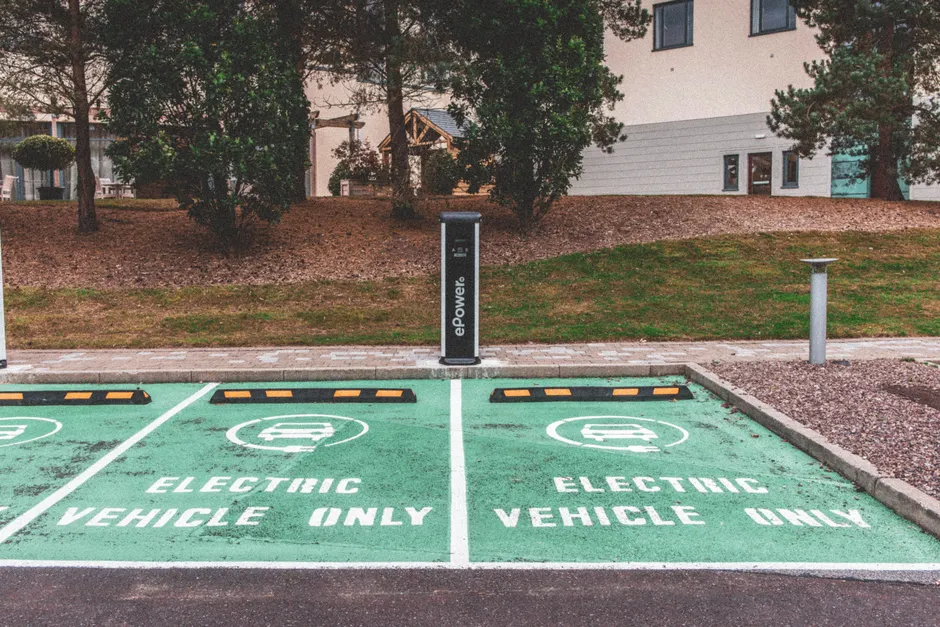
Charging infrastructure has scaled rapidly, with public stations growing from 2,000 to over 10,000 in the past three years. This five-fold expansion addresses the primary barrier to EV adoption—range anxiety—though deployment remains concentrated in urban centers.
Electric two-wheelers, forming the largest segment of India's EV market, sold nearly 1.3 million units in 2025, a 10% increase from the prior year. These vehicles, typically used for last-mile delivery and urban commuting, face lower infrastructure barriers than passenger cars and benefit from substantial cost savings on fuel and maintenance.
Tata Motors has emerged as the dominant player in passenger EVs, surpassing 250,000 cumulative sales by December 2025. The company's Nexon EV, launched in 2020, became the first electric passenger car in India to exceed 100,000 units sold. Tata plans to launch the Sierra EV and updated Punch EV in calendar year 2026, expanding its electric portfolio as competition intensifies.
Global Context and Strategic Positioning
India's 5% passenger car electrification rate trails China's 53.3% (2024), the European Union's 20%, and the United States' 8%. However, India's trajectory follows familiar adoption patterns seen in other markets, where electric vehicle penetration accelerates rapidly once infrastructure and model availability reach critical mass.
We have seen this pattern before, when China's EV market expanded from 5.7% in 2020 to majority market share within four years. The inflection point typically occurs when charging infrastructure achieves sufficient density and battery costs decline below parity with internal combustion engines on total cost of ownership.
The geopolitical dimension cannot be ignored. India's heavy reliance on oil imports—90% of consumption—creates vulnerability to supply disruptions and price volatility. The recent 50% oil price spike demonstrates how external conflicts directly impact domestic energy costs, making electric vehicles an energy security imperative rather than merely an environmental choice.
Industry Projections and Policy Targets
The Indian government has established a target of 30% electric vehicle penetration by 2030, with longer-term projections suggesting 87% EV penetration in new vehicle sales by 2047. Industry consultancy Bain & Company forecasts more modest near-term adoption: 40-45% for two-wheelers and 15-20% for four-wheelers, reflecting the economic realities of vehicle replacement cycles and infrastructure constraints.
Global EV sales are projected to triple by 2030, creating supply chain pressures for critical materials like lithium, cobalt, and rare earth elements. India's position as a major automotive manufacturing hub—and its ambitions to become an EV export center—depends on securing reliable access to these inputs while developing domestic battery manufacturing capabilities.
The acceleration in India's EV market reflects converging factors: regulatory mandates, infrastructure development, falling battery costs, and oil price volatility. While passenger car adoption remains in early stages compared to global leaders, the foundation for rapid scaling is now in place. The critical question is whether charging infrastructure can expand quickly enough to support the next phase of growth, particularly as adoption moves beyond urban early adopters to mainstream consumers across India's diverse geography.
The stakes extend beyond transportation. Success in EV adoption could reduce India's oil import bill by tens of billions of dollars annually while positioning the country as a manufacturing hub for the global electric transition. Failure would leave India increasingly exposed to energy price volatility in an uncertain geopolitical environment.