Canada Selects TKMS to Build 12 Submarines in Deal Worth Up to US$70 Billion
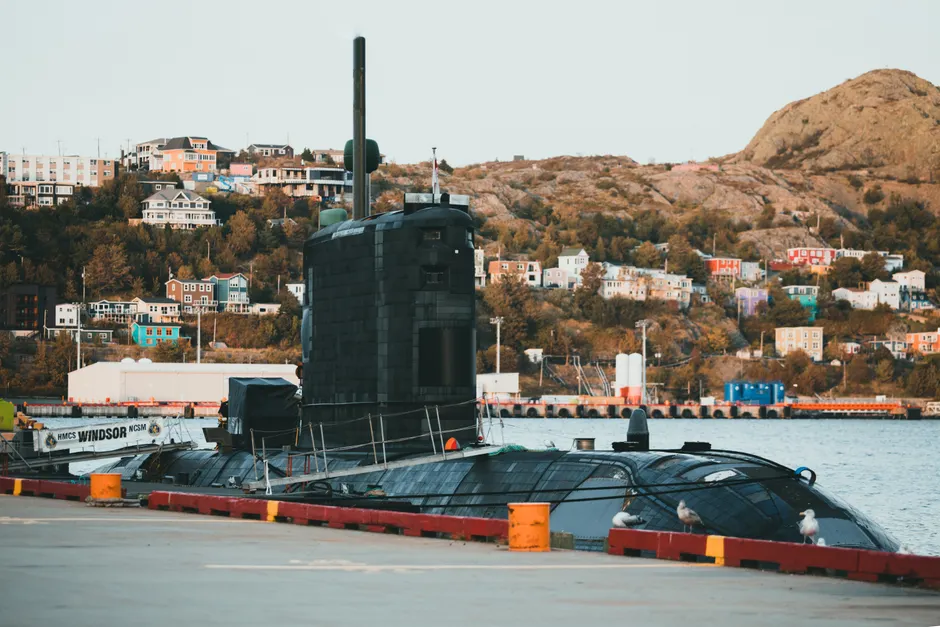
Canada awarded the Canadian Patrol Submarine Project contract to German-Norwegian consortium ThyssenKrupp Marine Systems (TKMS) on July 6, 2026, with Prime Minister Mark Carney announcing the selection in Halifax, Nova Scotia, before departing for a NATO summit. The order — 12 Type 212CD diesel-electric submarines — is the first time Canada has procured brand-new submarines. The headline acquisition cost exceeds US$12 billion; over roughly 50 years of through-life support, the total contract value could surpass US$70 billion, according to The Guardian.
TKMS, the world's largest builder of non-nuclear submarines and a core supplier to NATO's undersea fleet, beat out South Korea's Hanwha Ocean, whose competing offer was built around the KSS-III Batch-II. The two firms had been formally identified as the only qualified suppliers in August 2025, and both submitted proposals in March 2026. Carney personally toured TKMS's construction hall in Kiel and a completed Hanwha boat at the Geoje yard — an unusual level of prime-ministerial involvement that signalled how politically freighted the decision was from the start.
The Competing Offers
The 212CD and the KSS-III represent genuinely different operational philosophies. TKMS's boat is a compact, air-independent propulsion (AIP) platform engineered for stealth in littoral and contested waters; the Norwegian partnership that backed the bid has operated 212 variants for years in the demanding North Sea and North Atlantic. The KSS-III Batch-II is substantially larger — optimised for extended deep-ocean patrols and heavier weapon payloads — capabilities that, on paper, suit blue-water power projection more than covert surveillance in confined passages.
Canada's stated priority is sovereignty and surveillance in the Arctic, above all the Northwest Passage. On that mission profile, the 212CD's acoustic quietness and AIP endurance in shallower, ice-proximate waters align more tightly with the requirement than the KSS-III's blue-water range. German officials leaned hard on NATO interoperability throughout their pitch — a pointed argument given that South Korea is not a member of the alliance and Canada's submarine doctrine is tightly integrated with Allied anti-submarine warfare (ASW) architecture.
Both sides assembled elaborate industrial offset packages to meet Canadian defence procurement rules. Hanwha committed to sourcing steel from Algoma's Sault Ste. Marie mill for armoured vehicle production in Canada, and mounted a high-visibility lobbying campaign that included a television ad narrated by veteran CBC journalist Peter Mansbridge. TKMS positioned itself as a gateway to broader economic cooperation — exploring investments in rare earths, mining, AI, and automotive battery production alongside the submarine contract itself, per The Guardian.
What Comes Next
The announcement is a selection, not a signed contract. Ottawa and TKMS must now enter detailed negotiations covering pricing, industrial benefits, technology transfer, and Canadian content — a process that, for procurements of this complexity, routinely runs two to three years. As recently as October 2025, Canada's own planning documents anticipated a contract award no earlier than 2028; the accelerated announcement compresses that timeline on paper but does not eliminate the negotiating work ahead.
The Royal Canadian Navy currently operates four Victoria-class submarines — second-hand boats purchased from the Royal Navy in 1998 — three of which are in maintenance at any given time. That chronic readiness deficit has left Canada with, at most, one operationally available submarine for extended periods. Twelve 212CDs, delivered incrementally over the 2030s and into the 2040s, would represent a generational step change in undersea capacity. The first delivery date has not been confirmed publicly.
The broader defence policy backdrop gives the procurement its urgency. Canada confirmed in March 2026 that it had crossed the NATO threshold of spending 2% of GDP on defence — a milestone long overdue by alliance expectations. Carney's Liberals have committed to reaching 5% of GDP by 2035, a target that would place Canada among the highest defence spenders in the Western world. The submarine programme, at up to US$70 billion over its life, is the single largest line item in that trajectory.
Choosing TKMS also carries a transatlantic signal: a Canadian prime minister heading directly from a submarine announcement to a NATO summit, having selected a NATO-member supplier over a capable but non-allied competitor, is not a coincidence of scheduling. Whether that signal translates into concrete alliance credit — or into parallel trade momentum with Seoul, where Carney separately announced a Team Canada trade mission — will depend on the diplomatic ground-work that follows the headlines.


