xAI Rebrands as SpaceXAI, Ties Future to Orbital Data Centers
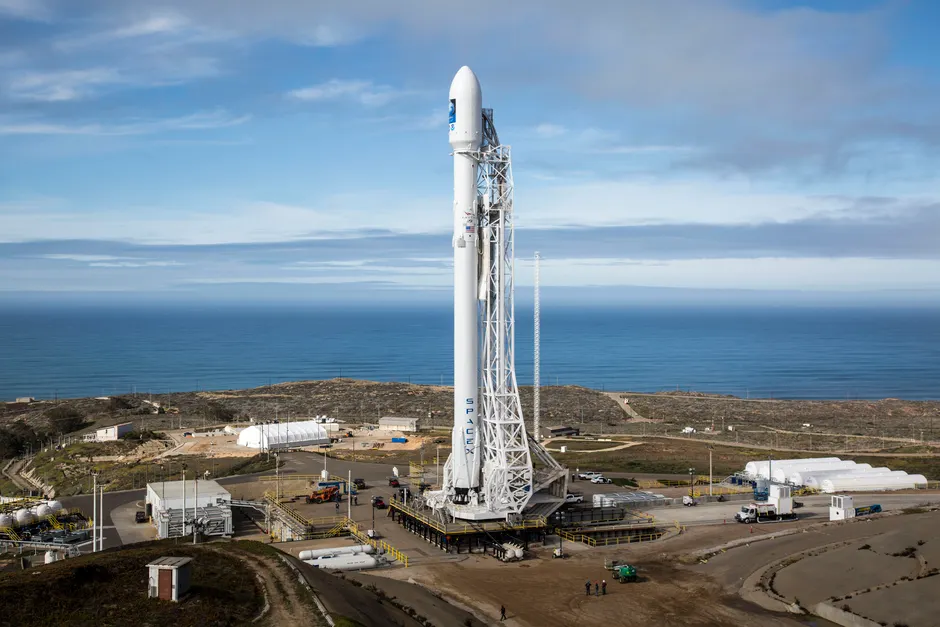
xAI has been officially rebranded as SpaceXAI, with the change confirmed via a post on the company's X account Engadget. The xAI account now operates under the handle @SpaceXAI, displaying the new name and logo SpaceXAI on X. The x.ai website has already been updated to reflect the new branding, though the change has not yet appeared in official corporate filings Engadget.
The formal rebrand lands roughly five months after SpaceX acquired xAI in February. Elon Musk previewed the SpaceXAI name in May, posting it on X well ahead of the official switch Engadget. SpaceX itself continues to run a separate X account dedicated to launch operations, vehicle design, and mission updates, so the rebrand consolidates the AI business under the SpaceX umbrella without folding the rocket company's public-facing identity into it.
The lineage here is layered. xAI acquired X, the social platform, in 2025; X now sits under the SpaceXAI brand following this latest rename. Untangling the corporate structure requires tracking three once-distinct entities — SpaceX, xAI, and X — that have progressively merged into a single public identity over the past year and a half.
Financially, the combined entity went public in June, with shares closing at $161 and a valuation of $2.1 trillion Engadget CNBC. That listing predates the formal SpaceXAI rebrand by about a month, meaning the company went to market under one identity and completed its renaming shortly after — an ordering worth noting given how unusual it is for a newly public company to change its name so soon after listing.
Musk has tied the rebrand to a specific infrastructure thesis: that global electricity demand for AI training and inference cannot be satisfied through terrestrial power generation and that orbital data centers are, in his words, "the only logical solution" Engadget. SpaceXAI has stated it intends to build data centers in orbit, and the groundwork predates the merger announcement itself — SpaceX filed an FCC application to launch roughly a million satellites in support of a space-based data center concept before the xAI acquisition was disclosed Engadget.
The technical case for orbital compute rests on solar power availability unconstrained by weather or day-night cycles, plus radiative cooling in vacuum that could reduce the thermal management overhead that currently consumes a substantial share of terrestrial data center power budgets. Set against that is the reality that no one has yet demonstrated data-center-scale compute clusters operating in orbit, and questions around radiation hardening, launch cadence, latency to ground stations, and satellite servicing at that density remain unresolved in any public technical filing. The FCC application establishes regulatory intent, not operational feasibility.
In this author's view, the electricity-constraint argument is not without merit — training-cluster power draw has become a genuine bottleneck for the industry, and utility-scale grid buildout timelines run years behind AI capacity roadmaps. But moving from a satellite filing to functioning orbital data centers is an enormous engineering leap, and Musk's public timelines on hardware projects have historically compressed optimistically relative to delivery.
Beyond infrastructure, SpaceXAI's product footprint is already expanding into consumer-facing services. Earlier in June, the company partnered with Gopuff to launch "Go," an AI-powered personal shopping assistant that generates predictive carts and delivers orders within minutes BusinessWire. That launch signals the AI business unit is pursuing commercial applications on a conventional timeline even as its parent talks about data centers in orbit, and it is a reminder that the day-to-day product roadmap and the moonshot infrastructure narrative are running on separate tracks within the same company.
The broader context here is a consolidation pattern that has become familiar across the industry: compute, social distribution, and now aerospace infrastructure sitting under one corporate roof and one brand. Whether orbital data centers become operational reality or remain an ambitious filing is the open question that will determine how much of this rebrand is architecture and how much is narrative.


