SpaceXAI Launches Grok 4.5, First Model Built With Cursor's Help

SpaceXAI launched Grok 4.5 on July 8, 2026, its first model release since the company went public and its first built with training assistance from Cursor since the two companies struck a development partnership in April Axios.
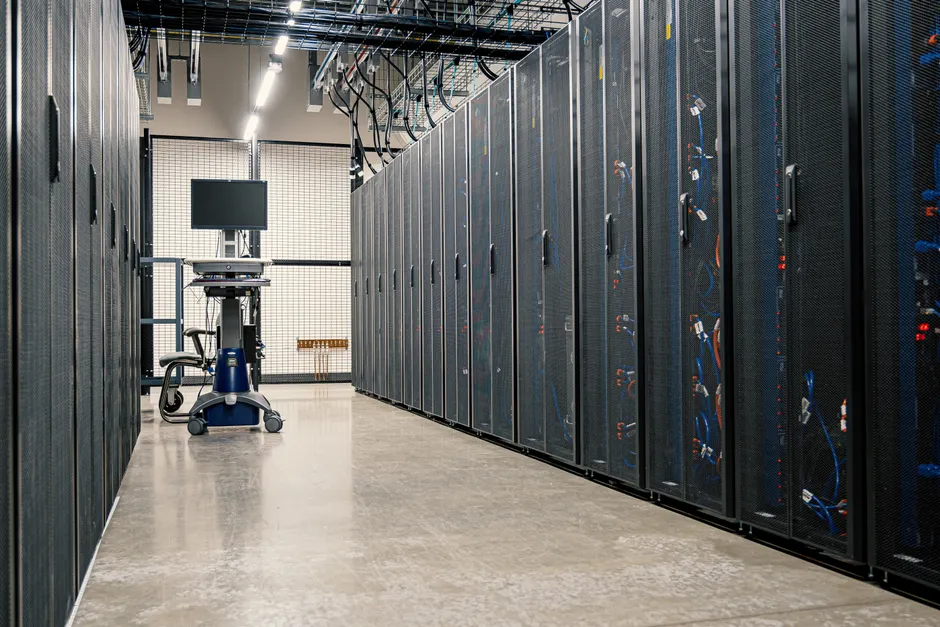
The model was trained across tens of thousands of NVIDIA GB300 GPUs in SpaceXAI's own data centers, on datasets weighted toward coding, science, engineering, and math x.ai xAI docs. SpaceXAI is positioning Grok 4.5 for coding, agentic workflows, and general knowledge work, and is billing it internally as its "smartest model" yet.
Pricing lands at $2 per million input tokens and $6 per million output tokens. That undercuts OpenAI's GPT-5.6 Sol variant, priced at $5 in and $30 out, and roughly matches Luna, priced at $1 in and $6 out Engadget. Reuters reports SpaceXAI is characterizing Grok 4.5 as an "Opus-class model" that runs faster than that tier typically implies Reuters. The model is available on multiple clusters with regional-based pricing, according to xAI's developer documentation.
Grok 4.5 is now the default model behind Grok Build, SpaceXAI's terminal-based coding agent, and is available both through the SpaceXAI console and across all of Cursor's subscription tiers. Grok Build's scope extends past pure software engineering — SpaceXAI says it also handles Excel, PowerPoint, and Word tasks, positioning it as a general knowledge-work agent rather than a developer-only tool.
Cursor's own announcement, posted to X, described Grok 4.5 as its most powerful model to date and the first one built for more than software engineering. Cursor also published a blog post on its site, titled "Introducing Grok 4.5," laying out the collaboration in more detail Cursor.
The partnership behind this release goes beyond a training collaboration. When SpaceXAI and Cursor agreed in April to develop AI together, the terms reportedly included an option for SpaceXAI to invest $10 billion in Cursor, or to acquire the company outright for $60 billion later this year Engadget. Grok 4.5 being trained "with Cursor's help," as SpaceXAI puts it, and shipping as the default model across Cursor's product line simultaneously, reads as an early down payment on that arrangement rather than an arm's-length API integration.
SpaceXAI claims Grok 4.5 outperforms rival frontier models on real engineering tasks and can generate functional applications from minimal prompting. Those are vendor claims, not independently verified benchmarks, and neither xAI's announcement nor Cursor's post includes third-party evaluation results at time of writing.
Grok 4.5 is not yet available in the European Union. SpaceXAI says it expects to bring the model to EU customers by mid-July, leaving a gap of roughly a week to ten days between the US/global launch and European availability — presumably tied to regulatory review, though neither xAI nor Cursor's materials specify the cause.
The pricing structure is worth sitting with for a moment. Grok 4.5's $2/$6 split against GPT-5.6 Sol's $5/$30 is not a marginal discount — it is a five-fold difference on output tokens, which is typically where agentic workloads accumulate cost given multi-step tool calls and longer generation chains. If SpaceXAI's performance claims hold up under independent testing, that price gap could matter more to enterprise coding-agent adoption than any single benchmark score, since agentic coding workflows are notoriously token-hungry in ways that chat interfaces are not.
The deeper story here is what "trained with Cursor's help" actually means in practice. Cursor has spent the past several years building deep telemetry into how developers actually use AI coding assistants — what gets accepted, what gets rewritten, where models hallucinate APIs or misjudge repo context. Folding that operational knowledge into a foundation model's training data, rather than just fine-tuning on top of it post-hoc, is a different kind of vendor relationship than the API partnerships that have defined this market since 2023. Worth flagging: this also means Cursor's fortunes are now more tightly coupled to SpaceXAI's model roadmap than to any neutral multi-model strategy, which cuts against the model-agnostic positioning Cursor built its early reputation on.
Rebranding from xAI to SpaceXAI itself is a detail easy to skate past but not a small one. It signals, at minimum, closer organizational integration with SpaceX than the company's previous corporate structure implied, though neither company's materials elaborate on the mechanics of that integration or what it means for xAI's prior independent operations and IP.
For enterprise buyers evaluating coding agents this quarter, Grok 4.5's combination of aggressive pricing, Cursor-native distribution, and an expanding remit into office productivity tasks makes it a credible third option alongside OpenAI and Anthropic's Claude Opus line, at least on paper. Whether it holds up against real engineering workloads, rather than the vendor's own framing of them, is the question independent benchmarking over the coming weeks should start to answer.