Putin's NATO Framing Widens Gap Between Kremlin Claims and Battlefield Reality
Vladimir Putin claimed in a televised broadcast released ahead of the US Independence Day weekend that Russian forces had "completely liberated" the eastern Ukrainian city of Kostiantynivka and had seized more than 3,000 square kilometres of Ukrainian territory so far in 2026. The Institute for the Study of War puts actual Russian gains over that same January-to-July window at 97 square kilometres — roughly 37 square miles, a fraction of the Kremlin's figure Al Jazeera.
The broadcast paired Putin with General Valery Gerasimov, chief of Russia's General Staff, who told the president that "the Kyiv regime is trying to convince its Western sponsors that it overtook the initiative and had significant battlefield gains." Putin's response was notable less for its rhetoric than for its instruction: he told Gerasimov to "continue analysing" the involvement of each Western nation in the war, adding that "we'll need this analysis for the possible making of responsible decisions in the future" Al Jazeera. The Kremlin's own transcript archive lists a corresponding Putin visit to a Joint Force auxiliary command post dated July 3, 2026, at 22:30 kremlin.ru.
Lt. Gen. Ihor Romanenko, the former deputy head of Ukraine's general staff, told Al Jazeera the Kremlin's aim is to explain to a domestic audience why the "special military operation" has run five years, and to recast it as a war against NATO rather than against Ukraine. Al Jazeera's reporting frames this reframing as groundwork for broader mobilisation inside Russia Al Jazeera.
Reuters, however, reported on July 4 that the Russian defence ministry itself claimed capture of Kostiantynivka — a claim distinct from, and less sweeping than, Putin's "completely liberated" language, illustrating how the framing hardens as it moves up the chain from ministry statement to presidential broadcast.
The NATO framing did not emerge in isolation. Dmitry Polyanskiy, Russia's representative to the OSCE, said on July 2 that NATO countries are "openly talking about preparing for a full-scale direct war with Russia," following a June 25 statement in which he described a "genuine hybrid war unleashed by NATO and the EU against Russia and waged mainly through Ukrainian hands" OSCE Mission. On June 17, the Russian mission to the OSCE circulated a concept note for a round table titled "Militarization of Europe," timed to the 85th anniversary of the Nazi invasion of the Soviet Union on June 22, 1941 OSCE Mission.
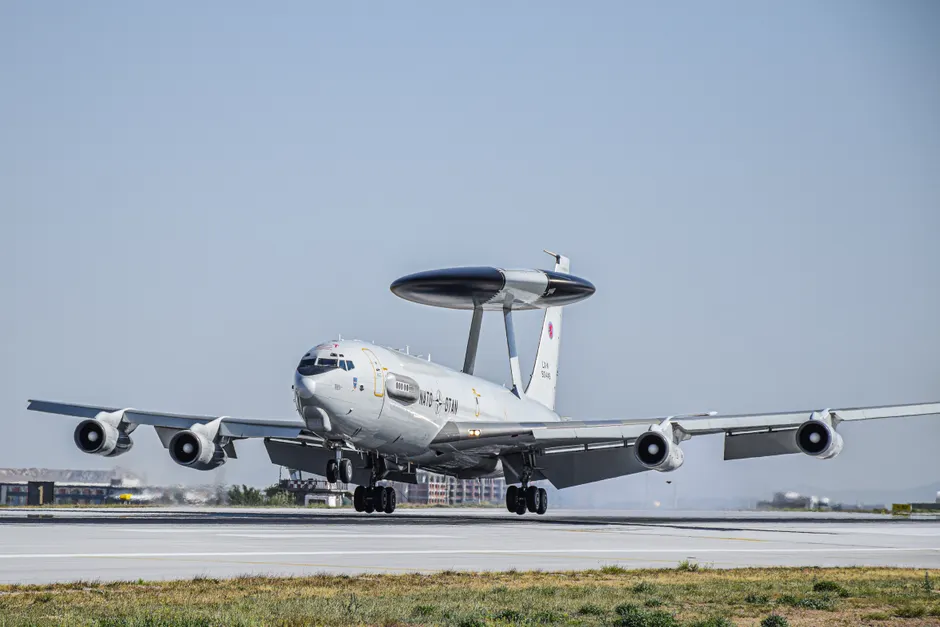
That messaging runs alongside a busier NATO exercise calendar in the same period. TASS reported the alliance's BALTOPS 2026 naval drills in the Baltic and its Ramstein Flag 2026 air exercise, scheduled June 8-19 across Finnish, Norwegian, Swedish and Danish airspace with 19 member states participating TASS. TASS also reported that NATO's secretary-general confirmed a reduction in US troop levels in Poland and Germany would begin "immediately" TASS, and previewed a summit agenda built around military confrontation with Russia, expanded arms supplies, and funding, to be put before Donald Trump TASS. Reuters separately confirmed NATO leaders were gathering for a summit in Ankara on July 7-8 Reuters.
The two threads — a US drawdown in Central Europe and Russian claims of a NATO war footing — sit uneasily together. Reuters reported on June 29 that senior European officials assess Russia could rebuild its military to a level threatening NATO territory within a few years, a timeline discussed as European governments overhaul war-fighting doctrine Reuters. A US intelligence assessment from March, meanwhile, addressed the possibility of direct Russia-NATO conflict without offering any forecast of timing Russia Matters.
The gap between Putin's territorial claims and ISW's tally matters beyond bragging rights. A Kremlin narrative resting on modest, costly gains needs a bigger enemy to justify continued sacrifice — hence the pivot from "special military operation" against Ukraine to a broader confrontation with the Atlantic alliance. That reframing does useful domestic work whether or not NATO forces have fired a shot: it recasts stalled advances as resistance against a superpower bloc rather than against Ukraine alone, and it lays rhetorical groundwork should Moscow need to justify an expanded call-up.
Whether this constitutes evidence of Russia actually preparing for conflict with NATO, or merely narrating one for domestic consumption, is contested by design. Polyanskiy's OSCE statements assert NATO aggression as established fact; NATO's own summit agenda, per TASS's characterization, treats confrontation with Russia as a planning scenario rather than a declared war. Both framings serve institutional purposes for their authors. What is verifiable is the exercise calendar, the troop drawdown announcement, and the arithmetic gap between Kremlin and ISW battlefield figures — the rest remains a battle of narratives running parallel to the one on the ground.