US Declares Iran Ceasefire 'Over' After Strikes on 80+ Targets, Trump Floats Kharg Island Takeover

The ceasefire that Trump declared dead
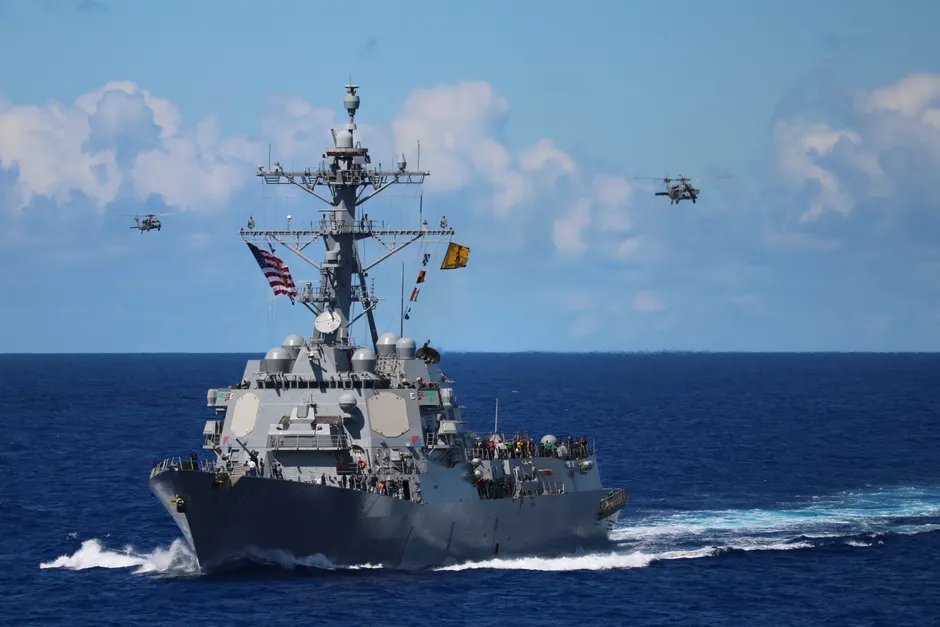
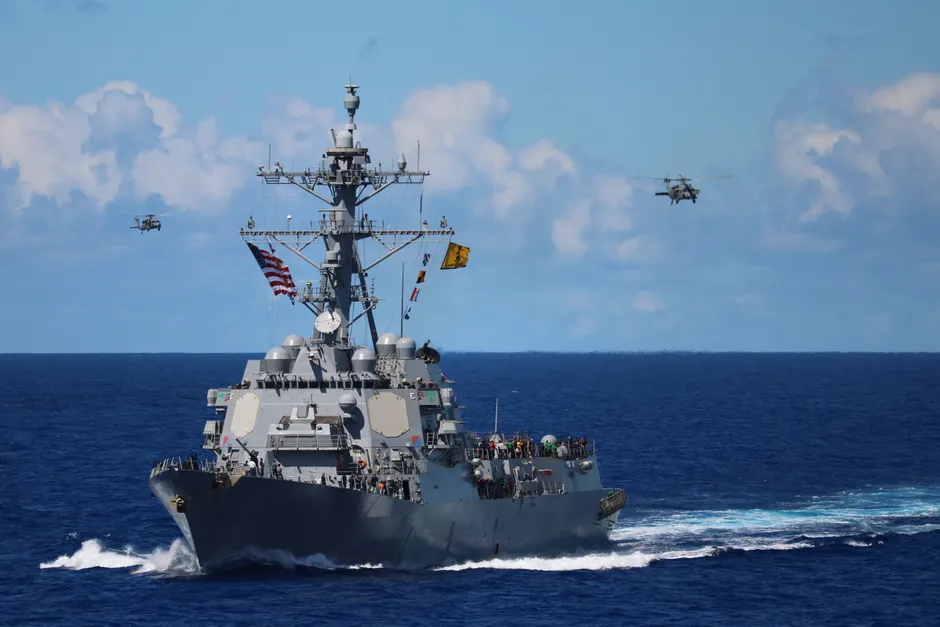
US Central Command said Tuesday it had completed a new round of retaliatory strikes against Iran, hitting more than 80 targets after an overnight exchange that Centcom described as necessary to "further degrade Tehran's ability to threaten freedom of navigation" in the Strait of Hormuz Reuters. The strikes came after Iranian state media reported explosions in Sirik, Qeshm, Bandar Abbas, Konarak, Chabahar and near Bushehr, with air defence systems activated over Bandar Abbas BBC; Al Jazeera.
President Trump, speaking from the NATO summit in Ankara, said the ceasefire with Iran is "over" and that he'd "probably hit them hard again tonight." He called further negotiations "a waste of time" — this despite the fact that the 60-day negotiating window under the US-Iran memorandum of understanding, signed 17 June, has not yet expired BBC; Al Jazeera.
The immediate trigger was a tanker attack. On Tuesday the US military said it launched what it called "powerful" strikes after three tankers were hit in the Strait of Hormuz. Iran responded Wednesday by having the Islamic Revolutionary Guard Corps target US military sites in Bahrain and Kuwait — retaliation Foreign Minister Abbas Araghchi framed on X as a matter of principle: "We do not answer vulgarity with vulgarity, but with action: fearlessly and with great valour" BBC. Centcom's public framing has been consistent across this cycle of strikes, describing the campaign as accountability for "unjustified aggression against commercial shipping and civilian crews freely navigating a vital international waterway" BBC.
This is not the first breakdown since the MoU. Washington struck Iran on 26 June after an Iranian projectile hit a cargo ship, and again on 27 June following a tanker attack — CENTCOM documented both rounds in press releases on its "Attack on Apache" and "Latest Strikes in Iran" statements CENTCOM; CENTCOM. Both sides subsequently agreed to stand down. The current exchange is, by the BBC's characterization, the worst between Washington and Tehran since the memorandum was signed BBC.
At the center of the dispute is a single clause. The MoU's fifth point commits Iran to "make arrangements using its best efforts for the safe passage of commercial vessels, with no charge for 60 days only, from the Persian Gulf to the Sea of Oman, and vice versa." Iranian Foreign Ministry spokesman Esmaeil Baghaei has argued this language gives Tehran sole authority to determine passage arrangements through the strait Al Jazeera. Washington reads the same clause as an unconditional guarantee of unfettered transit for all vessels — a position Al Jazeera's Kimberly Halkett reported the administration continues to maintain from Washington Al Jazeera.
That interpretive gap is where the ceasefire actually failed. A 14-point framework negotiated in mid-June — covering a 60-day pause for talks, safe passage guarantees, and US sanctions relief — was specific enough to be signed but left the mechanics of enforcement to custom and goodwill rather than a verification regime. When both governments read the safe-passage clause to hand themselves the deciding authority, the document stopped functioning as a ceasefire and became, instead, a text each side could cite while continuing to strike.
Trump's rhetoric since has moved well beyond the immediate tanker dispute. He has floated targeting Iran's electricity and water infrastructure — action that international law experts characterize as a war crime under the laws of armed conflict — and said US forces "may take over" Kharg Island, Iran's principal oil export terminal Al Jazeera. He also said the US could reinstate a naval blockade and suggested Washington might move to "de-nuclearise" Iran "without a deal" Al Jazeera. CNN reported the US has already reimposed oil sanctions on Iran CNN.
Each of those threats — infrastructure targeting, occupation of an oil terminal, a blockade, forced denuclearization — describes an escalation of a fundamentally different character than degrading air defense and radar sites near the strait, which is what CENTCOM says its strikes have actually done so far. Whether they are negotiating leverage delivered from a NATO podium or a genuine statement of intent is not yet answerable from the public record. What is clear is that the gap between rhetoric and executed strikes has, at each prior juncture in this cycle, narrowed rather than widened.
Kharg Island alone handles the overwhelming majority of Iran's crude exports; any US move against it would cross from strait-security operations into direct assault on Iran's economic lifeline, a threshold the strikes to date — focused on air defense, radar, and surveillance nodes near Hormuz — have not approached. The MoU's 60-day clock, notionally still running, now looks less like an active negotiating track than a piece of paper both governments have stopped consulting.