Sunrun Launches Pilot to Turn Rooftop Solar Homes Into Distributed AI Data Centers
Sunrun has opened a pilot program that places AI compute nodes inside customers' homes, converting residential solar and battery installations into a distributed pool of processing capacity that the company intends to sell to enterprise AI buyers The Verge. The pilot was announced July 8, 2026, and Sunrun's stock rose 7.30% in premarket trading that day on the news Yahoo Finance.
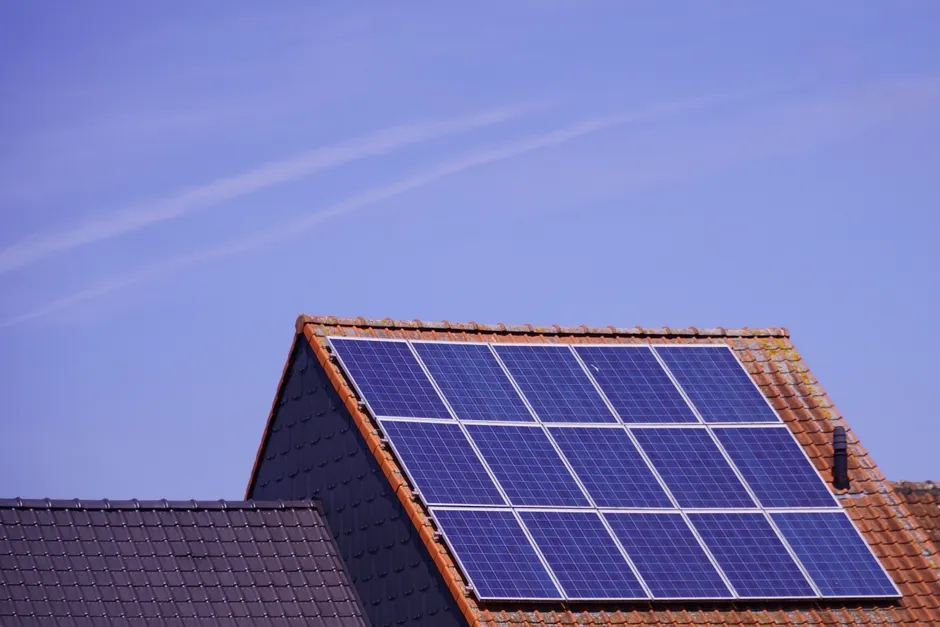
The mechanics are straightforward on paper. Sunrun installs what it calls AI Compute Nodes in homes already equipped with its solar panels and battery storage systems. Those nodes draw on the home's existing power infrastructure and, per the company, are built to run quietly enough for a residential setting sunrun.com/compute. Participating homeowners get compensated for hosting the hardware and for the power it draws; Sunrun, in turn, packages the aggregated compute capacity and sells it to enterprise buyers — AI companies chief among them — who need processing capacity but can't get it fast enough through conventional data center buildouts.
Sunrun says the underlying concept has already been tested. The company ran a proof of concept for the distributed compute model prior to this pilot and characterized it as successful, though it has not published granular performance data from that earlier phase The Verge. The current pilot is expected to run over the coming months, after which Sunrun says it will evaluate results before deciding whether to expand the program across its customer base. That customer base is not small: Sunrun counts roughly 1.1 million customers, and interested homeowners can join a waitlist at sunrun.com/compute.
Sunrun is not running this alone. The initiative is built in partnership with Renew Home and Tesla, and the three companies together describe delivering more than 16 gigawatts of flexible home energy capacity earmarked for data centers and AI workloads sunrun.com/compute. Renew Home's presence points toward the demand-response and grid-flexibility side of this equation — coordinating thousands of distributed batteries and inverters as a single dispatchable resource is a discipline that predates the AI compute angle by years. Tesla's involvement brings its own battery and energy-management stack, and the Sunrun-Tesla relationship already runs through existing Powerwall installations across the overlapping customer footprint.
The full press release announcing the pilot was published through Sunrun's investor relations channel on July 8, 2026 Sunrun investor relations, positioning this as a corporate and financial disclosure as much as a product announcement — unsurprising given the timing of the stock move.
The commercial logic here is that AI compute demand has outrun the pace at which hyperscale data centers can be sited, powered, and interconnected to the grid. Utility interconnection queues in several U.S. regions now run into multi-year waits, and new data center campuses increasingly compete with existing residential and industrial load for the same substations and transmission capacity. Distributed compute sitting behind a home's existing solar-plus-storage system sidesteps a chunk of that bottleneck: the power generation and storage infrastructure is already installed, the interconnection already exists, and the marginal load added by a compute node is small relative to what a new data center campus would require.
Whether the economics actually work at scale is the open question the pilot is designed to answer. Enterprise AI buyers care about latency, uptime, and aggregate throughput in ways that a network of geographically scattered residential nodes will have to prove out under real workloads, not just in a controlled proof of concept. Coordinating thousands of small, intermittent compute sites into something an AI company can actually schedule inference or training jobs against is a materially different engineering problem than running a single hyperscale facility, even before accounting for the physical security and reliability expectations enterprise customers typically demand from compute vendors.
There is also a behavioral variable that solar and storage companies have wrestled with before: whether homeowners who sign up for compensation now stay enrolled once the novelty fades, especially if the node generates noticeable heat, noise, or a visible increase in the home's power draw. Sunrun's emphasis on quiet in-home operation suggests the company is already anticipating that friction point.
The broader significance, if the pilot succeeds, is less about Sunrun's balance sheet and more about what it implies for how compute capacity gets built going forward. For three decades the answer to "where does compute live" has trended toward ever-larger centralization — mainframes to client-server to cloud region to hyperscale campus. A model in which idle residential energy infrastructure becomes a saleable compute asset would push against that trend, distributing capacity the way rooftop solar itself distributed generation away from utility-scale power plants. That is a real possibility worth watching rather than a settled outcome, and Sunrun's own framing — a pilot, assessed before wider rollout — treats it that way too.