Uber Lobbies Against D.C. Driverless Bill Backed by Waymo, Its Own Robotaxi Partner

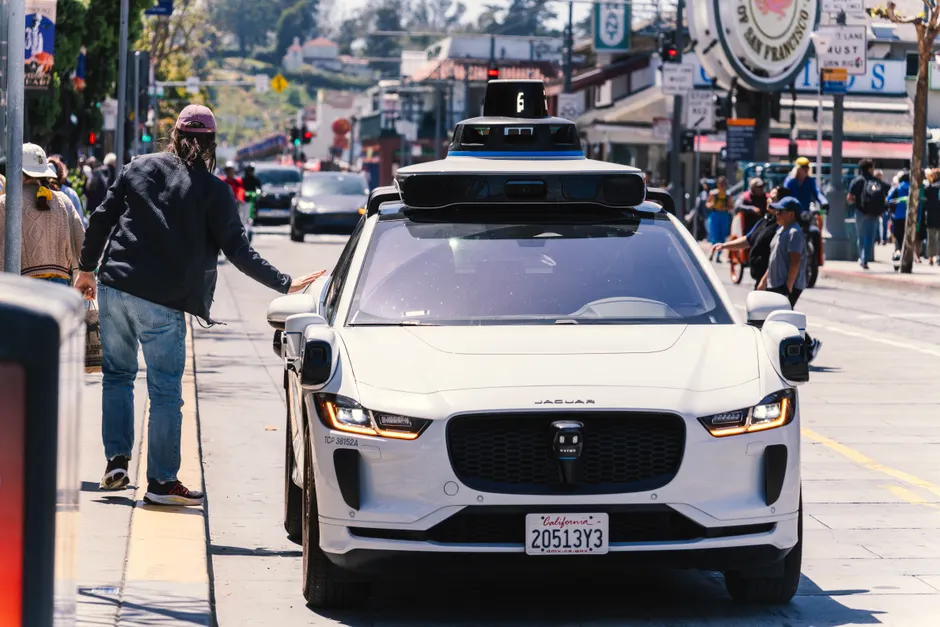
Uber is actively lobbying against a proposed Washington, D.C. autonomous vehicle bill that Waymo, its own robotaxi partner, supports — a split that surfaces publicly at a D.C. Council hearing scheduled for Monday, July 14, 2026 TechCrunch.
The bill, designated B26-0684 and introduced by Councilmember Charles Allen in May 2026, would update the district's Autonomous Vehicle Act of 2012 to permit driverless testing and commercial driverless operations. Currently, companies including Waymo and Zoox can only test AVs in D.C. with a human safety operator behind the wheel. The legislation would hand the District Department of Transportation authority to issue driverless testing and deployment permits, require a minimum $5 million in liability insurance per permit holder, and mandate crash-data reporting within 8 hours for commercial fleets or 72 hours for privately owned AVs TechCrunch.
Uber opposes the bill outright, arguing it would displace for-hire human drivers and hand Waymo a de facto monopoly in the district. The company's case rests substantially on figures presented by Javi Correoso, who leads Uber's U.S. policy and federal affairs, during a May 2026 D.C. Council roundtable. Correoso told councilmembers that one autonomous vehicle displaces roughly four human drivers, and that robotaxis generate congestion by idling or cruising empty while lacking the capacity to provide physical assistance that human drivers can offer older or disabled riders.
Uber's preferred alternative is what it calls a "hybrid model": a regulatory framework requiring robotaxis to operate on a ride-hailing network that also dispatches human drivers, rather than running as a standalone driverless fleet. Correoso has been explicit that Uber wants this structure imposed as a regulatory mandate for the entire AV industry, not offered merely as a consumer option layered on top of existing app choice.
Waymo, for its part, backs the bill as written, contending it enables safe AV deployment while supporting public transit, equitable access, and driver workforce transitions without imposing operational restrictions on companies like Uber. The dispute is notable given the two companies' commercial relationship: Waymo vehicles already operate through Uber's app in several markets, making this a case of a platform partner lobbying against legislation its own supplier is championing.
The bill carries fiscal mechanics beyond the permitting structure. It would impose a $0.15-per-mile vehicles-miles-traveled tax on robotaxi operators, with revenue split 50 percent to public transit and the remainder toward education and workforce development programs for ride-share and taxi drivers — a provision that appears designed, at least in part, to blunt exactly the driver-displacement argument Uber is making. Tesla, Lyft, the Teamsters, and the Service Employees International Union are also engaged with the bill, according to TechCrunch, giving Monday's hearing a broader coalition of interested parties than a simple Uber-versus-Waymo framing suggests.
Timing matters here. Multiple parties told TechCrunch they want the legislation approved before the end of 2026, and specifically before Mayor Muriel Bowser leaves office in January 2027 — a deadline that compresses what might otherwise be a slower-moving regulatory fight into a matter of months.
The D.C. fight sits inside a wider pattern of accelerating AV lobbying nationally. Axios reported in February 2026 that Waymo had significantly increased its D.C. lobbying spend after the district's robotaxi rollout stalled — context that helps explain why Waymo is now pushing so forcefully for B26-0684 rather than waiting on incremental permitting. Waymo had announced in March 2025 that it intended to launch a robotaxi service in D.C. via the Waymo One app in 2026 TechCrunch; that timeline has evidently run into the same regulatory bottleneck the new bill is meant to clear.
At the federal level, the SELF DRIVE Act (H.R.7390), introduced in the 119th Congress, would give NHTSA authority over automated driving systems and would preempt state and local rules that prohibit or partially prohibit AV deployment, provided manufacturers meet federal standards Congress.gov. The Senate Commerce Committee's February 2026 hearing, "Hit the Road, Mac: The Future of Self-Driving Cars," took Waymo testimony on how outdated regulation constrains deployment, and the Trump administration has separately convened AV safety forums with the CEOs of Waymo, Zoox, and Aurora aimed at accelerating rollout. Should SELF DRIVE Act preemption advance, it could eventually override whatever D.C. settles on locally — though that outcome remains speculative and contingent on federal timelines that have historically moved slower than municipal ones.
What makes the D.C. dispute worth watching closely is less the policy mechanics than the corporate alignment it exposes. Uber's hybrid-model demand effectively asks regulators to protect its aggregator position against a future where autonomous fleets bypass ride-hailing platforms entirely and deal directly with riders. Waymo, conversely, has less need for Uber's dispatch layer once permitted to operate its own branded app in a jurisdiction. In this author's view, the more consequential long-term question isn't whether D.C. passes B26-0684 this year, but whether Uber's hybrid-mandate framing gains traction in other cities as a template — because if it does, it reshapes the competitive relationship between AV developers and ride-hailing platforms well beyond the district's borders.