US Disables Oil Tanker in Strait of Hormuz as Strikes Enter Fifth Day, Iran Retaliates Against Gulf States

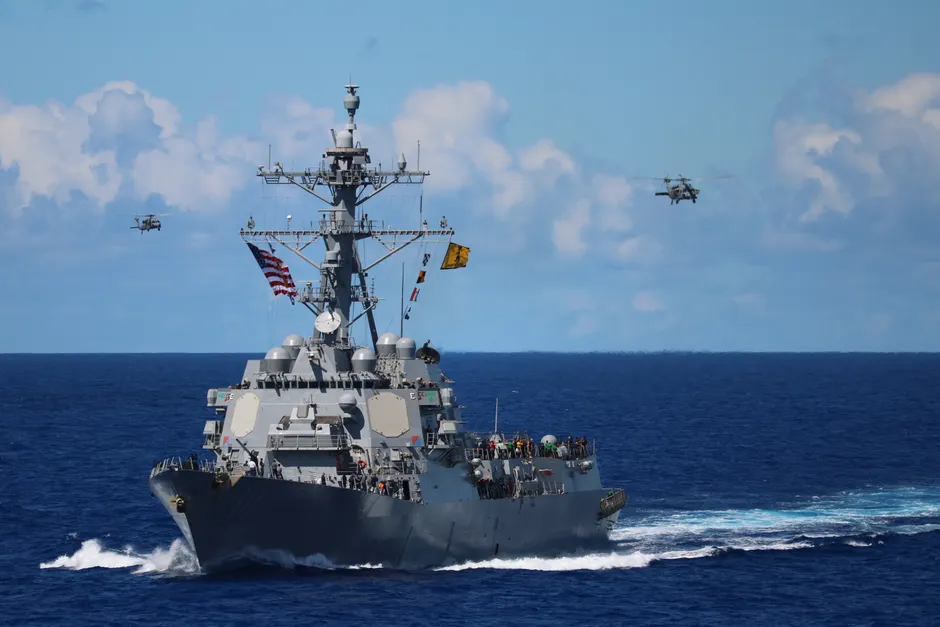
The US military disabled an unladen oil tanker in the Strait of Hormuz on July 16, 2026, marking the fifth consecutive day of American strikes against Iranian targets across the Persian Gulf region. The attack was carried out with Hellfire missiles fired into the vessel's smokestack after it ignored multiple warnings, according to The Guardian.
The tanker had been attempting to reach Kharg Island, Iran's principal crude export terminal, in violation of a US naval blockade on Iranian ports reimposed on July 15. US Central Command (CENTCOM) stated that the strikes targeted Iranian military capabilities "used to threaten vessels freely transiting through the strait of Hormuz, an international waterway vital to global commerce." No specific military unit or named spokesperson beyond CENTCOM was cited in the report.
The same day saw US strikes on the Iranian capital. Air defences were heard throughout Tehran in the early hours of July 16. The capital had not been a direct target in the prior days of the campaign, which had focused on maritime and coastal military infrastructure.
On July 15, the US targeted coastal defences and missile sites along Iran's southern littoral, and separately struck cruise missile storage and launch facilities on Greater Tunb Island, a strategically positioned Iranian-held island in the eastern Strait of Hormuz. The reimposition of the naval blockade coincided with these strikes.
Iranian officials stated that the cumulative US strikes have killed more than 35 people and wounded more than 300. These figures have not been independently verified.
Iran's retaliation extended beyond US forces. Tehran launched attacks targeting Bahrain and Kuwait, both host to substantial US military installations. The targeting of Gulf Cooperation Council states marks an escalation from a bilateral US-Iran confrontation to one drawing in neighbouring monarchies that have allowed American forces to operate from their territory.
The Islamic Revolutionary Guard Corps (IRGC) issued a threat to shut down all energy exports from the Middle East. "Regional energy exports are either shared by all or denied to all," the IRGC said, language that tracks with longstanding Iranian doctrinal positioning on the Strait of Hormuz as a collective resource rather than an open international chokepoint.
Tehran's chief negotiator, Mohammad Bagher Ghalibaf, addressed the diplomatic track. He warned that the US-Iran memorandum of understanding could "only have meaning if its clauses are valid and being implemented," signalling that the agreement, however its terms are defined, is now under acute strain.
The current campaign has roots in a multi-month escalation. The US established "Project Freedom," a military operation aimed at opening the Strait of Hormuz and enabling commercial shipping to transit safely, after Iran blocked passage for cargo and tanker vessels, trapping thousands of ships inside the Persian Gulf, according to defense.gov. On June 10, Secretary of War Pete Hegseth announced that the US planned major strikes on Iran. The Department of Defense, which as of 2026 operates under the designation "Department of War" with Hegseth as Secretary of War, laid the groundwork for the current posture through Project Freedom's operational framework.
A prior tanker interdiction occurred on July 2, when the US fired a Hellfire missile at a vessel heading toward Iran. The US also announced it would charge a 20% fee on Strait of Hormuz cargo, according to Reuters. The tariff mechanism and the kinetic enforcement actions together constitute a layered approach: commercial vessels transiting the strait face a fee regime, while vessels attempting to reach Iranian ports face military interdiction.
The broader context here is a systematic dismantling of the prior maritime status quo in the Persian Gulf. The Strait of Hormuz carries roughly a fifth of global oil liquefied natural gas shipments through its narrow shipping lanes. Iran's blockade, the US military response under Project Freedom, the reimposed naval embargo, and now strikes on Tehran itself have collapsed whatever tentative framework the US-Iran memorandum of understanding represented. Ghalibaf's statement is not a withdrawal from that agreement but a conditional warning, and the gap between condition and reality is widening.
The IRGC's "denied to all" threat carries weight because Iran retains asymmetric capabilities along the strait's northern shore, including fast-attack craft, anti-ship cruise missiles, and naval mines. Whether the Guard Corps can or will execute a full closure under sustained US bombardment of those same capabilities is the operational question the coming days will answer. Iran's decision to strike Bahrain and Kuwait rather than attempt a direct closure of the strait suggests a strategy of widening the conflict's geography to impose costs on US regional partners, rather than a head-on contest for the waterway.
The trajectory points toward sustained escalation. The US has demonstrated willingness to strike the Iranian capital, enforce a blockade with lethal force against shipping, and maintain a five-day operational tempo without a publicly articulated exit condition. Iran has demonstrated willingness to absorb those strikes and retaliate against third-party states. Neither side has signalled a threshold for de-escalation, and the diplomatic instrument both sides reference, the memorandum of understanding, is being hollowed out in real time.