Astronomers Detect Helium in the Atmosphere of Rocky Exoplanet LHS 1140b
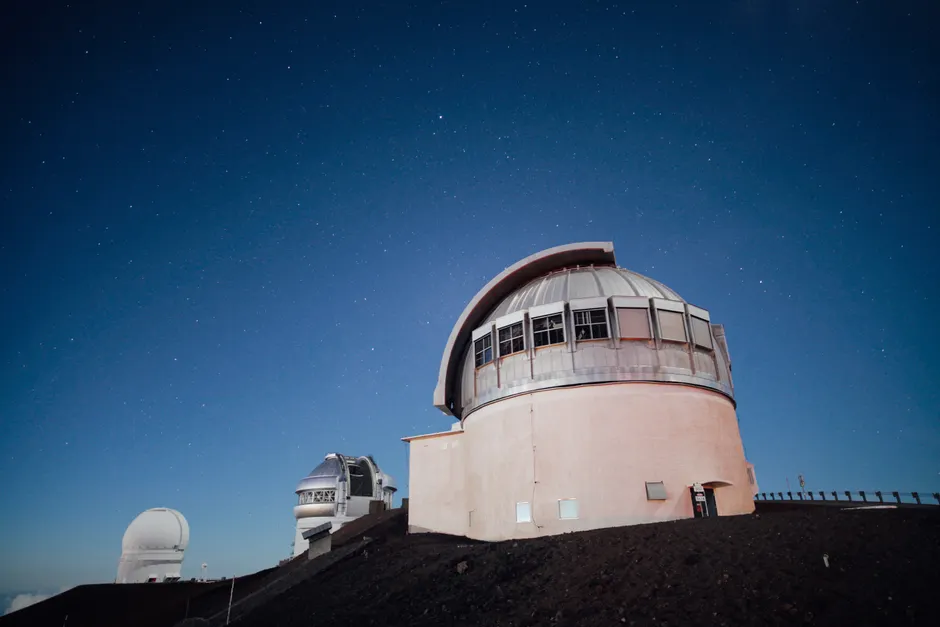
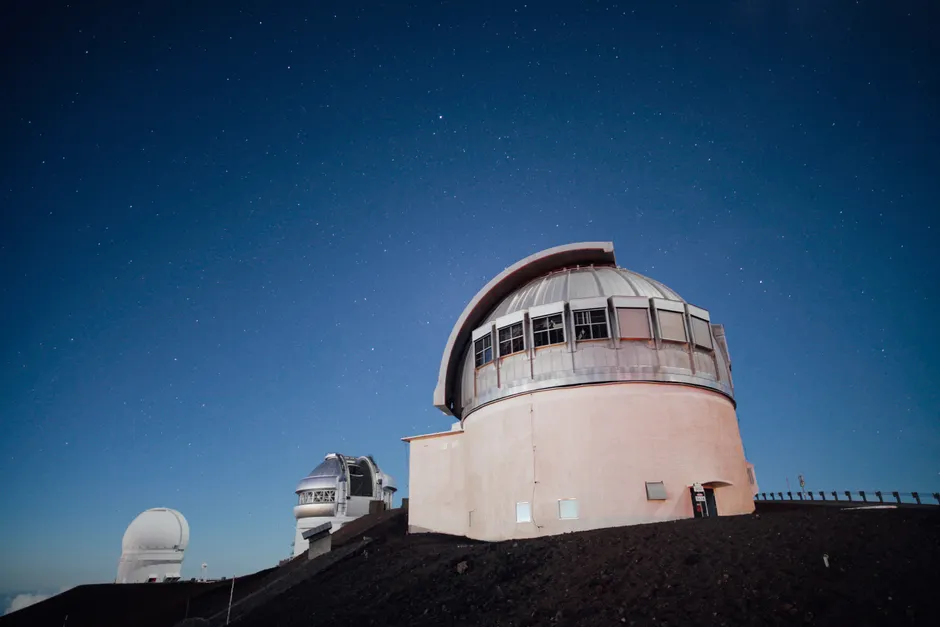
Astronomers have directly detected helium in the atmosphere of LHS 1140b, a rocky exoplanet roughly 48 light-years from Earth orbiting within its star's habitable zone. The observation, conducted using the Magellan Clay telescope at Las Campanas Observatory in Chile, is the first direct atmospheric detection for any rocky exoplanet and the first confirmed atmosphere around a rocky, Earth-like planet in the habitable zone (Space.com).
The finding was announced on July 16, 2026, through press releases from the AAAS/EurekAlert service and the University of Florida. The EurekAlert release, titled "Detected: Rocky, habitable-zone exoplanet with an atmosphere," describes helium escaping from the planet's atmosphere (EurekAlert). The University of Florida published its own institutional announcement the same day (University of Florida).
LHS 1140b orbits a nearby star and sits within the habitable zone, the orbital region where liquid water could in principle exist on a planetary surface. The planet is classified as rocky, placing it in a category that has been extraordinarily difficult to characterize atmospherically. Gas giants and hot Jupiters have yielded atmospheric signatures for years through transit spectroscopy, but rocky exoplanets, with their far smaller atmospheric columns, have resisted equivalent analysis. The helium signal from LHS 1140b breaks that barrier.
The helium was detected as it escapes the planet's atmosphere, a process consistent with hydrodynamic atmospheric loss driven by stellar irradiation. Helium, being chemically inert, is a useful tracer for atmospheric dynamics because its presence or absence directly reflects physical processes rather than chemical reactions that might otherwise complicate interpretation.
The observational campaign was motivated by a computer model that predicted a helium-dominated, escaping atmosphere on LHS 1140b (USA Today). That modeling work provided the theoretical basis for targeting the planet with the Magellan Clay telescope's spectroscopic capabilities. The confirmation of the prediction lends weight to the modeling framework used, which could inform future observational strategies for other rocky exoplanet candidates.
The broader context here is the long-standing gap between detecting exoplanets and characterizing their atmospheres. Thousands of rocky exoplanets have been identified, primarily through transit and radial velocity methods, but the atmospheric properties of virtually all of them have remained inaccessible. The ability to detect an atmospheric component on a rocky planet in the habitable zone narrows that gap. It does not, by itself, establish the presence of water, a biosphere, or surface conditions amenable to life. The Guardian's coverage notes that the atmosphere could contain water, but that is a possibility raised for further investigation, not a confirmed finding (The Guardian).
Worth flagging is the instrumentation dimension. The Magellan Clay telescope is a ground-based facility, and the detection was achieved without space-based platforms like the James Webb Space Telescope. Ground-based spectroscopy of this kind operates in a regime where telluric contamination and atmospheric seeing have historically limited sensitivity to thin rocky-planet atmospheres. A successful helium detection from a ground telescope suggests that the instrumental and data-reduction techniques have matured to a point where a broader survey of rocky exoplanet atmospheres from ground-based facilities may be feasible.
The detection of escaping helium also carries implications for planetary evolution. Atmospheric loss is a key mechanism by which rocky planets, particularly those orbiting M-dwarf stars, may be stripped of volatiles over geological timescales. LHS 1140b's host star type is a factor in interpreting how long the planet may have retained its atmosphere and what its present composition reveals about its history. The observed helium outflow provides a direct observational constraint on those models.
In this author's view, the most consequential outcome of this detection is not the helium itself but the proof of concept it provides. For the exoplanet community, the ability to probe the atmosphere of a rocky, habitable-zone planet with a ground-based telescope opens a population of targets that has been theorized about extensively but observed scarcely. The next questions, whether water vapor is present, whether the atmosphere is stable or eroding, and whether surface conditions support liquid water, can now be posed against an observational foothold rather than speculation alone.
The LHS 1140b system remains one of the more accessible targets for follow-up. At 48 light-years (Phys.org), it is close enough for continued spectroscopic monitoring, and the confirmation of an atmospheric signal provides a baseline against which future observations can be compared. Whether this atmosphere is a long-lived envelope or a transient remnant in the final stages of erosion is among the questions that repeated observation may eventually answer.