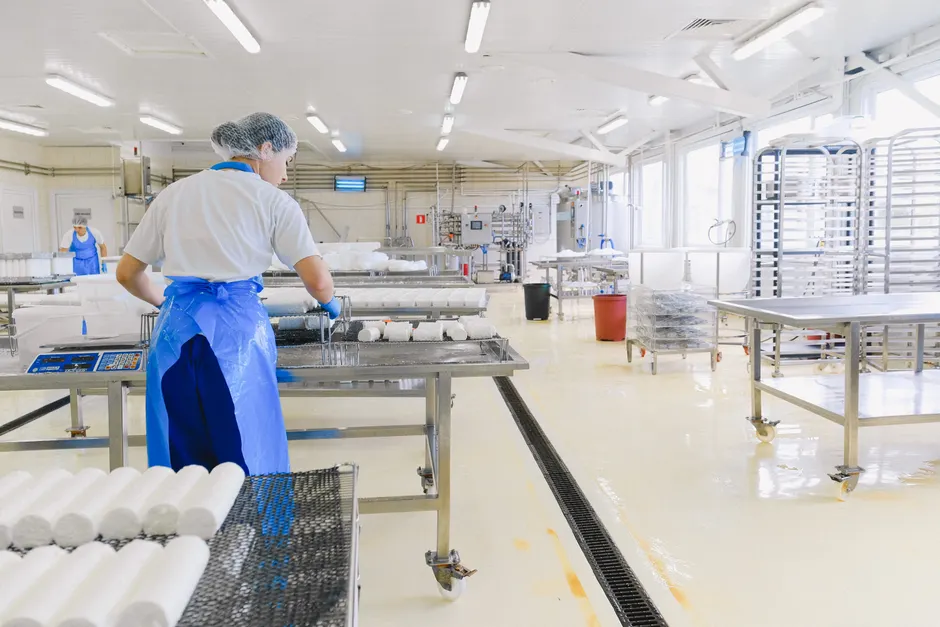
Coca-Cola Halts fairlife US Operations After Ransomware Strike on Production Systems

Coca-Cola has suspended all US operations at fairlife, its ultra-filtered milk subsidiary, following a ransomware attack that compromised production-related systems. The company disclosed the incident in an SEC filing dated July 16, 2026, stating that it discovered unauthorized third-party access to portions of fairlife's technology infrastructure that day Engadget.
Coca-Cola described the intrusion in its regulatory filing as occurring "in connection with a ransomware event." The accessed systems included those related to production, prompting the company to halt fairlife's US manufacturing operations as a containment measure. fairlife's Canadian production facilities remained operational as of the filing Engadget.
The company has engaged external cybersecurity experts to investigate and remediate the incident and has notified law enforcement authorities. Coca-Cola stated in its SEC filing that "the full scope, nature and impacts of the incident are not yet known" and that it has not yet determined whether the incident is reasonably likely to materially affect the company Engadget.
Coca-Cola also stated that product quality and safety were not impacted by the breach. The company has not disclosed the specific ransomware strain, the identity of the threat actor, or whether any data exfiltration occurred alongside the encryption activity Engadget.
The breach drew rapid coverage across cybersecurity and mainstream outlets. BleepingComputer and TechCrunch reported on the incident on July 16, 2026, with Engadget, Help Net Security, and Bloomberg News following with additional detail on July 17 BleepingComputer; TechCrunch; Bloomberg; Help Net Security.
fairlife posted $4 billion in sales in 2024, making it a substantial revenue contributor within Coca-Cola's portfolio Engadget. The brand's ultra-filtered milk products have grown into a significant force in the premium dairy category, which gives the production halt real, if still unquantified, supply-chain implications for US grocery and retail channels.
What makes this incident notable from an operational technology standpoint is the direct impact on production systems. Ransomware operators have increasingly targeted industrial control and manufacturing environments, where downtime carries immediate physical consequences: halted lines, spoiled perishables, and downstream distribution gaps. When the compromised systems are OT-adjacent rather than purely IT, the blast radius extends past data recovery into the physical supply chain. fairlife's dairy products are perishable, which compresses the window for restoration in a way that, say, a compromised back-office ERP system does not.
Coca-Cola's SEC disclosure itself is worth noting. The four-business-day disclosure window introduced by the SEC's cybersecurity reporting rules, effective since late 2023, has pushed public companies toward faster, often less-detailed incident reporting. Coca-Cola's filing follows that pattern: timely, but explicitly hedged on scope and material impact. The language the company chose, particularly the admission that it cannot yet determine materiality, is consistent with the early-stage posture most organizations adopt when ransomware encryption has been confirmed but forensic investigation is still underway.
The geographic split is also relevant. fairlife's Canadian operations continuing to run while US facilities are down suggests either that the ransomware did not propagate across the network boundary between the two regions or that Coca-Cola was able to isolate the US environment before lateral movement reached Canadian infrastructure. Either scenario points to at least partial effectiveness of network segmentation, though the company has not confirmed this.
The absence of disclosed data-exfiltration detail is standard for this stage of an incident. Ransomware actors frequently exfiltrate data prior to encryption, using the threat of public release as secondary leverage. Whether that occurred here remains unknown publicly, and Coca-Cola's statement that product quality and safety were unaffected addresses a different concern than data theft.
For security teams in consumer goods and food manufacturing, the fairlife incident is a concrete reminder that ransomware risk in this sector is not abstract. Production downtime for perishable goods carries costs that compound quickly, and the regulatory expectation for prompt disclosure means that incident response plans need to account for both technical remediation and compliance-grade communication within days, not weeks. The investigation is ongoing, and further detail on scope, data impact, and the specific threat actor involved may emerge as forensic work progresses.