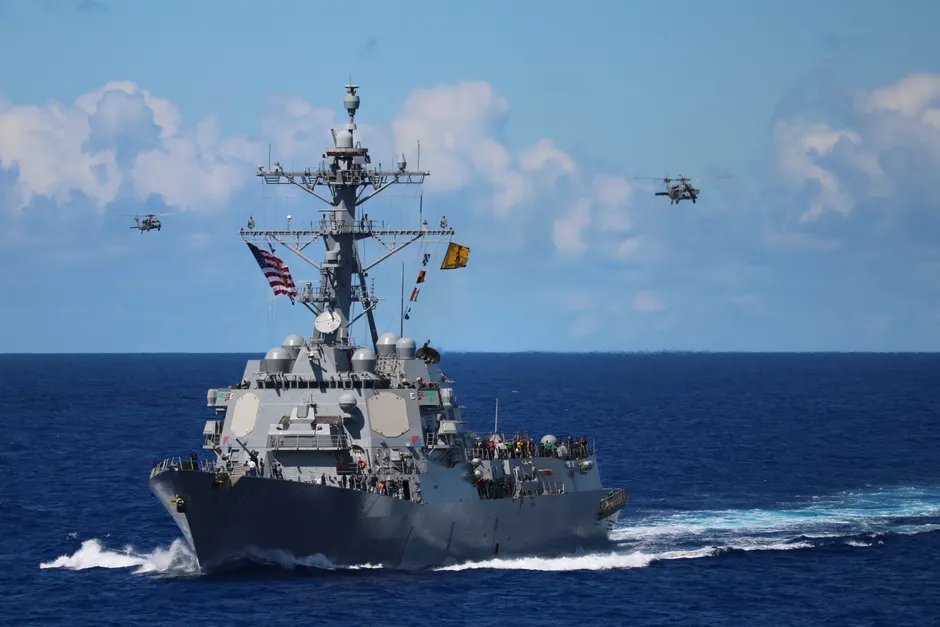
U.S. Strikes Iran for Sixth Consecutive Night, Expanding Campaign to Bandar Abbas Infrastructure

U.S. Central Command completed its sixth consecutive night of strikes against Iran on July 17, 2026, with the campaign expanding from coastal military installations to bridges, railway stations, and airports across southern Iran's Hormozgan province. The latest wave targeted critical infrastructure around Bandar Abbas, Iran's principal port on the Strait of Hormuz, and the nearby coastal city of Bandar Khamir. Reuters
The escalation follows President Donald Trump's July 14 reimposition of a naval blockade on all Iranian ports, accompanied by a threat to strike power plants and bridges in the days ahead. Reuters Two waves of U.S. attacks on Iran's coastal defenses and missile sites followed on July 15. Reuters
By July 16, the targeting pattern shifted to transportation infrastructure. U.S. strikes hit three bridges and the train station in Bandar Khamir. A separate missile attack targeted Iranshahr Airport. Iranian state media reported that the overnight strikes also struck an airport and a railway station. The Guardian Reuters, citing Iran's state news agency IRNA, reported seven killed in the attacks on Bandar Khamir's bridges. Reuters
The governor's office of Hormozgan province confirmed that several bridges in southern Iran were hit in the latest round of strikes. CNN NBC News and the Associated Press both reported that the U.S. campaign expanded to target bridges and the port of Bandar Abbas in what amounts to a battle over the Strait of Hormuz. NBC News AP
Iranian officials reported that U.S. strikes have killed dozens of people and wounded hundreds of others. AP Separately, Iran's army confirmed that at least seven Iranian military personnel were killed in a U.S. strike on a base in Bampur, in southeastern Iran. BBC
The naval blockade, which the U.S. has maintained since at least April 2026, has already involved interdiction operations against commercial shipping. On April 28, a commercial ship was suspected of attempting to transit to Iran in violation of the blockade, in the Arabian Sea. U.S. forces conducted additional operations related to a suspected blockade violation on July 1. CENTCOM
The FY 2026 U.S. defense budget request overview, published in July 2025, referenced continued military operations related to attacks by Iran-backed Houthi forces, indicating that the current campaign builds on an already budgeted theater posture. DoD Comptroller
The progression from the April port blockade to the sustained bombing campaign now in its sixth night reveals a deliberate escalation ladder. The targeting of bridges, railway stations, and airports around Bandar Abbas points to an effort to degrade Iran's logistical capacity to move goods and military materiel through its principal maritime hub. Bandar Abbas handles the overwhelming majority of Iran's container traffic and sits directly on the Strait of Hormuz, through which roughly a fifth of global oil consumption transits. Disabling the road and rail links connecting the port to Iran's interior would compound the economic pressure of the naval blockade by choking internal distribution networks even for goods already in country.
The Bampur strike, geographically separate from the Hormozgan-targeted infrastructure campaign, suggests the U.S. is also pressing Iran's military posture in the southeast, where Iran maintains forces oriented toward its borders with Pakistan and Afghanistan. The simultaneous pressure on the Strait of Hormuz axis and the southeastern interior raises the question of whether CENTCOM is executing a single coordinated operational plan or parallel campaigns with distinct objectives.
Iran has framed the Strait of Hormuz as a red line. Reuters That formulation matters: closing the strait would disrupt a maritime chokepoint that no importer of Gulf hydrocarbons can easily reroute around. The blockade of Iranian ports, by contrast, is a unilateral enforcement action against Iran-bound traffic. These are different things, and whether Iran retaliates by attempting to close the strait to all shipping, or restricts its response to bilateral military exchanges, will determine whether the conflict remains contained to the U.S.-Iran dyad or draws in naval powers dependent on unhindered passage.
What remains unclear from the available reporting is the state of Iran's coastal anti-ship missile and air defense capabilities after the July 15 strikes. The U.S. described those targets as coastal defenses and missile sites. If those systems were degraded, the enforcement of the naval blockade becomes less contested for U.S. Navy vessels, but the risk of asymmetric retaliation, including fast-boat swarm tactics or mining, would persist. The CENTCOM naval tag page surfacing the "Strikes Against Iran" article signals that Navy assets are operationally central to the campaign. DoD
For now, the campaign shows no sign of tapering. Six consecutive nights of strikes, an active port blockade, infrastructure destruction in Hormozgan, and a stated presidential threat to hit power plants all point to an operation with objectives that extend beyond a punitive signal. Whether those objectives include regime-level pressure or a negotiated maritime settlement is not visible in the public record.