Seven American Aid Workers Quarantine at Contested US-Built Ebola Facility in Kenya
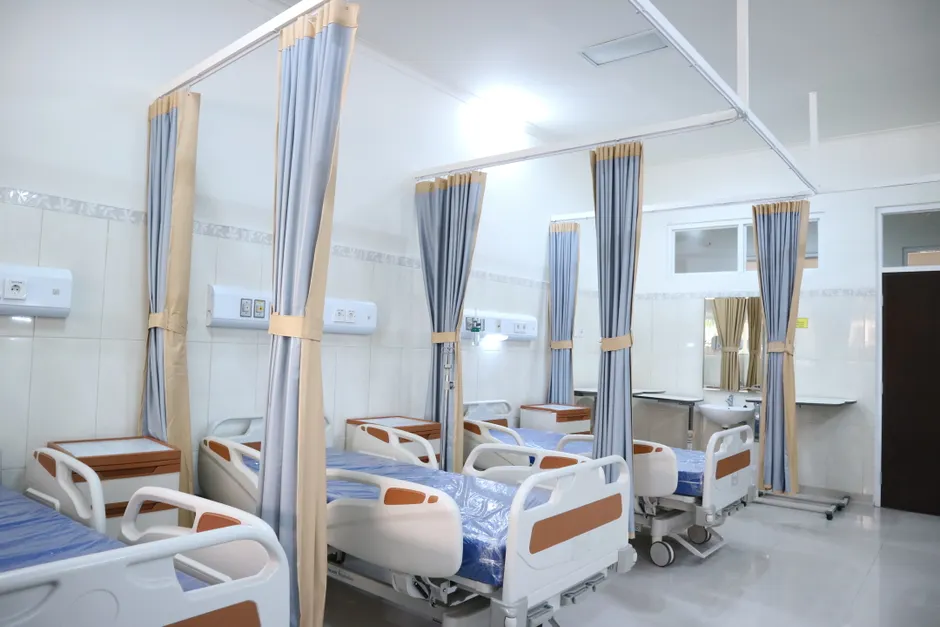
Seven American aid workers who had been deployed to the Democratic Republic of Congo to combat the Ebola outbreak are now quarantining at a new US government isolation facility in Nanyuki, central Kenya. The seven are staff members of Samaritan's Purse's Disaster Assistance Response Team (DART) and are the first known occupants of the 50-bed bio-isolation unit, which is sited on a Kenyan air force base. The Guardian
The group arrived at the site on Monday and were sleeping in army cots in tents. A US State Department official said the seven had voluntarily moved to the Kenya facility for precautionary monitoring and isolation. They are being held under a 21-day quarantine administered by the Kenyan government, which is not allowing them to leave the facility to travel elsewhere in the country. The facility is designed for asymptomatic Americans exposed to the Ebola virus in the DRC or Uganda. Among the seven, there is one potential high-risk exposure. Some had treated Ebola patients at Samaritan's Purse treatment centres in Congo; others carried out construction work with no direct contact with infected patients. The Guardian
The quarantine is the consequence of a US government policy requiring American citizens returning from the DRC to spend three weeks in a third country before entering the United States. Kenya was selected as the site for the bio-isolation unit, and the US government has been building the facility on the air force base in Nanyuki. The Guardian
Samaritan's Purse, an evangelical Christian organisation led by president and CEO Franklin Graham, is one of the largest foreign aid groups operating in the DRC's Ebola response, working alongside the World Health Organization. It employs the largest number of Americans in the country and has been promised several million dollars from the Trump administration for its Ebola work. One Samaritan's Purse US staff member who contracted Ebola earlier in July was transferred to a hospital in Germany on Monday. The Guardian
The facility's arrival at its first occupants follows months of legal and political turmoil in Kenya over its construction. Kenyan High Court Judge Patricia Nyaundi first ordered the suspension of work on the facility on May 28, 2026, barring the government from taking steps to build or begin operations. Reuters
Construction continued. US officials acknowledged ongoing work, and satellite imagery reviewed by Reuters confirmed that US military flights into Nanyuki proceeded in the days after the court order. On June 2, the High Court ordered the government to release details of the facility. Al Jazeera Protests against the facility in Kenya resulted in two deaths. Reuters
President William Ruto defended the US-backed project, calling it the "right thing." Reuters Health Minister Aden Duale was found in contempt of court for failing to observe the suspension order and subsequently announced an immediate halt to construction. The Guardian
The broader context here is a collision between public health imperatives and national sovereignty. The US policy of requiring third-country quarantine for citizens exposed to Ebola in the DRC reflects a precautionary posture shaped by past transmission events, but the decision to build the facility in Kenya, rather than on US soil or in the DRC itself, has generated real friction. The Kenyan judiciary's role in attempting to halt construction, the executive branch's defiance of those orders, and the fatal protests that followed all point to a population that feels it was not consulted on a decision carrying direct biosecurity implications for their communities.
For the aid workers themselves, the quarantine is precautionary. Six of the seven are asymptomatic with low-risk or no direct patient exposure. But the single potential high-risk exposure, combined with the earlier infection and evacuation of a colleague to Germany, underscores the danger of the work and the rationale for the US third-country policy. The 21-day quarantine period aligns with the maximum incubation window for the Ebola virus.
The facility itself, despite the legal challenges, is now operational. Whether Kenyan courts will pursue further action now that Americans are physically housed there remains an open question. The tension between Kenya's judicial branch, which sought to halt construction, and its executive, which facilitated it, has not been resolved by the arrival of patients. It has been overtaken by it.


