Russia Unleashes Five-Hour Ballistic Missile Barrage on Kyiv as Escalation Cycle Intensifies

Russia carried out one of its largest-ever ballistic missile attacks on Kyiv in the early hours of July 19, 2026, launching approximately 40 Iskander-M and hypersonic Zircon missiles across a five-hour raid that killed at least one person and wounded seven more. The assault unfolded in two waves: the first air raid siren sounded at 1:30am local time, with dozens of missiles striking the capital in under an hour. A second siren followed at 6:30am, bringing additional impacts across the city (The Guardian).
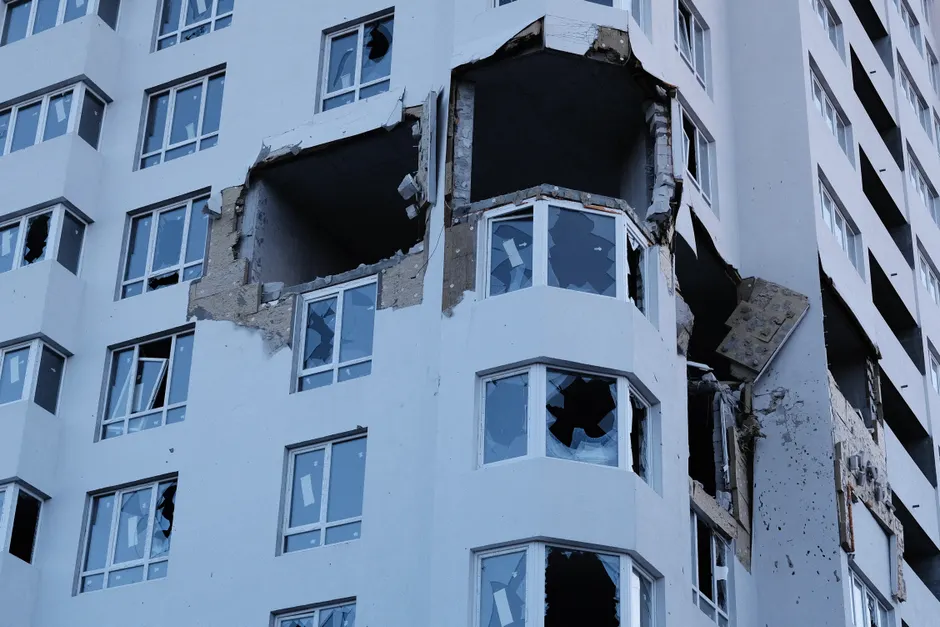
The central Shevchenkivsky district bore some of the heaviest damage. A three-storey building caught fire there, and rescuers subsequently recovered a body from the wreckage while digging out several people trapped inside. Four other areas of Kyiv were also hit, with fires reported at office buildings, residential buildings, and a dormitory. The blast wave from one nearby strike caused the ceiling in the ground-floor vestibule of Lukyanivska metro station to collapse, forcing a temporary closure of the station.
Kyiv's city military administration confirmed the fatality via Telegram. Mayor Vitali Klitschko reported seven wounded. The casualty figures, while modest by the standards of this war's deadliest strikes, reflect the scale of infrastructure damage and the depth of the targeting pattern rather than the human toll alone (The Guardian).
The attack did not occur in isolation. Earlier on Saturday, Russian strikes killed five people and wounded nearly 20 across several regions of Ukraine outside the capital. Then, in a same-day retaliatory cycle, Ukraine dispatched attack drones that destroyed e-commerce warehouses in the Moscow and Tambov regions, killing eight people. The reciprocal strikes, occurring within the same 24-hour window, underscore how deeply embedded the escalation dynamic has become: each side's offensive operations now routinely trigger immediate counterstrikes, with civilian infrastructure and populations absorbing the impact on both sides.
The composition of the barrage merits attention. The use of Iskander-M short-range ballistic missiles alongside Zircon hypersonic cruise missiles in a single raid represents a layered strike architecture. Iskander-M, a road-mobile system with a reported range of roughly 500 kilometers, flies a quasi-ballistic trajectory that allows maneuvering in the terminal phase, complicating interception. The Zircon, a sea-launched hypersonic missile traveling at speeds reported to exceed Mach 5, presents an entirely different interception challenge to air defense networks due to its velocity and low-altitude flight profile. Combining both weapon types in a coordinated saturation attack places maximum stress on Ukraine's layered air defense systems, which must contend with different threat profiles simultaneously.
The targeting of a metro station vestibule also carries practical consequences beyond the immediate structural damage. Ukraine's subway systems have functioned as de facto shelters during air raids since the opening months of the full-scale invasion. Structural compromise to these networks erodes the last reliable layer of civilian protection available during sustained bombardment. The temporary closure of Lukyanivska, even if brief, signals that even underground infrastructure is not immune to the blast effects of large-scale missile impacts.
The broader context here is one of intensifying reciprocal strikes on urban and logistical targets. Russia's missile campaign against Ukrainian cities has continued at varying tempo throughout the conflict, but the deployment of Zircon missiles in volume suggests either an expansion of production capacity or a strategic decision to expend scarce high-value assets in saturation raids. Ukraine's drone strikes on Russian warehouse infrastructure, killing eight, indicate that Kyiv's long-range strike capability continues to operate effectively against rear-area economic targets. Both trajectories, deepening strike depth on both sides, point toward a conflict in which escalation is not episodic but structural.