Russia Launches Largest Ballistic Missile Barrage on Kyiv Since War Began
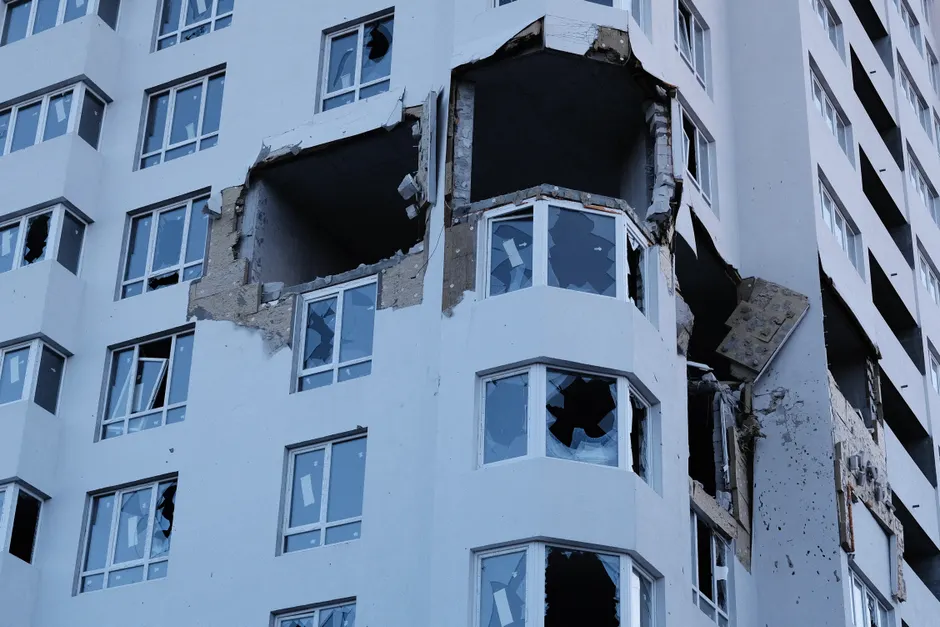
Russia launched its largest ballistic missile attack on Kyiv since the start of the war overnight on July 19, 2026, firing 41 missiles across six districts of the capital, according to Ukrainian officials. Ukraine's air force reported it downed 18 of the 41 missiles. The assault killed one person and injured at least 15, with casualty figures still described as preliminary by the Kyiv City Military Administration (Al Jazeera).
The Kyiv City Military Administration identified the ballistic missile as having been launched from Russia's Bryansk region at approximately 02:05 local time (24 Kanal). The KMVA confirmed one fatality and eight injuries, with six of the injured hospitalized. The Associated Press separately reported one killed and eight injured, citing local authorities (AP via KSAT). Deutsche Welle confirmed that Russian ballistic missiles struck Kyiv, triggering an emergency services response (DW). Focus.ua also reported the KMVA's confirmation of the overnight strike (Focus.ua).
Ukraine's State Emergency Service reported that the strikes caused fires across Kyiv, damaging residential buildings, offices, industrial sites, a dormitory, and vehicles. Ukraine's national police said the attacks spanned six districts of the capital.
Foreign Minister Andrii Sybiha characterized the barrage as "a brutal terrorist attack on the Ukrainian capital" in a post on X, stating that Russia fired its largest number of ballistic missiles since the war began (Al Jazeera).
The assault on Kyiv was accompanied by strikes elsewhere in Ukraine. Regional official Oleksandr Ganzha reported that Russian drone strikes targeted Dnipropetrovsk on the same night, killing one person. Ukraine's national railway company reported that a Russian drone struck a passenger train in the Zaporizhia region, killing its conductor.
Ukraine also stated that its forces struck two Russian oil tankers in the Black Sea, as reported on July 19 (Al Jazeera).
The discrepancy in injury figures across sources reflects the fluidity of early reporting. Al Jazeera's tally of at least 15 injured, citing local officials, is the highest figure reported, while the KMVA's preliminary count stood at eight as reported by RBC Ukraine. The KMVA explicitly characterized its figures as preliminary information, according to 24 Kanal (24 Kanal).
The broader context here is one of escalation in both scale and targeting pattern. Ukraine's air force intercepting 18 of 41 missiles yields a roughly 44 percent interception rate, which is lower than the rates Kyiv has reported during previous large-scale barrages against the capital, though the specific breakdown of missile types among the 41 launched has not been publicly detailed. The simultaneous use of ballistic missiles launched from Bryansk against Kyiv, drone strikes against infrastructure in Dnipropetrovsk and Zaporizhia, and Ukraine's own reported strikes on Russian oil tankers in the Black Sea points to a multi-domain overnight exchange rather than a single-axis operation.
Sybiha's use of the phrase "largest number of ballistic missiles since the start of the war" is a notable framing. Ballistic missiles, with their shorter flight time compared to cruise missiles or Shahed-type drones, compress the window available for air defense engagement. A barrage composed predominantly or significantly of ballistic weapons places particular stress on Ukraine's Patriot and SAMP/T interceptor inventories, which are the systems capable of engaging ballistic targets. The logistical and industrial implications of Russia assembling a ballistic-heavy salvo of this size are worth weighing, as is Ukraine's parallel decision to target Russian energy infrastructure at sea.
The casualty figures remain preliminary and may rise as emergency services continue their work across the six affected districts.


