Nolan's 'The Odyssey' Opens to $264.1M Global, Powered by First-All-70mm-IMAX Production

Christopher Nolan's "The Odyssey" grossed $264.1 million globally in its opening weekend after its July 17, 2026 release, with IMAX 70mm screenings sold out for weeks (The Verge, Variety). The domestic portion of that figure came in at $124 million, the third-biggest debut of the year (The Verge).
The film is an adaptation of Homer's nearly 3,000-year-old epic poem, directed by Nolan with Matt Damon as Odysseus and Bill Irwin as the Cyclops Polyphemus (The Verge). Production spanned locations across the world and employed brand-new IMAX film technology developed for the project (The Verge).
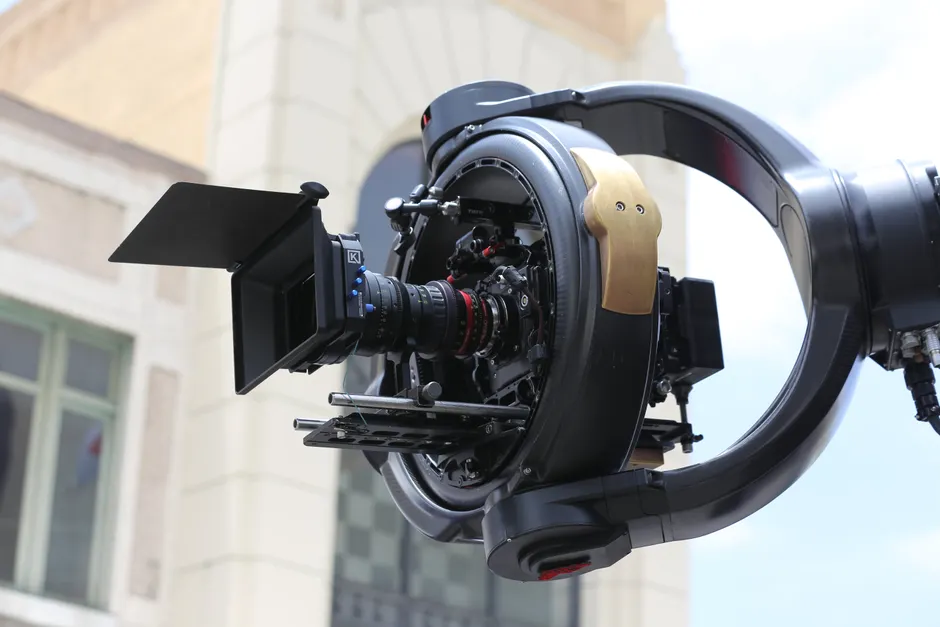
"The Odyssey" is the first feature film shot entirely with 70mm film IMAX cameras (The Verge). Two million feet of IMAX film stock were consumed in the process, yielding roughly 100 hours of footage at 24 frames per second (The Verge). The production pushed through the format's inherent constraints: 70mm IMAX cameras are loud, heavy, and limited to roughly three minutes of recording per load, constraints that shape everything from blocking to take length. Shooting an entire feature on the format, across multiple countries, is a logistical escalation beyond what Nolan attempted on "Oppenheimer," which mixed 70mm IMAX with conventional formats.
The exhibition strategy feeds directly from that acquisition choice. Three distinct aspect ratios are in play depending on exhibition format. Standard IMAX screenings present the film at 1.90:1. 70mm IMAX prints open up to 1.43:1, filling the full height of the giant-screen canvas. 35mm screenings, by contrast, use a widescreen 2.39:1 crop (The Verge). The practical effect is that viewers in different venues see meaningfully different amounts of image area, with the 70mm IMAX presentation delivering approximately 80% more vertical screen real estate than the standard digital IMAX version and roughly 2.4x the image area of the 35mm widescreen crop. The sell-out status of the 70mm IMAX engagements suggests audiences are not just passively accepting that differentiation but actively seeking it out.
The box office return validates the bet. A $264.1 million global opening for a three-hour literary adaptation with no franchise scaffolding is a commercial result that few properties outside established IP universes achieve. That it did so on the strength of a format most theaters cannot project, and a source text studied in middle school rather than consumed as entertainment, makes the financial performance worth noting beyond the raw number. The IMAX 70mm sell-outs functioned as a scarcity-driven demand signal; whether the wider rollout sustains comparable per-screen velocity will be clearer in the coming weeks.
There is also a technical lineage worth tracking. IMAX Corporation has spent years iterating on quieter, more reliable 70mm mechanisms, and a production of this scale puts that hardware through the most sustained real-world stress test it has faced. If the new IMAX film technology used here performs reliably across a full feature shoot, it lowers the barrier for other directors considering the format. Kodak's continued motion-picture film stock production remains the upstream dependency that makes any of this possible; the supply chain for two million feet of 70mm stock is not something that scales on demand.
The downstream question for the industry is whether "The Odyssey" becomes the proof point that normalizes all-70mm-IMAX acquisition for tentpole-scale productions, or whether it remains an outlier enabled by a director with enough clout to absorb the cost and complexity. The answer likely depends on how the format premium translates into sustained theatrical attendance rather than opening-weekend curiosity.