Kore-eda's 'Sheep in the Box' Pairs AI Grief Robotics With ChatGPT Script Consultation
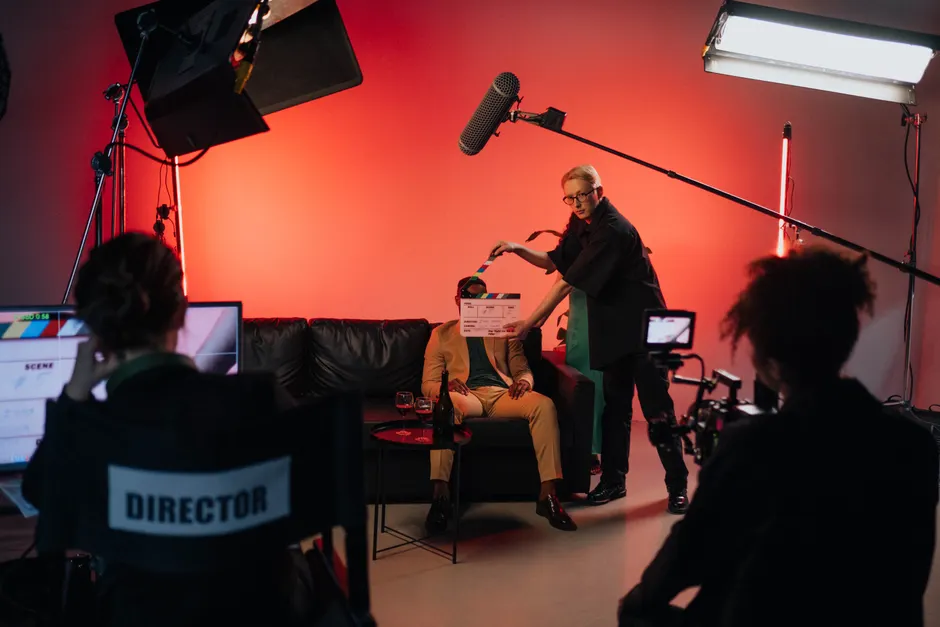
Palme d'Or winner Hirokazu Kore-eda's latest film, the sci-fi drama "Sheep in the Box," arrived for its US debut on July 23, 2026, bringing with it a narrative that sits squarely at the intersection of artificial intelligence and bereavement. The plot centers on a parent whose seven-year-old son dies in a freak accident and who then receives a robotic double of the child from an AI company. The Verge
Kore-eda, who won the Palme d'Or at Cannes for his 2018 feature "Shoplifters," screened "Sheep in the Box" as one of 22 films competing for the prize at the 2026 Cannes Film Festival, where he sought his second Palme. Reuters Reuters
In an interview conducted through an interpreter at Neon's offices days before the US debut, Kore-eda described the research that shaped the script. He consulted a robotics expert during the writing process and was told that "we would sooner have clones of humans than we would humanoid robots," because robots overheat. The detail is notable for anyone tracking the state of humanoid robotics: thermal management remains a gating constraint on bipedal form factors, and the film's premise of a convincing child-sized robotic surrogate is, by the expert's own assessment, further from feasibility than biological cloning. The Verge
Kore-eda also disclosed that he fed the "Sheep in the Box" script through ChatGPT, though the interview did not elaborate on what he used the tool for or how it influenced the final draft. The disclosure places Kore-eda among a growing cohort of creatives experimenting with large language models in the writing process, whether for structural feedback, dialogue iteration, or scene-level alternatives. The Verge
Grief is familiar territory for the director. Kore-eda noted that his first film, "Maborosi," dealt with the subject and that he read Elisabeth Kübler-Ross's books on grief work while making it. "Sheep in the Box" extends that preoccupation into speculative territory, asking what happens when the tools of artificial intelligence are offered as instruments of mourning. The Verge
The film's premise is not purely speculative. Kore-eda cited two real-world precedents during the interview. In Japan, a famous deceased singer was re-created through AI and used to perform a new song. In Korea, a deceased young girl was re-created through AI to help her parents process their grief. Both cases involve the synthesis of a person's likeness or voice from training data, deployed post-mortem for emotional or commercial purposes. The technology underpinning these re-creations, voice cloning and generative facial animation, has matured rapidly, and the ethical and psychological questions Kore-eda dramatizes are ones that families, platforms, and regulators are already confronting. The Verge
The broader context here is that the entertainment industry's engagement with AI has moved well beyond behind-the-scenes tooling. Synthetic media is now a creative material, a posthumem services product, and a regulatory flashpoint simultaneously. When a filmmaker of Kore-eda's stature builds a feature around AI-mediated grief, uses ChatGPT in the writing process, and grounds the fiction in documented real-world cases of AI re-creation of the dead, the film functions as both artwork and cultural diagnostic.
Worth flagging is the gap between the film's technological premise and current engineering reality. The robotics expert's observation about overheating is not a minor caveat. Full-body humanoid robots capable of sustained, convincing interaction with a grieving parent are not on the near-term horizon, and the thermal dissipation problem is one of several hard physical constraints, alongside power density, actuator fidelity, and edge inference latency, that separate today's humanoid platforms from anything that could plausibly pass as a child. The film's AI company supplying a robotic double is, at present, closer to science fiction than to engineering roadmap.
What the film captures more plausibly is the human side of the equation. The emotional readiness of bereaved parents to accept a synthetic surrogate, and the commercial incentive for companies to offer one, are both already in evidence. Voice cloning and digital re-creation services exist today. The question "Sheep in the Box" appears to pose is not whether the technology will arrive but whether the arrival matters in the way its proponents suggest, or whether grief resists technological mediation in ways that no amount of model sophistication can resolve.
For technology professionals, the film is a useful cultural data point. It reflects how AI capabilities are being understood and narrated by artists outside the industry, and it foregrounds the social use cases, posthumem re-creation, grief companionship, surrogate identity, that will shape public expectations of AI systems regardless of what the technical state of the art actually permits.


