Identified GRU Officer Departs Japan After NYT Investigation Exposed Aeroflot Procurement Network
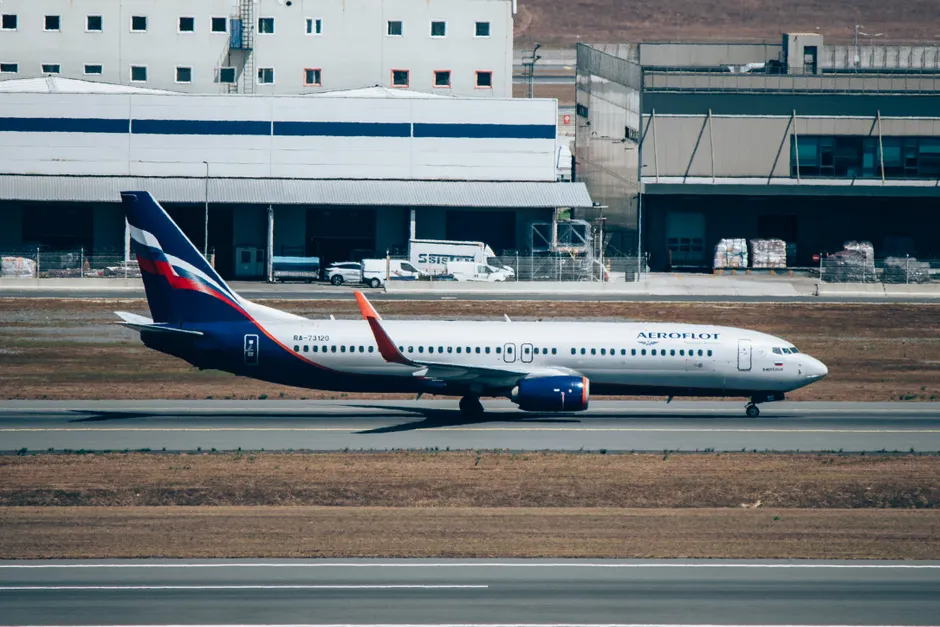
A Russian national identified by The New York Times as a GRU military intelligence officer operating under cover in Japan left the country shortly after the newspaper published its investigation on July 12, 2026, according to a July 23 report by The Japan News (The Japan News).
The Times investigation, published July 12 and dated July 13, 2026, named the officer as Filchenkov and reported that Russian intelligence operatives were working under commercial cover at the Tokyo office of Aeroflot, Russia's state airline. The report identified the Aeroflot Tokyo office as allegedly being used to procure Japanese technology for Russian missiles, drones, and other weapons systems (The New York Times). Euromaidan Press corroborated the procurement angle the following day (Euromaidan Press).
One detail from the Times investigation stands out for its operational implications: the Aeroflot office in Tokyo is located approximately a ten-minute walk from the headquarters of Japan's National Police Agency, the body responsible for investigating espionage within Japan (The New York Times). The proximity means that officers tasked with countering Russian intelligence activity were physically within walking distance of an alleged GRU procurement front.
The Guardian, publishing an explainer on July 14, 2026, reported that Japan had long been a target for Russian espionage. It cited a Nikkei Business report from August 2022 estimating that approximately 120 Russian intelligence officers were operating in Japan at that time (The Guardian). A separate Guardian piece the same day covered the Aeroflot cover detail (The Guardian).
The timeline is compact. The Times named Filchenkov on July 12. The Guardian ran its explainer on July 14. By July 23, The Japan News reported that Filchenkov had departed Japan. The sequence mirrors a pattern seen in counterintelligence contexts elsewhere: once an officer is publicly named and their cover blown, continued presence in the host country offers no operational value and carries significant risk. Departure, in such cases, is the expected outcome rather than a surprise.
Japan occupies a particular niche in the Russia sanctions architecture. As a member of the G7 and a participant in the export control regime targeting Russian military-industrial capacity, Tokyo has aligned with Western measures restricting dual-use technology transfers. Yet Japan is also one of the world's leading producers of advanced electronics, semiconductors, and precision components, the very categories of goods that the Times investigation alleges were being procured through the Aeroflot office. The country's industrial base makes it both a sanctions enforcer and a high-value procurement target.
The broader context here is the degree to which Russian military intelligence has relied on commercial cover to sustain supply chains for weapons systems used in the war in Ukraine. The GRU, formally the Main Directorate of the General Staff of the Armed Forces of the Russian Federation, has historically operated through a mix of diplomatic, journalistic, and business-cover positions. The Aeroflot angle fits within that pattern: a state-owned enterprise providing institutional cover that can absorb individuals whose actual function is intelligence-related procurement rather than commercial aviation.
The Nikkei Business figure of approximately 120 intelligence officers, reported in August 2022, predates the Times investigation by nearly four years. Whether that number has grown, contracted, or shifted in composition since then is not established in the available reporting. What the Times investigation does establish is that at least one named GRU officer was operating in Japan under business cover as recently as July 2026, and that the procurement channel allegedly ran through an office whose location was geographically adjacent to Japan's own counterespionage authority.
Filchenkov's departure closes one thread of this story. The Aeroflot office, the broader network of Russian intelligence personnel in Japan, and the question of whether Japanese authorities will pursue further action against remaining operatives remain open.


