India's Youth-Led "Cockroach Janta Party" Protests Squeeze Modi Government Over Education Crisis

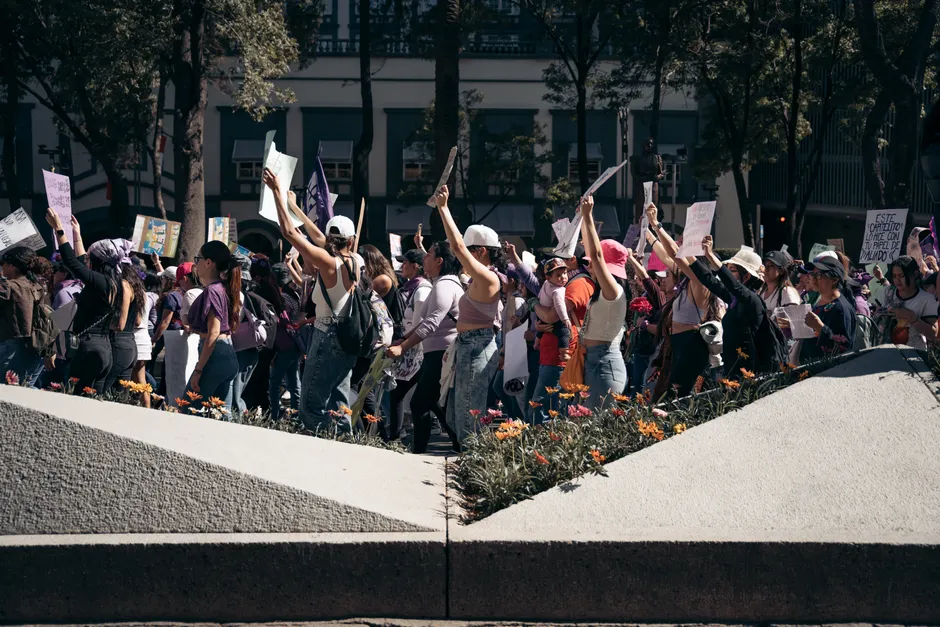
Tens of thousands of young Indians rallied against Prime Minister Narendra Modi's government in July 2026, camping on the streets of New Delhi in what the New York Times described as a rare challenge to his administration, driven by anger over a broken education system and a dearth of jobs New York Times. The protests, which intensified around July 20 and drew larger-than-expected crowds by Monday, were spearheaded by a newly formed political entity called the Cockroach Janta Party, which channeled youth frustration into one of India's largest youth protest movements in recent memory ABC News. Many student protesters were injured during the clashes Reuters, and thousands remained encamped on Delhi's streets as the demonstrations continued AP News.
The immediate trigger was a series of alleged exam paper leaks that undermined the credibility of India's competitive entrance examinations, which millions of young people sit each year as their primary route into public-sector employment and higher education Financial Post. The leaks compounded a deeper frustration: nearly 40% of Indian graduates aged 15 to 25 are unemployed, along with 20% of graduates aged 25 to 29, according to BBC reporting from March 2026 BBC News. India's overall unemployment rate on a Current Weekly Status basis stood at 5.5% for persons aged 15 and above as of June 2026, according to government data from the Ministry of Statistics and Programme Implementation.
The backdrop is more layered than the headline numbers suggest. India's Periodic Labour Force Survey indicated modest improvement in youth unemployment: rural youth unemployment declined from 8.7% in 2024 to 8.3% in 2025, while urban youth unemployment fell from 14.3% to 13.6% over the same period. Yet those aggregate figures mask a sharp education paradox: the more educated an Indian young person is, the more likely they are to be jobless. It is this cohort, graduates who followed the system's promised pathway only to find a dead end, that filled the streets of Delhi.
India's Supreme Court Chief Justice Surya Kant, during a hearing on May 15, 2026, described unemployed youth who drift into activism, an observation that anticipated the scale of what followed Frontline. The Cockroach Janta Party, named with deliberate provocation, emerged as the organizational vehicle translating that drift into political action. Its very name signals a refusal to be marginalized: cockroaches survive against all odds, and the party's founders have leaned into the metaphor to frame their movement as one of endurance against an indifferent establishment.
The political reverberations have been immediate. India's opposition parties disrupted parliament to support the student protesters and pressure the Modi government, seizing on an issue that has proven difficult for the ruling Bharatiya Janata Party to deflect Reuters. Under that pressure, India's education minister promised reforms and agreed to a parliamentary debate on the crisis. Prime Minister Modi, meanwhile, delivered a speech touting youth as a national asset even as thousands protested the education system's failures outside Financial Post.
The juxtaposition is stark. Modi's political brand has long rested on a narrative of aspirational youth driving India's rise. The sight of those same young people, organized under a deliberately unglamorous banner, demanding accountability for exam leaks and joblessness complicates that story at a time when his government can least afford complacency. The opposition's parliamentary disruption, while procedurally performative, signals a calculated bet that the education-and-employment nexus is a vulnerability that can be pressed.
What makes this movement unusual in the Indian context is its organizational novelty. India has seen large student protests before, from the anti-corruption movements of 2011 to the Jawaharlal Nehru University demonstrations of 2016. But the emergence of a purpose-built political entity, the Cockroach Janta Party, explicitly designed to harness youth disillusionment, marks a structural shift from episodic mobilization toward sustained political contestation. Whether it can translate street energy into electoral traction remains an open question, but its capacity to draw tens of thousands and dominate a parliamentary session within weeks of formation is itself a signal.
The exam-leak issue is not merely a governance failure; it strikes at the one mechanism India's system presents as meritocratic and fair. For a graduate in a tier-2 city who has spent years preparing for a government entrance exam, a leaked paper is not an administrative inconvenience but an invalidation of years of effort. When that experience is shared by millions, the leap from personal grievance to collective political action becomes shorter. The protesters in Delhi are not simply asking for better administration. They are questioning whether the social contract, study hard, pass the exam, get the job, still holds.