UK Cancels September Military Exercise in Kenya Amid Prosecution Dispute
The UK Ministry of Defence has cancelled a planned military training exercise in Kenya scheduled for September 2026, a decision tied to an ongoing dispute between London and Nairobi over jurisdictional powers to prosecute British soldiers under the bilateral defence cooperation agreement (The Guardian).
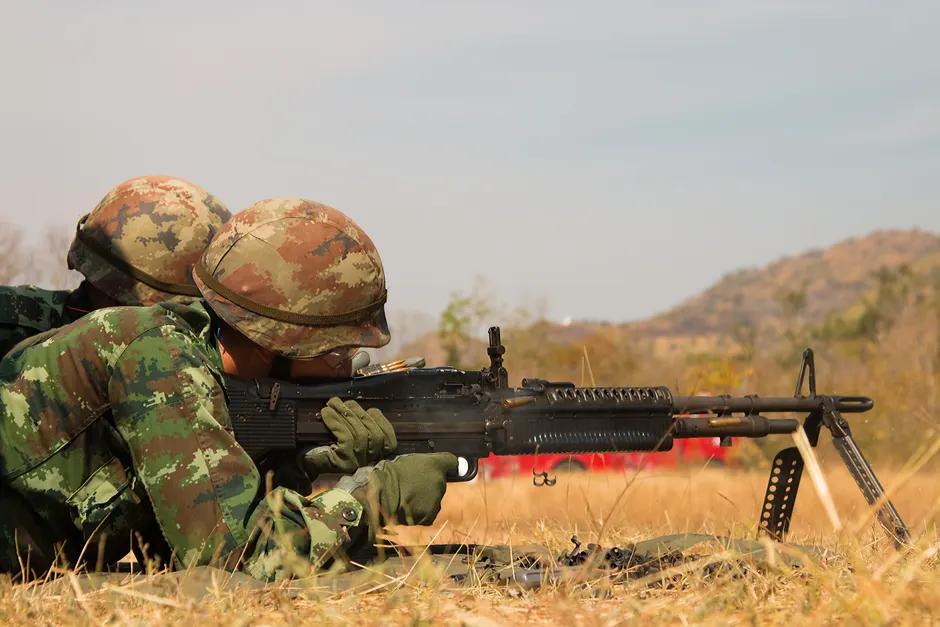
The cancelled exercise was expected to involve approximately 1,500 personnel from the British Army Training Unit Kenya, known as BATUK, which is based near Nanyuki in central Kenya (Nation Africa). BATUK serves as the permanent UK military footprint in the country, facilitating the rotational training of British infantry battalions on Kenyan terrain.
Under the UK-Kenya Defence Cooperation Agreement, up to six British Army infantry battalions per year carry out eight-week exercises in Kenya (British Army). That agreement provides the legal framework for military cooperation between the two countries, covering training arrangements, investigations, and jurisdiction over visiting forces (Al Jazeera). It is the jurisdictional provisions — specifically the question of which country holds the power to prosecute British soldiers for alleged offences committed on Kenyan soil — that lie at the heart of the current rupture.
The UK MOD has struck a conciliatory tone. In a statement, it said: "The UK MOD deeply regrets those issues and challenges which have arisen in relation to the UK's defence presence in Kenya, both in the past and more recently" (Al Jazeera). The ministry also said: "The UK MOD highly values its relationship with Kenya, which is underpinned by mutual benefit, respect and cooperation" (Al Jazeera). The language acknowledging "past and more recently" arising issues signals that the current dispute did not emerge in isolation but reflects accumulated friction over the terms of the UK military presence.
Training activity has been continuous in the lead-up to the cancellation. The British Army held Exercise Winter Camp in January 2026, which included activity spanning from Kenya (British Army). The 1st Battalion, Welsh Guards conducted training in Kenya on Exercise Haraka Storm (British Army). Royal Irish Regiment soldiers were in Kenya on St. Patrick's Day, 17 March 2026, during the same exercise, with Lance Corporal Dorothy Orr, a saxophonist with the regiment, serving as enemy force during the training (British Army). This operational tempo underscores the scale of what the September cancellation disrupts: not a one-off deployment but a sustained, multi-battalion training cycle that runs throughout the calendar year.
The broader context here is a defence relationship in which the legal architecture has not kept pace with political expectations. The Defence Cooperation Agreement was designed to codify training access, investigative procedures, and jurisdictional boundaries in a single instrument. When the question of prosecution authority becomes a live dispute serious enough to cancel a major exercise, it suggests that the agreement's jurisdictional provisions are being tested in ways the drafters may not have fully anticipated, or that political conditions in one or both capitals have shifted enough to make previously tolerable ambiguities untenable.
For the UK, BATUK provides access to training terrain and climate conditions unavailable in Britain, supporting readiness for deployment scenarios ranging from counterinsurgency to conventional warfare. For Kenya, the arrangement brings direct economic activity to the Laikipia region around Nanyuki, infrastructure investment, and a security partnership with a permanent member of the UN Security Council. The cancellation of the September exercise imposes costs on both sides, though the distribution of those costs is asymmetric: the UK loses a training cycle it cannot easily replicate elsewhere on short notice, while Kenya forgoes the economic and logistical inflows associated with 1,500 personnel operating in the area for an extended period.
What remains unclear is whether the cancellation is a tactical pause — pressure applied to force a renegotiation of the jurisdictional terms — or a signal of a deeper structural realignment in the relationship. The MOD's regret-laden language and affirmation of the partnership's value suggest London views this as a soluble disagreement rather than a rupture. But the fact that a dispute over prosecution powers escalated to the point of scrubbing a scheduled exercise indicates that the jurisdictional question has moved from a background legal technicality to a front-line political issue. How the two governments resolve it will likely determine whether the six-battalion annual training cycle resumes at its previous tempo or undergoes a more fundamental restructuring.