Gironde Wildfires: 220,000 Evacuated as Flames Reach Bordeaux Outskirts

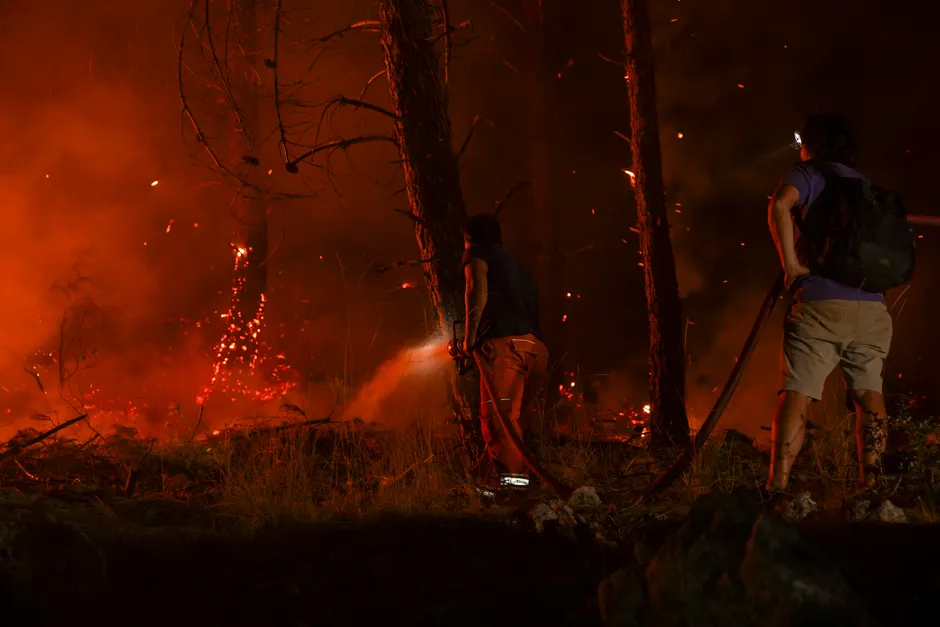
A forest fire that ignited in Saumos, Gironde on July 22, 2026 has consumed 42,000 hectares of forest and triggered the evacuation of 220,000 people across the department, with flames reaching the outskirts of Bordeaux by July 26. The scale of displacement, concentrated in one of France's most densely forested regions, has placed extraordinary demands on emergency response infrastructure and pushed the crisis to the metropolitan edge of a major city.
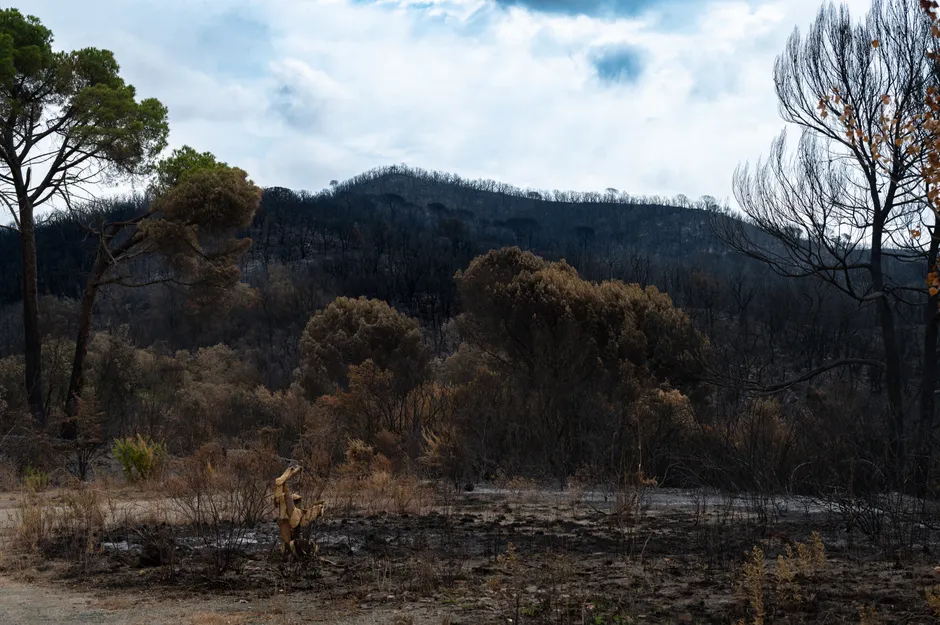
The fire started near Bordeaux-Mérignac airport on July 21, 2026, around 2 PM, according to the Gendarmerie nationale. A separate ignition at Saumos, further west toward the Atlantic coast, began the following day and had already covered more than 800 hectares by the evening of July 22. By July 24, the Saumos fire alone had destroyed 12,500 hectares. As of July 26, the total burned surface in Gironde stood at 42,000 hectares, an area equivalent to four times the surface area of Paris.
Two sapeurs-pompiers died in the line of duty while responding to the fires, the Gendarmerie confirmed. The deaths occurred during an engagement that, by the prefecture's July 24 situation update, involved 260 ground resources (moyens terrestres) and 440 gendarmes mobilized to manage evacuations and secure the perimeter.
The evacuation footprint expanded rapidly over a 72-hour window. The first FR-Alert notification was triggered for the immediate evacuation of villages on the Cap-Ferret peninsula on July 23. The prefecture then ordered preventive evacuations for the communes of Le Porge, Saumos, Le Temple, and Lège-Cap-Ferret. By July 24, 44,000 people had been displaced in 48 hours. The Gironde prefecture issued a communiqué on July 25 activating FR-Alert specifically for the communes of Saint-Aubin and Saint-Médard, and seven communes near Bordeaux were placed under preventive evacuation orders the same day. During the night of July 25 to 26, evacuations took place in Marcheprime. Eight communes bordering Bordeaux were evacuated as flames reached the city's edge. An additional 55,000 evacuations were ordered around July 25–26, bringing the cumulative total to 220,000 people displaced since July 22.
The crisis was not confined to Gironde. As of July 24, fires of exceptional intensity were also destroying forest in the neighboring department of Landes, according to the Gendarmerie nationale. By July 25, the combined evacuation figure for Gironde and Landes stood at 140,000, a number subsequently overtaken by the July 26 Gironde-only total of 220,000.
The pace of escalation from the initial 800 hectares on the evening of July 22 to 42,000 hectares by July 26 is striking in its own right, but the geographic trajectory of the evacuations tells the more consequential story. The fire's advance moved from rural forest communes toward the Bordeaux metropolitan perimeter, forcing authorities to use FR-Alert, the national population-warning system, for urban evacuations. The Cap-Ferret peninsula evacuation and the subsequent orders for Saint-Aubin, Saint-Médard, Marcheprime, and eight Bordeaux-bordering communes trace a fire front that progressively closed the distance to a city of 260,000 residents.
The scale of mobilization and loss raises questions about the capacity of France's wildfire response framework to handle fire complexes that simultaneously threaten rural forest, coastal tourism communities, and metropolitan peripheries. The deaths of two firefighters, the deployment of 260 ground resources alongside 440 gendarmes, and the activation of FR-Alert across an expanding arc of communes each represent escalation points that would, individually, constitute a major incident. Their convergence within a single 72-hour window defines this as a compound crisis: multiple fire fronts, overlapping evacuation zones, and a resource pipeline stretched across two departments.
The early evacuations of the Porge Nord-Est quartier, involving roughly a hundred people on the first night, provide a sense of the granularity at which evacuation orders initially operated. These small, localized displacements rapidly gave way to mass evacuation as the fire front expanded, and the transition from neighborhood-level orders to department-wide alerts occurred within roughly 48 hours.
What remains unclear from the available official communiqués is the containment status of the fire complex. The prefecture's situation updates have tracked hectares burned, people evacuated, and resources deployed, but a fixed perimeter or percentage of containment has not been reported in the verified communiqués. The ongoing issuance of FR-Alert notifications as late as July 25, with new communes added to evacuation orders, indicates that the fire front remained active and advancing four days after ignition.