7.1 Magnitude Earthquake Strikes Kumamoto at Shindo 7, Triggering Structural Collapses and Industrial Evacuations

A 7.1-magnitude earthquake struck Kumamoto prefecture on July 28, 2026, at 4:27 p.m. local time (8:27 a.m. BST), generating a maximum Shindo scale intensity of 7 and causing structural collapses, fires, and widespread infrastructure disruption The Guardian. The Japan Meteorological Agency (JMA) recorded the focal depth at 10 kilometers.
The JMA initially issued a tsunami warning for a one-metre wave but later rescinded it. The seismic event prompted immediate industrial and transit disruptions. Rail services were halted and flights were grounded in the affected region The Guardian. Heavy rain subsequently fell in Nagoya, Aichi Prefecture, adding a secondary meteorological hazard to the immediate aftermath Reuters.
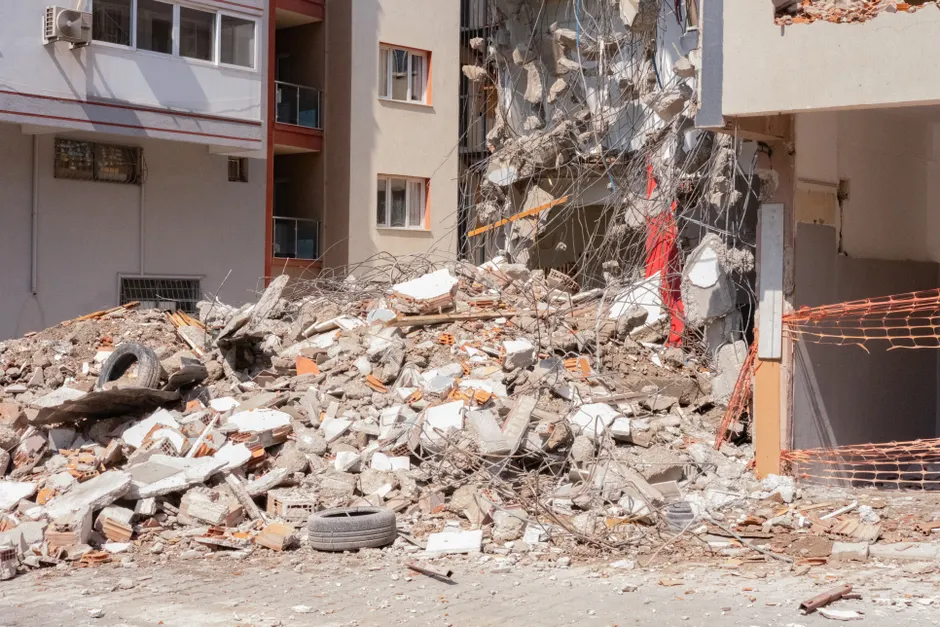
Police received reports of what sounded like an explosion at the Aeon Mall outlet in the Kumamoto region. In Kashima town, the shopping complex's second floor collapsed, leaving many people trapped inside The Guardian. Witness Kazuya Tsurunaga told broadcaster TBS he heard an explosion while inside a pub about 300 metres from the Aeon mall and saw a large cloud of smoke The Guardian.
Beyond the commercial complex, several buildings were on fire or partially collapsed. Large cracks appeared on major roads, including an elevated highway The Guardian. Prime Minister Sanae Takaichi confirmed the government assembled an 'Emergency Assembly Team' to tackle the disaster The Guardian.
The economic and industrial reverberations were immediate. TSMC evacuated workers from its plant in the Kumamoto area as a precaution The Guardian. Sony and Fujifilm also evacuated staff from their local facilities The Guardian. The International Atomic Energy Agency (IAEA) stated that Japan's nuclear regulation authority reported no damage or safety issues at the Sendai nuclear power plant after the earthquake The Guardian.
The JMA operates an observation network comprising approximately 200 seismographs and 600 seismic intensity meters, and collects data from over 3,600 additional seismic intensity meters managed by local governments and the National Research Institute for Earth Science and Disaster Resilience (NIED) JMA. Data flow into the Earthquake Phenomena Observation System (EPOS) at JMA headquarters in Tokyo and the Osaka District Meteorological Observatory on a real-time basis JMA. The agency's seismic intensity scale contains 10 degrees ranging from 0 (imperceptible) to 7, with intermediate steps including 5 lower, 5 upper, 6 lower, and 6 upper JMA. A Seismic Intensity Information report is issued within one and a half minutes when an earthquake with seismic intensity 3 or greater occurs JMA.
The broader context here centers on Kumamoto's seismic history and the concentrated vulnerability of advanced manufacturing to localized geological shocks.
The seismic mechanics carry specific weight. A 10-kilometer focal depth places this event firmly within the shallow crustal category, significantly amplifying surface ground motion and helping explain the Shindo 7 peak intensity. Shindo 7 represents the maximum degree of seismic intensity on the JMA scale, a threshold where most structures experience severe to total collapse. The 2016 Kumamoto sequence provides the most direct precedent: a magnitude 6.5 foreshock followed by a magnitude 7.3 mainshock two days later, killing 273 people and injuring over 2,800. The occurrence of a magnitude 7.1 event on July 28, 2026, raises immediate structural and operational questions about the regional fault systems and the potential for aftershocks of comparable magnitude.
Looking at what this means for industrial and infrastructure resilience, the simultaneous precautionary evacuations by TSMC, Sony, and Fujifilm expose the concentrated geographic footprint of critical global semiconductor and imaging supply chains. Even temporary operational halts at these facilities can ripple through global inventory buffers. The confirmed absence of damage at the Sendai nuclear power plant is critical, as it prevents a compounding radiological crisis. The intersection of the earthquake with subsequent heavy rainfall in Nagoya presents a compound hazard scenario. Saturated ground conditions drastically elevate the risk of secondary geotechnical failures, including landslides and debris flows. This dual-hazard dynamic, combined with compromised linear infrastructure such as the cracked elevated highway, suggests a complex, multi-vector recovery phase extending beyond standard seismic structural assessments.