Magnitude 7.1 Earthquake Strikes Kumamoto: 28 Dead, Hundreds Injured, Shopping Mall Collapses

A magnitude 7.1 earthquake struck Kumamoto Prefecture on Japan's southern island of Kyushu at approximately 16:27 JST on July 28, 2026, killing at least 28 people, injuring dozens more, and trapping multiple individuals inside a collapsed shopping mall. The Kumamoto prefectural government has formally designated the event the "2026 Kumamoto Earthquake" (Reiwa 8 Kumamoto Earthquake) Kumamoto Prefecture.
GMA News, citing the Kumamoto prefectural government and other sources, reported 28 fatalities from the quake, which had its epicenter within the prefecture GMA News. Kyodo News separately confirmed one death from a house collapse Kyodo News. Initial reports from CNN placed the injured toll at no fewer than 50 CNN. Al Jazeera reported that one hospital received more than 50 injured, while a second hospital in Yatsushiro city accepted approximately 40 wounded, including 10 in serious condition Al Jazeera.
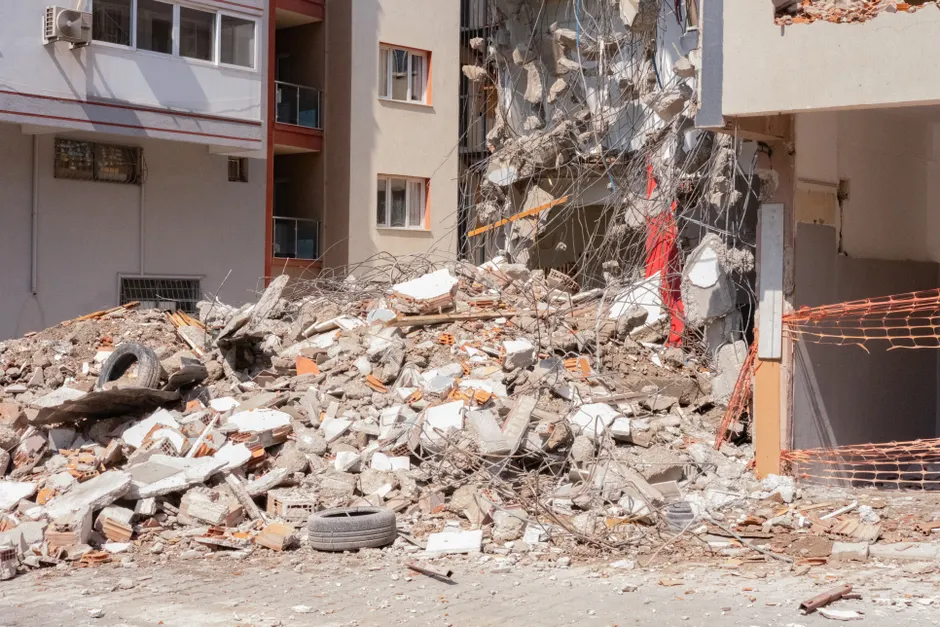
The Aeon shopping centre in Kumamoto collapsed during the quake, trapping multiple people inside. Between 20 and 30 mall employees were among those affected, according to NBC News NBC News. Reuters reported workers missing after a blast at the same shopping mall Reuters. A train derailment was also reported in the prefecture The Guardian.
Reuters and CNN reported the event as a magnitude 7.1 earthquake, citing the Japan Meteorological Agency Reuters; CNN. The Kumamoto prefectural government recorded a maximum seismic intensity of 7, the highest level on JMA's 10-degree scale, which runs from 0 through 7 with intermediate gradations of 5-lower, 5-upper, 6-lower, and 6-upper Kumamoto Prefecture.
Japanese officials issued evacuation instructions for roughly 300,000 people across Kumamoto Prefecture NBC News. Governor Kimura of Kumamoto Prefecture issued a public statement on July 28 regarding the earthquake Kumamoto Prefecture.
The Kumamoto Prefecture Disaster Countermeasures Headquarters was automatically established at 16:27 JST on July 28, the moment the earthquake struck. Its first meeting convened at 20:00 JST at the Prefectural Office Disaster Prevention Center Kumamoto Prefecture. The Disaster Relief Act was applied to 9 cities, 10 towns, and 1 village in Kumamoto Prefecture on the same day, enabling prefectural and national government coordination on emergency shelter, medical assistance, and debris removal Kumamoto Prefecture.
The JMA's earthquake early warning infrastructure played its standard role in this event. The agency operates an observation network of roughly 200 seismographs and 600 seismic intensity meters, supplemented by over 3,600 additional seismic intensity meters managed by local governments and the National Research Institute for Earth Science and Disaster Resilience (NIED). JMA's Earthquake Phenomena Observation System (EPOS) processes this data in real time at headquarters in Tokyo and the Osaka District Meteorological Observatory. Under standard procedure, the agency issues a Seismic Intensity Information report within 90 seconds when recorded intensity reaches 3 or above. The Earthquake Early Warning system provides advance announcement of estimated seismic intensity and expected arrival time of principal motion.
This is not Kumamoto's first encounter with a major seismic event at this intensity level. The fact that the prefectural government's Disaster Countermeasures Headquarters activates automatically at the moment of an earthquake, rather than awaiting a manual trigger, reflects institutional learning from prior disasters on Kyushu. The rapid application of the Disaster Relief Act across 20 municipalities likewise signals a pre-planned scaling response designed to move resources before damage assessments are complete.
The broader context here is one of layered institutional readiness meeting a severe event in real time. The casualty figures from GMA News, if they hold, would place this among the deadliest Japanese earthquakes in recent years. The collapse of the Aeon shopping centre, with workers reported missing and a possible blast involved, raises immediate questions about structural integrity standards for large commercial buildings in seismically active zones. The simultaneous train derailment, the evacuation of 300,000 residents, and the strain on at least two hospitals point to widespread infrastructure impact that will require sustained assessment in the coming days. Whether the death toll stabilizes or climbs will depend heavily on search-and-rescue outcomes at the Aeon site and on the identification of any additional structural failures across the affected municipalities.
A magnitude 5.1 earthquake was recorded by JMA at coordinates 32.4N, 131.5E at a depth of 10 km on July 1, 2026, at 08:40 JST JMA. The coordinates place that earlier event in the same general Kyushu region. Whether a causal or foreshock relationship exists between the July 1 event and the July 28 mainshock is a matter for JMA's seismological analysis, which has not yet been published in the available sources.